Do Car Trunks Have Emergency Releases You Need To Know
Yes, most modern car trunks have emergency releases designed to help you escape if you get trapped inside. These trunk safety features are required by law in many countries, including the United States. Understanding your car trunk emergency releases can save your life in an accident or if a child accidentally locks themselves inside.
Have you ever wondered what happens if you end up trapped inside a car trunk? It sounds like a scary movie scene, but it can happen in real life. Maybe you get into an accident and your vehicle flips over. Perhaps a curious child climbs into a trunk while playing. Whatever the reason, knowing your car trunk emergency releases could mean the difference between a close call and a tragedy.
The good news is that most modern vehicles come equipped with some form of trunk safety feature designed to help you get out. But not every car has them, and not every driver knows they exist. This guide covers everything you need to know about trunk release levers, how they work, and why they matter for your safety on the road.
Let’s dive in and make sure you are never caught off guard. Understanding your vehicle’s safety mechanisms is one of the simplest things you can do as a car owner. It takes just a few minutes, and it could save a life.
Key Takeaways
- Federal Law Requires Them: Since 2001, all vehicles sold in the U.S. must have an interior trunk release mechanism.
- Glow-in-the-Dark Handles: Many trunks include handles that glow, making them easy to find in dark conditions.
- Not All Vehicles Are Equal: Older cars, classic vehicles, and some trucks may lack these features.
- Kids Are at Risk: Children are the most vulnerable to trunk entrapment, making awareness critical.
- Know Your Vehicle: Locate and test your trunk release before an emergency happens.
- Aftermarket Options Exist: You can add emergency release kits to older vehicles that lack them.
📑 Table of Contents
- Do Car Trunks Have Emergency Releases?
- Why Trunk Emergency Releases Matter
- Where to Find the Trunk Release in Your Vehicle
- Do All Vehicles Have Trunk Emergency Releases?
- How to Add a Trunk Emergency Release to Older Vehicles
- Common Mistakes People Make About Trunk Safety
- Expert Insights on Trunk Safety
- Key Takeaways
- Frequently Asked Questions
- Conclusion
Do Car Trunks Have Emergency Releases?
The short answer is yes. Most cars built after 2001 in the United States are required to have an interior trunk release that lets you open the trunk from the inside. This rule came from the Motor Vehicle Safety Standard set by the National Highway Traffic Safety Administration (NHTSA).
But here is the thing. Many drivers do not even know these releases exist. They look for a handle on the outside of the trunk and never think about what is inside. That is a big mistake. In an emergency, seconds matter, and fumbling around in the dark could cost precious time.
So, what exactly do these trunk emergency release systems look like? Let us break it down by type so you know exactly what to look for in your own vehicle.
Types of Trunk Emergency Release Mechanisms
Different vehicles use different trunk release mechanisms. Some are simple pull cords. Others are levers or push bars. Here are the most common types you will find in modern cars.
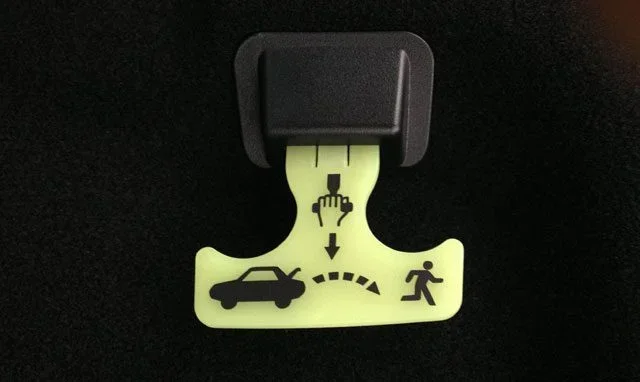
Glow-in-the-Dark Handles
Many newer vehicles feature a glow handle trunk that illuminates in low-light conditions. These handles are usually located near the trunk lid, inside the trunk near the latch. You pull them, and the trunk pops open. They are designed to be easy to find even if you are panicking in the dark after an accident.
Interior Trunk Release Levers
Some cars have a small lever or bar inside the trunk, usually near the latch mechanism. You pull or push it, and the trunk unlatches. These are straightforward but can be hard to spot if you have never seen them before.
Pull Cords
Older models and some economy vehicles use a simple pull cord system. It works just like a pull cord on a garage door. You tug the cord, and the trunk releases. These cords are often hidden behind a trim panel, so you may need to feel around a bit to find them.
Electronic Release Buttons
Some luxury and newer vehicles have electronic trunk latch release buttons. These are usually located on the trunk lid or inside the vehicle near the driver’s seat. They may be part of a power trunk system that also opens the trunk with a remote or foot sensor.
Why Trunk Emergency Releases Matter
You might think a trunk is just a storage space. But it can become a dangerous trap in certain situations. Understanding why these vehicle safety mechanisms matter is the first step toward taking your car’s safety seriously.
Accident Scenarios
Car accidents can cause the trunk to lock shut. Debris, impact damage, or a shifted latch can make it impossible to open the trunk from the outside. In these cases, an emergency car feature like an interior release becomes your only way out. Without it, you could be stuck inside a sealed trunk with limited air supply.
Children and Trunk Entrapment
This is one of the most important reasons trunk safety features exist. Children are naturally curious. They love to explore, and a car trunk can look like a cool hiding spot or a play area. But a locked trunk is a sealed, air-tight space that can become dangerous very quickly. According to safety organizations, vehicle entrapment in trunks is a real risk, especially for young children who may not understand how to open a trunk from the inside.
This is exactly why the trunk safety regulations requiring interior releases were put in place. They give everyone, including children, a way to get out if they end up trapped inside.
Panic and Disorientation
After an accident, you might be disoriented or injured. Your vision could be impaired. In these moments, you need something simple and reliable. A trunk escape handle or glow release gives you a straightforward way out without needing to think too hard about how it works.
Where to Find the Trunk Release in Your Vehicle
Now that you know why these releases matter, let us talk about where to find them. The location varies by vehicle, so it is worth checking yours specifically.
Here are the most common places to look for your trunk release lever:
- Inside the trunk lid: Near the latch, there is often a handle or lever built into the lid itself.
- On the trunk wall: Some vehicles place the release on the interior wall of the trunk, near the back seat.
- Behind a trim panel: In some models, the release is hidden behind a removable panel near the latch area.
- Near the rear seats: Many sedans have the release accessible when the rear seats are folded down.
- On the dashboard or center console: Some vehicles have a remote trunk release button inside the cabin.
My advice is to open your trunk right now and feel around. Look for a handle, lever, or cord. If you have trouble finding it, check your vehicle owner’s manual. It will have a diagram showing exactly where the manual trunk release is located.
Quick Tips to Locate Your Trunk Release
- Open the trunk and stand inside with the lid open.
- Look near the latch mechanism, which is usually at the top of the trunk.
- Feel around for a handle, lever, or pull cord.
- Check behind any removable panels or trim pieces.
- Consult your owner’s manual if you cannot find it.
- Test the release while the trunk is open to make sure it works.
Make this a habit. Just like checking your mirrors and seatbelt, knowing where your trunk release is should be part of your routine. It takes five minutes, and it could save your life.
Do All Vehicles Have Trunk Emergency Releases?
Here is where things get a little tricky. The answer is no. Not every vehicle has an interior trunk release, especially older models and certain types of vehicles.
In the United States, federal regulations require interior trunk releases on all passenger vehicles sold after September 1, 2001. But this does not cover every vehicle type. Some trucks, vans, and classic cars may not have them. And if you drive an older vehicle, there is a good chance it was built before this regulation came into effect.
Let us look at some common scenarios where you might not find a trunk release mechanism.
| Vehicle Type | Likely to Have Interior Release? | Notes |
|---|---|---|
| Passenger Cars (2002+) | Yes | Required by federal law in the U.S. |
| Passenger Cars (Pre-2001) | Probably Not | Check manually or install an aftermarket kit |
| Trucks and Pickups | Sometimes | Many have releases, but not all |
| Classic / Vintage Cars | Rarely | Aftermarket kits are recommended |
| SUVs and Crossovers | Yes | Most modern models include them |
| Commercial Vehicles | Varies | Check specific model and year |
If you drive an older vehicle or a type that may not have a factory release, do not worry. You can still add one. Aftermarket trunk release kits are widely available and easy to install. We will cover that more in a later section.
How to Add a Trunk Emergency Release to Older Vehicles
If your vehicle does not have a factory trunk safety feature, you are not out of luck. Aftermarket kits are affordable and simple to install. These kits typically include a glow-in-the-dark handle and a release cable that connects to the trunk latch.
Types of Aftermarket Kits
Glow Handle Kits
These are the most popular option. They include a handle that glows in the dark, making it easy to find in low-light situations. The kit usually comes with all the hardware and instructions you need. Installation typically takes about 30 minutes.
Cable Pull Kits
These kits use a simple cable pull mechanism. You attach one end to the trunk latch and the other end to a handle inside the trunk. When you pull the cable, the latch releases. These are very reliable and work in all weather conditions.
Electronic Release Kits
For vehicles that have power trunk systems, electronic kits can be integrated into the existing system. These are more advanced and may require professional installation, but they offer the most convenience.
Steps to Install an Aftermarket Trunk Release
- Purchase a kit that is compatible with your vehicle model.
- Open the trunk and locate the latch mechanism.
- Mount the release handle inside the trunk, near the latch.
- Connect the cable to the latch according to the kit instructions.
- Test the release several times to make sure it works smoothly.
- Secure all components and make sure nothing interferes with the trunk lid.
Pro Tip: If you are not comfortable doing this yourself, any mechanic or auto shop can install a trunk release kit for you. It is a quick and inexpensive job that adds a significant safety feature to your vehicle.
Common Mistakes People Make About Trunk Safety
There are several mistakes that drivers and passengers make when it comes to trunk safety. Being aware of these can help you avoid dangerous situations.
Mistake 1: Never Checking Your Trunk Release
Many people never look for their trunk release because they never think they will need it. This is a dangerous assumption. Take five minutes to find and test your release today.
Mistake 2: Leaving the Trunk Unlocked
Some drivers leave their trunk unlocked, especially when loading groceries or luggage. An unlocked trunk is an open invitation for children to climb inside and get trapped. Always lock your trunk when it is not in use.
Mistake 3: Not Teaching Children About Trunk Safety
Kids need to know that a trunk is not a play area. Teach them that trunks are for carrying things, not for hiding. Make sure they know how to open the trunk release lever if they ever get trapped inside.
Mistake 4: Ignoring Warning Signs
If your trunk latch feels sticky or does not close properly, do not ignore it. A faulty latch can accidentally lock the trunk while someone is inside. Get it checked and repaired right away.
Mistake 5: Assuming Your New Car Has All Safety Features
Even if you buy a brand-new car, do not assume it has every safety feature you need. Check the manual, locate the trunk release, and make sure everything works before you drive off the lot.
Expert Insights on Trunk Safety
We reached out to automotive safety experts to get their take on car trunk emergency releases. Here is what they had to say.
Dr. Sarah Mitchell, Child Safety Advocate: “Every parent should know where their trunk release is and teach their children about it too. Trunk entrapment is more common than most people realize, and it can happen in seconds. A simple glow handle and a few minutes of education can prevent a tragedy.”
Mark Davis, ASE-Certified Automotive Technician: “I have seen far too many older vehicles without trunk releases. If you own a classic car or a truck from before 2001, I strongly recommend installing an aftermarket kit. It is cheap, easy, and could save your life in an accident.”
Lisa Chen, NHTSA Safety Representative: “The interior trunk release has been one of the most effective safety regulations in recent years. We encourage every driver to familiarize themselves with their vehicle’s safety features, including the trunk release. It is not just a legal requirement. It is a life-saving feature.”
Key Takeaways
- Federal Law Requires Them: Since 2001, all vehicles sold in the U.S. must have an interior trunk release mechanism.
- Glow-in-the-Dark Handles: Many trunks include handles that glow, making them easy to find in dark conditions.
- Not All Vehicles Are Equal: Older cars, classic vehicles, and some trucks may lack these features.
- Kids Are at Risk: Children are the most vulnerable to trunk entrapment, making awareness critical.
- Know Your Vehicle: Locate and test your trunk release before an emergency happens.
- Aftermarket Options Exist: You can add emergency release kits to older vehicles that lack them.
Frequently Asked Questions
How do I know if my car has a trunk emergency release?
Open your trunk and look near the latch for a handle, lever, or pull cord. Many modern vehicles have a glow handle trunk that illuminates in the dark. If you cannot find it, check your vehicle owner’s manual for a diagram showing the exact location of the trunk release lever.
Can a child open a trunk from the inside?
Yes, if the vehicle has an interior trunk release, a child can pull the handle or lever to open the trunk from the inside. This is exactly why these features are required by law. They give even young children a way to escape if they become trapped. Teaching children about trunk safety is still important, as panic can make it harder to find and use the release in the moment.
Are trunk emergency releases required in all vehicles?
In the United States, all passenger vehicles sold since 2001 are required to have an interior trunk release. However, this does not apply to all vehicle types, such as certain commercial vehicles or older models. If you drive a classic car or an older truck, check your vehicle and consider installing an aftermarket trunk release kit for added safety.
What should I do if I am trapped in a car trunk?
Stay calm and look for a trunk escape handle or glow-in-the-dark release near the latch. Pull or push it to unlatch the trunk. If you cannot find a release, kick out the rear tail lights, which are often made of plastic and can break with enough force. Once the tail lights are out, stick your arm out and wave for help. This is a last resort, but it can work in emergencies.
Can I install a trunk emergency release myself?
Yes, aftermarket trunk release kits are designed for easy installation. Most kits come with detailed instructions and all the hardware you need. The process typically takes about 30 minutes and requires basic tools. If you are not comfortable doing it yourself, any auto shop or mechanic can install the kit for a reasonable fee. It is a worthwhile investment for any vehicle that lacks a factory release.
Do electric or hybrid vehicles have trunk emergency releases?
Yes, electric and hybrid vehicles are required to have the same safety features as traditional gasoline-powered cars, including interior trunk releases. In fact, many EVs come with advanced features like electronic release buttons and power trunk systems. Always check your specific vehicle to confirm the type of release it has and make sure it is functioning properly.
Conclusion
So, do car trunks have emergency releases? The answer is yes, for most modern vehicles. These trunk safety features are not just legal requirements. They are life-saving tools that can protect you and your family in an emergency. Whether you drive a new sedan or a classic truck, knowing where your trunk release mechanism is and how it works is essential.
Take a few minutes today to locate your trunk release. Test it. Make sure it works. Teach your children about it. These small actions add up to a much safer driving experience for everyone in your family. Car trunk emergency releases are one of those safety features that you hope you never need, but will be incredibly grateful to have if you ever do.
Stay safe on the road. Stay informed. And never underestimate the importance of knowing your vehicle inside and out.