How Do You Know If Your Camber Is Out of Alignment
Knowing how to spot camber misalignment early can save you hundreds in tire repairs and keep your car driving straight. Uneven tire wear, a pulling steering wheel, and visible tilt in your wheels are all telltale signs that your camber alignment is off. This guide walks you through every symptom, cause, and fix in plain language.
Key Takeaways
- Uneven tire wear is the #1 warning sign: If one edge of your tire wears faster than the other, your camber is likely off.
- Your car may pull to one side: A vehicle that drifts left or right on a flat road often points to a camber or wheel alignment problem.
- You can do a basic check at home: Visual inspection and simple measurements can flag camber issues before they worsen.
- Ignoring camber problems damages more than tires: Suspension components, steering, and fuel economy all suffer over time.
- A professional alignment check is the best fix: Mechanics use alignment machines to measure and correct your camber angle precisely.
- Prevention is simple: Regular alignment checks and avoiding potholes go a long way in maintaining proper suspension geometry.
📑 Table of Contents
What Is Camber and Why Does It Matter?
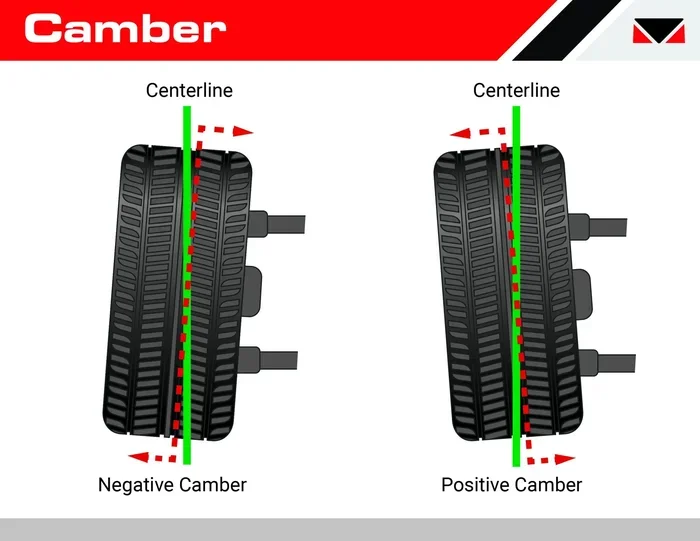
Let us start with the basics. Camber is the angle of your wheel when you look at it from the front or back of the car. If the top of the wheel tilts inward toward the car, that is called negative camber. If it tilts outward, that is positive camber. When everything is lined up perfectly, the wheel sits straight up and down. That is what we call zero camber.
Why does this tiny angle matter so much? Because it directly controls how much of your tire touches the road. The right camber alignment gives you even tire wear, stable handling, and a steering wheel that stays centered. When the camber is off, your tires work harder, wear faster, and your car feels wrong behind the wheel.
Most factory-built cars come with a slight negative camber. This setup helps with cornering grip and stability at highway speeds. But over time, bumps, potholes, and normal wear can shift that angle. When it shifts too far, you start seeing problems. The key is catching those problems early.
Think of your wheel camber like the posture of a person. Stand up straight and you feel balanced. Lean too far in one direction and your whole body compensates. Your car does the same thing. It adjusts steering, tire contact, and suspension load to deal with a bad camber angle. The longer you ignore it, the more damage builds up.
Understanding your camber angle gives you power. You can spot problems before they become expensive repairs. You can talk confidently with your mechanic. And you can keep your tires lasting longer, which saves real money over time.
Common Signs Your Camber Is Out of Alignment
Your car talks to you every day. You just have to know what to listen for. Here are the most common signs that your camber is out of alignment.
Uneven Tire Wear
This is the biggest red flag. Grab a flashlight and look at your tires. If the inside edge of the tread is worn down more than the outside, you likely have too much negative camber. If the outside edge is wearing faster, your camber may be too positive. This camber wear pattern shows up on one tire or all four, depending on the cause.
Uneven tire wear does not just mean you need new tires sooner. It also means your car is not handling the way it should. Every mile you drive on misaligned tires is a mile of wasted rubber and reduced safety.
Steering Wheel Pulls to One Side
Drive on a flat, straight road and let go of the steering wheel for a second. Does your car drift left or right? A vehicle pulling to one side is one of the most noticeable alignment symptoms. While toe and caster angles can also cause pulling, camber misalignment is a very common culprit.
Some drivers get used to this and never fix it. That is a mistake. A car that pulls to one side is harder to control, especially in emergencies or bad weather.
Steering Wheel Off-Center
When you drive straight, your steering wheel should sit level and centered. If it is tilted to one side, your wheel alignment is out of spec. This often goes hand in hand with camber issues. The steering wheel is your direct connection to the road, and when it feels wrong, something is wrong.
Poor Handling and Vibration
Does your car feel loose in turns? Do you feel vibrations through the steering wheel? A bad camber angle can make your suspension geometry work against you. The tire loses its optimal contact patch, and you feel it in the way the car responds to your inputs.
Some people describe this as a “wandering” feeling. The car does not track straight and feels unpredictable. This is especially dangerous at higher speeds or on wet roads.
Squealing Tires
Hear a high-pitched squeal when you turn? That is your tire scrubbing against the road at an odd angle. When the tire camber is off, the rubber does not sit flat on the pavement. It slides and squeals, especially in tight turns or parking maneuvers.
The Causes Behind Camber Misalignment
Camper does not go out of alignment on its own. Something causes it. Understanding the root cause helps you prevent future problems.
Potholes and Road Hazards
This is the number one cause of camber issues. Hitting a deep pothole, a curb, or a speed bump at speed can jolt your suspension out of position. The suspension components that control your camber angle can bend or shift. Even a single hard impact can change your wheel camber adjustment enough to cause problems.
Worn Suspension Parts
Your car relies on ball joints, control arms, bushings, and shocks to hold the correct camber angle. Over time, these parts wear out. When they do, the wheel shifts and your camber alignment drifts. This is especially common on older vehicles or cars with high mileage.
Aftermarket Modifications
Lowered suspensions, lifted trucks, and upgraded coilovers all change the geometry of your wheels. If the camber angle is not corrected after a modification, you will almost certainly see uneven tire wear and handling changes. Always get an alignment after modifying your ride height.
Accidents and Collisions
Even a minor fender bender can knock your wheels out of alignment. The force of an impact can bend control arms, shift subframes, and alter your suspension geometry in ways that are not always visible right away.
Normal Wear and Age
Let us be honest. Cars age. Rubber bushings harden. Metal fatigues. Over hundreds of thousands of miles, small changes in your alignment check readings add up. This is why regular alignment inspections matter, even if you have not hit anything dramatic.
How to Check Your Camber at Home
You cannot get a precise camber reading without professional equipment, but you can do some basic checks at home to spot obvious problems.
The Visual Tire Check
Look at your tires from the front of the car. Do they look perfectly straight up and down? Or does the top of the wheel lean inward or outward? A visible lean is a strong sign that your camber is out of alignment. Compare all four tires. If one stands out as tilted, that is your culprit.
The Tread Depth Test
Grab a ruler or a tread depth gauge. Measure the tread depth on the inside edge and the outside edge of each tire. If there is a difference of more than 2/32 of an inch, your camber is likely off. This simple tire inspection takes five minutes and can save you a lot of money.
The Coin Test
Insert a penny into the tread with Lincoln’s head pointing down. Check the inside and outside edges. If the wear patterns are clearly different between the two sides, you have a camber problem. This is not a precise measurement, but it gives you a strong clue.
Quick Tip: Check your tires once a month. Catching uneven wear early gives you the best chance to fix the camber alignment before the tires are ruined.
What Happens When You Ignore Camber Issues
It is tempting to ignore a slight pull or a little uneven wear. But the cost of ignoring camber problems adds up fast.
Premature Tire Replacement
This is the most immediate cost. A tire that wears unevenly on one edge will need replacement far sooner than it should. A set of tires is a significant investment, and bad camber can eat through them in half the expected lifespan.
Reduced Fuel Economy
When your tires are not rolling straight, they create more rolling resistance. Your engine works harder, and your fuel economy drops. Over months and years, this adds up to real money at the pump.
Suspension Damage
A bad camber angle puts extra stress on suspension components. Ball joints, tie rods, and control arms wear out faster. What starts as a simple alignment issue can turn into a costly suspension repair if left unchecked.
Safety Risks
Poor handling, unpredictable steering, and reduced traction are all safety hazards. In wet or icy conditions, a car with bad camber is harder to control. Your tires need full contact with the road to grip properly, and misaligned camber robs you of that grip.
How Mechanics Diagnose and Fix Camber Problems
When you take your car to a shop, the process is straightforward and worth every penny.
The Alignment Machine
Your mechanic places sensors on each wheel and runs the car through a series of measurements. The alignment machine reads your camber angle, toe angle, and caster angle with precision. It compares these readings to your vehicle manufacturer’s specifications and shows exactly where the problem lies.
The Adjustment Process
Fixing camber usually involves adjusting the control arms or camber bolts. On most cars, the mechanic turns an adjustment bolt to tilt the wheel back to the correct angle. This process is called a wheel camber adjustment and typically takes 30 to 60 minutes for a full four-wheel alignment.
How Much Does It Cost?
A standard four-wheel alignment costs between $75 and $200 depending on your location and vehicle type. Some shops offer lifetime alignment packages for a slightly higher upfront cost. This is money well spent, especially if you drive on rough roads regularly.
When to Get a Full Alignment vs. a Front-End Only
If only the front wheels are affected, a front-end alignment may be enough. But if you have hit a major pothole or been in an accident, a full four-wheel alignment is the safer choice. It checks all angles on all wheels and ensures your entire suspension geometry is correct.
Expert Insight: Always get your alignment checked after replacing any suspension part. Even a new control arm can shift your camber slightly during installation. A quick alignment check after any suspension work prevents future headaches.
Preventing Camber Misalignment
The best fix is the one you never need. Here is how to keep your camber alignment in great shape.
- Avoid potholes and curbs: I know this is not always possible, but slowing down before bumps and potholes reduces the impact on your suspension.
- Get regular alignment checks: Have your alignment check done at least once a year or every 10,000 to 12,000 miles.
- Check your tires monthly: A quick visual inspection catches uneven wear before it becomes a serious problem.
- Get alignments after suspension work: Any time you replace control arms, ball joints, shocks, or springs, get a fresh alignment.
- Drive smoothly: Aggressive driving over bumps and rough roads accelerates suspension wear and shifts your camber angle faster.
- Rotate your tires regularly: Tire rotation helps even out any minor wear differences and gives you a chance to spot camber issues early.
Key Takeaway: Your camber alignment affects everything from tire life to fuel economy to safety. A few simple habits and regular checks keep your wheels pointing the right way and your car driving its best.
Conclusion
Your car tells you when something is wrong. The trick is paying attention. Uneven tire wear, a pulling steering wheel, a tilted steering column, and squealing tires are all messages from your vehicle. They are asking for a camber alignment check.
Do not wait until the damage becomes expensive. A simple alignment check can reveal everything you need to know about your wheel camber and suspension geometry. Whether you catch the problem early through a home inspection or during a routine shop visit, fixing camber issues promptly keeps your tires lasting longer, your handling sharp, and your safety intact.
Take five minutes this week to look at your tires. Check the tread. See if the steering wheel sits straight when you drive on a flat road. If something looks off, book an alignment appointment. Your wallet, your tires, and your peace of mind will all thank you.
Keep your camber angle right, and your car will reward you with a smoother, safer, and more efficient ride for miles to come.
Frequently Asked Questions
Can I drive with bad camber alignment?
You can, but you should not for long. Driving with bad camber causes uneven tire wear, reduces handling, and can become a safety issue. The longer you drive on misaligned wheels, the more damage you do to your tires and suspension components.
How often should I check my camber alignment?
A good rule is to get a full alignment check once a year or every 10,000 to 12,000 miles. If you hit a pothole, curb, or get into any kind of accident, get it checked right away. Regular checks catch small problems before they turn into big expenses.
What is the difference between negative and positive camber?
Negative camber means the top of the wheel tilts inward toward the car. Positive camber means the top tilts outward. Most street cars run a slight negative camber for better cornering grip. Too much negative or positive camber causes uneven tire wear and poor handling.
Will a camber alignment fix my steering wheel pull?
In most cases, yes. A steering wheel that pulls to one side is often caused by camber misalignment. However, toe and caster angles can also contribute. A full four-wheel alignment checks all angles and addresses the root cause of the pull.
Can I adjust camber at home?
You can do a visual check at home, but precise adjustment requires an alignment machine and professional tools. Some aftermarket camber kits include adjustment bolts that let you tweak the angle yourself, but for most drivers, a trip to a qualified alignment shop is the safest and most accurate option.
Do new tires fix camber problems?
No. New tires will wear unevenly just as fast if the camber is still out of alignment. Always fix the alignment issue before putting on new tires. Otherwise, you are wasting money on tires that will not last.