Can You Register a Car Without a License in Your State
Yes, you can register a car without a license in most states, but the process depends on your situation and local laws. Whether you are buying a vehicle for a family member, managing an estate, or using a registered agent, understanding the rules saves time and money. This guide walks you through every step so you know exactly what to expect.
Key Takeaways
- You can register a car without a license: Most states allow vehicle registration even if you do not hold a driver’s license.
- You will need a co-signer or registered agent: Many DMV offices require a licensed individual to co-sign the registration application.
- Documentation is critical: Proof of ownership, insurance, and identification are essential regardless of your license status.
- State laws vary widely: Some states have specific rules for non-owner registration, so always check your local DMV requirements.
- Insurance is still mandatory: You must have car insurance even if you are not the licensed driver of the vehicle.
- Common mistakes delay the process: Missing documents or incorrect forms can cause significant delays at the DMV.
- Alternative options exist: Power of attorney and designated agents provide legal workarounds for registration without a license.
📑 Table of Contents
- Can You Register a Car Without a License?
- Documents You Will Need to Register a Car Without a License
- State-by-State Differences in Registration Rules
- Car Insurance Without a License: What You Need to Know
- Common Mistakes That Delay Registration
- Alternative Options for Registering a Vehicle
- Key Takeaways
- Conclusion
Can You Register a Car Without a License?
The short answer is yes. You can register a car without a license in most U.S. states. But the process is not always straightforward. The rules depend on your state, your reason for registering, and who will be driving the vehicle.
Many people assume that a driver’s license is a hard requirement for vehicle registration. That is not entirely true. While a license is needed to drive a car, it is not always needed to own and register one. This distinction matters a lot if you are helping a family member, managing property, or navigating a unique situation.
In this article, we will walk through every scenario, every document, and every tip you need to know. We will cover state-specific rules, common mistakes, and practical solutions. By the end, you will have a clear roadmap to register your vehicle the right way.
Let us dive in and break this down step by step.
Why Would Someone Register a Car Without a License?
There are many real-world reasons why a person without a license needs to register a car. Understanding these scenarios helps clarify the process.
- Family member is the driver: You own a car that your spouse, adult child, or other licensed family member will drive.
- You collect vehicles: Some people buy cars as investments or for restoration and do not plan to drive them.
- You are managing an estate: Executors may need to register vehicles left behind by a deceased family member.
- You have a disability: Some individuals cannot obtain a license due to medical reasons but still need vehicle access for a caregiver.
- You are a non-citizen: Visitors or temporary residents may need to register a vehicle they purchased locally.
- You use a registered agent: A third party handles registration and ownership on your behalf.
Each of these situations has a path forward. The key is knowing what your state requires and preparing the right paperwork ahead of time.
How Does Car Registration Work Without a License?
The basic process for registering a car without a license follows the same general steps as standard registration. But there are key differences you should know about.
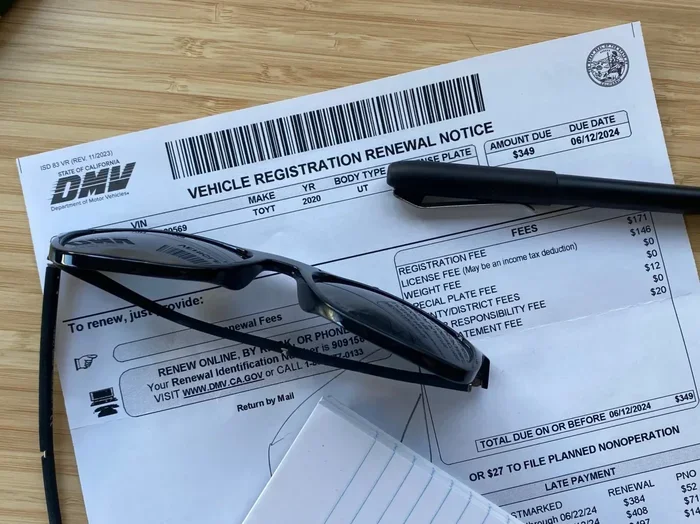
First, you must visit your local Department of Motor Vehicles or equivalent agency. Some states allow online or mail-in registration, which can simplify things. You will need to fill out the registration application form. Here is where it gets tricky.
Most DMV offices will ask for a licensed driver’s signature on the application. This person is often called a co-signer. The co-signer agrees to take responsibility if registration rules are violated. In some states, you can list a registered agent who handles the process on your behalf.
Second, you must provide proof of ownership. This usually means the vehicle title. If the title is in your name, you are good to go. If not, you will need a title transfer or a bill of sale.
Third, you must show proof of insurance. This is non-negotiable in nearly every state. Your insurance policy must meet the minimum coverage requirements set by your state.
Finally, you pay the registration fees. These vary by state and vehicle type. Let us look at what you typically need to bring to the DMV.
Documents You Will Need to Register a Car Without a License
Gathering the right documents before your DMV visit saves time and frustration. Here is a checklist of what most states require for vehicle registration without a driver’s license.
Proof of Ownership
This is the most important document. You need to prove you own the vehicle. Acceptable forms include:
- Vehicle title in your name
- Bill of sale if the title is being transferred
- Manufacturer’s certificate of origin for brand-new vehicles
- Previous registration documents showing ownership history
If the title has a lienholder listed, you may need a lien release letter before you can complete registration. This is a common stumbling block, so check this early.
Proof of Identity
Even without a driver’s license, you must prove who you are. Acceptable documents include:
- State-issued identification card
- Passport (U.S. or foreign)
- Birth certificate
- Permanent resident card
- Military identification
Each DMV has its own list of accepted IDs. Call ahead or check your state’s DMV website to confirm what they accept.
Proof of Insurance
You cannot register a car without insurance in almost every state. Your policy must be active before you visit the DMV. Bring:
- Insurance card or policy declaration page
- Agent contact information
- Policy number and effective dates
Some states now require electronic verification of insurance. In those cases, the DMV checks your policy through a state database. Still, carrying physical copies is a smart backup.
Vehicle Inspection and Emissions Documents
Many states require a vehicle inspection before registration. This may include:
- Safety inspection certificate
- Emissions test results
- Odometer reading for title transfer purposes
Not all states require these. But if yours does, failing to bring the documents means a return trip. Always check your state’s specific requirements before heading to the DMV.
Co-Signer or Agent Documentation
If you do not have a license, you will likely need a co-signer. This person must:
- Hold a valid driver’s license
- Be present at the DMV (in most cases)
- Provide their own identification
- Sign the registration application
For power of attorney arrangements, you will need a legal document naming the agent. This agent can then handle registration on your behalf. The rules for power of attorney vary by state, so consult your local DMV or an attorney if you go this route.
State-by-State Differences in Registration Rules
Every state has its own set of rules for registering a vehicle without a license. What works in California may not work in Texas. Here is a closer look at how different states handle this situation.
States That Allow Non-License Registration
Many states are relatively flexible. They allow individuals without a license to register a vehicle as long as all other requirements are met. These states include:
- California: Allows registration without a license. You need a co-signer and all standard documents.
- New York: Permits non-license holders to register vehicles with proper documentation and a co-signer.
- Florida: Accepts registration applications from unlicensed individuals with a licensed co-signer.
- Texas: Allows vehicle registration without a license, though insurance requirements are strict.
- Illinois: Permits registration with a valid state ID instead of a driver’s license.
States With Stricter Requirements
Some states make it harder to register a car without a license. They may require additional documentation or limit the process.
- Virginia: Requires a valid license or state ID. Non-license registration is possible but more complex.
- Georgia: The registered owner must typically hold a valid license. Exceptions exist for certain situations.
- Ohio: Requires a license or state ID for registration. Power of attorney is a workaround.
The table below summarizes the general approach several states take toward non-license vehicle registration.
| State | Registration Without License? | Co-Signer Required? | Alternative Option |
|---|---|---|---|
| California | Yes | Often yes | Registered agent |
| New York | Yes | Yes | Power of attorney |
| Florida | Yes | Yes | Registered agent |
| Texas | Yes | Sometimes | Title transfer with agent |
| Illinois | Yes | Sometimes | State ID accepted |
| Virginia | Limited | Yes | Power of attorney |
| Georgia | Difficult | Yes | Power of attorney |
| Ohio | Limited | Yes | Power of attorney |
This table is a general guide. Always verify current rules with your state’s DMV before visiting. Laws change, and specific circumstances can affect outcomes.
Quick Tips for Navigating State Rules
- Call your local DMV before you go. Ask specifically about registering a car without a license. Get the exact document list in writing.
- Check your state’s DMV website. Most states publish detailed guides online. Look for sections on “non-license registration” or “vehicle registration requirements.”
- Bring copies of everything. Original documents are best, but having photocopies or digital backups saves time if something gets lost.
- Ask about online or mail-in options. Some states let you complete registration remotely, which can bypass the need for a co-signer to be physically present.
Car Insurance Without a License: What You Need to Know
One of the biggest hurdles for people asking can you register a car without a license is insurance. Most insurance companies want to see a valid driver’s license before issuing a policy. But it is not impossible.
Here is how it works. You still need insurance to register the vehicle. Without it, the DMV will reject your application. So you must find an insurer willing to cover a vehicle when the owner does not hold a license.
Finding Insurance as a Non-License Holder
Not all insurance companies have the same policies. Some are happy to insure a vehicle for a non-license holder. Others refuse outright. Here are tips to help you find coverage:
- List a licensed driver on the policy. This is the most common solution. The licensed driver (a family member or co-owner) is listed as the primary driver.
- Shop around. Different insurers have different underwriting rules. Get quotes from at least three companies.
- Use an insurance broker. A broker can help you find companies that specialize in non-standard policies.
- Be honest on your application. Misrepresenting your license status can void your policy and lead to legal trouble.
Keep in mind that insurance rates may be higher for non-license holders. This is because insurers view the arrangement as slightly riskier. But the cost is worth the protection and the ability to complete registration.
Common Mistakes People Make With Insurance
Avoid these pitfalls when trying to insure a car without a license:
- Assuming any insurer will cover you. Many major companies have strict license requirements. Do not waste time on companies that will not work with your situation.
- Letting the policy lapse. A gap in coverage can delay registration and even result in fines.
- Forgetting to update the policy. If your situation changes, make sure your insurance reflects the current ownership and usage details.
Common Mistakes That Delay Registration
Even with the right documents, mistakes can slow down the car registration process significantly. Here are the most common errors people make when registering a vehicle without a license.
Missing or Incorrect Documents
This is the number one reason for delays. The DMV will not process your application if a document is missing, expired, or incorrect. Common omissions include:
- Unsigned title or bill of sale
- Outdated insurance cards
- Missing odometer statements
- Incomplete registration applications
Double-check every document before you visit the DMV. Make copies of everything you submit as well.
Not Having a Co-Signer Ready
If your state requires a co-signer and you show up without one, your visit will be wasted. Confirm the co-signer requirements ahead of time. Make sure your co-signer brings their own valid license and identification.
Using the Wrong Form
Some states have specific forms for non-license registration. Using the standard form can cause rejection. Ask the DMV which form you need before your appointment.
Ignoring Fees and Payment Methods
Registration fees vary by state and vehicle type. Some DMVs do not accept credit cards. Others require exact cash amounts. Call ahead to confirm fees and acceptable payment methods.
Expert Insight: Why Preparation Matters
According to DMV professionals, the most successful registration experiences come from thorough preparation. “The people who succeed are the ones who call ahead, gather every document, and arrive ready,” says one veteran DMV office manager. “Those who walk in without checking requirements almost always need a second visit.”
Alternative Options for Registering a Vehicle
If the standard path does not work for your situation, there are alternative options available. These can help you complete vehicle registration without a driver’s license legally and efficiently.
Power of Attorney for Vehicle Registration
A power of attorney (POA) is a legal document that gives someone else the authority to act on your behalf. For vehicle registration, a POA allows a trusted person to handle the process at the DMV for you.
To use this option:
- Draft a power of attorney document specific to vehicle registration.
- Have it notarized if your state requires it.
- Give the document to your appointed agent.
- Your agent visits the DMV with all required documents and the POA.
This is a powerful tool for people who cannot visit the DMV themselves. It is also useful for those who want to keep the process private or handle it remotely.
Using a Registered Agent
A registered agent is a third party authorized to handle vehicle-related matters. This is different from a power of attorney in that the agent may have ongoing authority for multiple transactions.
Registered agents are commonly used by:
- Business owners who fleet vehicles
- Non-residents who own property in a state
- Individuals with mobility limitations
Make sure any agent you use is reputable and legally authorized. Check your state’s rules for registered agents in vehicle registration.
Registering a Car in Someone Else’s Name
Some people choose to put the vehicle title in a licensed family member’s name. This person becomes the registered owner. You can still use the vehicle, but legal ownership belongs to the titleholder.
This approach has risks. The titleholder is legally responsible for the vehicle. This includes liability in accidents and compliance with state registration rules. Make sure all parties understand the implications before going this route.
Buying a Car Without a License
You can also buy a car without a license. The purchase and the registration are separate processes. You can legally buy a vehicle as a non-license holder. The challenge comes in registering and insuring it afterward.
When buying without a license:
- Use a bill of sale to document the transaction
- Arrange financing in your name if needed (some lenders require a license)
- Plan for registration and insurance before taking possession
Having a clear plan before purchase prevents headaches later.
Key Takeaways
- You can register a car without a license: Most states allow it with the right documentation and a co-signer or agent.
- Gather all documents first: Proof of ownership, identity, insurance, and inspection certificates are essential.
- State rules vary: Check your local DMV website or call ahead to confirm specific requirements.
- Insurance is mandatory: You must have an active policy even if you do not hold a driver’s license.
- Avoid common mistakes: Missing documents, wrong forms, and lack of a co-signer are the top reasons for delays.
- Alternative options exist: Power of attorney, registered agents, and title transfer to a licensed person provide workable solutions.
- Preparation is everything: The more organized you are before visiting the DMV, the smoother the process will be.
Conclusion
Can you register a car without a license? Yes, you can. The process requires more preparation than standard registration, but it is absolutely doable. Whether you are registering a vehicle for a family member, managing an estate, or navigating a personal situation, the path forward exists.
The most important steps are knowing your state’s rules, gathering the right documents, securing insurance, and having a co-signer or agent ready. Avoid the common mistakes that delay the process, and you will save yourself time and frustration.
Take action today. Call your local DMV, gather your documents, and start the process. With the right preparation, you can get your vehicle registered and on the road the right way.
Remember, every state is different. What works in one state may not work in another. Always verify current requirements before you begin. The information in this guide gives you a strong foundation, but your local DMV is the final authority on all registration matters.
Frequently Asked Questions
Can I register a car in my name if I don’t have a driver’s license?
Yes, in most states you can register a car in your name without a driver’s license. You will typically need a co-signer who holds a valid license, along with proof of ownership, identity, and insurance. Check your state’s DMV for specific requirements.
Do I need car insurance if I don’t have a license?
Yes, car insurance is required in nearly every state regardless of whether you hold a driver’s license. You must have an active policy to complete vehicle registration. Look for insurers that offer policies for non-license holders.
Can I use power of attorney to register a car for someone else?
Yes, a power of attorney allows a designated agent to handle vehicle registration on your behalf. The agent visits the DMV with the POA document and all required paperwork. Make sure your POA is specific to vehicle registration and properly notarized if required by your state.
What happens if I try to register a car without a license and get rejected?
A rejection usually means a document is missing or incorrect. Common reasons include incomplete applications, expired insurance, or lack of a required co-signer. Review the rejection notice, fix the issue, and try again. Calling the DMV beforehand can help you avoid this.
Is it legal to buy a car without a driver’s license?
Yes, it is legal to purchase a vehicle without a driver’s license. The buying process and the registration process are separate. However, you will still need to register and insure the vehicle, which requires meeting your state’s specific requirements for non-license holders.
How much does it cost to register a car without a license?
Registration fees are the same whether you have a license or not. Fees vary by state, vehicle type, and value. Expect to pay anywhere from $50 to several hundred dollars. Some states also charge additional fees for title transfers or late registration.