Can I Drive With My TRAC Off Heres What You Should Know
Yes, you can drive with TRAC off in certain situations, but it is not always safe. The TRAC system, found in Toyota and Lexus vehicles, helps prevent wheel slippage during slippery conditions. Turning it off can help when you are stuck in snow or mud, but driving with TRAC off on dry roads reduces your safety. Always check the TRAC off light on your dashboard and understand what it means before you hit the road.
Have you ever been driving and noticed a light on your dashboard that says TRAC off? It can feel confusing and a little scary. You might wonder if your car is broken or if it is safe to keep driving.
The good news is that you can drive with TRAC off in most cases. But there are important things you need to know first. TRAC is a safety feature, and turning it off changes how your car handles the road.
This guide will walk you through everything you need to know about the TRAC off light. We will cover what TRAC means, when it is safe to turn it off, what causes the light to stay on, and how to fix common problems. By the end, you will feel confident about what that little light on your dash is trying to tell you.
Key Takeaways
- TRAC stands for Traction Control: It is a safety system that stops your wheels from spinning on slippery surfaces.
- You can drive with TRAC off temporarily: It is useful when stuck in snow, mud, or sand.
- The TRAC off light on your dash means the system is disabled: It could be a manual switch or a warning of a fault.
- Driving with TRAC off on normal roads is risky: You lose stability control and are more likely to slide.
- A persistent TRAC off light may signal a deeper problem: Check engine faults, bad wheel sensors, or low brake fluid could be the cause.
- Resetting TRAC is often simple: Press the button again or fix the underlying issue to turn the light off.
- Always re-enable TRAC when conditions improve: Your safety depends on this system working properly.
- What Does TRAC Off Mean on Your Toyota?
- Can You Actually Drive With TRAC Off?
- What Happens When TRAC Is Off? A Closer Look
- Why Is the TRAC Off Light Staying On?
- Common Mistakes People Make With TRAC Off
- How to Fix TRAC Off Issues
- TRAC Off in Different Driving Conditions
- Expert Tips for TRAC Off Driving Safety
- TRAC Off and the Check Engine Light Connection
- How to Maintain Your TRAC System
- Key Takeaways
📑 Table of Contents
What Does TRAC Off Mean on Your Toyota?
TRAC stands for Traction Control. It is a system built into Toyota and Lexus vehicles. The job of traction control is to keep your wheels from spinning when the road is slippery. If one wheel starts to slip, the system slows it down automatically. This helps you stay in control.
The TRAC off button is usually found on the left side of the steering wheel. When you press it, you turn off the traction control system. A light will appear on your dashboard to let you know the system is off.
TRAC works closely with another system called Vehicle Stability Control (VSC). Together, these systems help your car grip the road. They use sensors to check each wheel. If a wheel starts to lose traction, the system applies the brakes to that wheel. This keeps you from sliding.
How TRAC and VSC Work Together
TRAC and VSC are like best friends. They share the same goal: keeping you safe. TRAC focuses on stopping wheel spin. VSC helps you stay on your intended path. When you press the TRAC off button, you usually disable both systems. This is important to remember because it affects your car’s overall stability.
Some Toyota models let you turn off TRAC while keeping VSC active. Check your owner’s manual to see how your specific model works. The traction control system uses the same sensors as the ABS (Anti-lock Braking System). If your ABS has a problem, it can also affect TRAC.
Can You Actually Drive With TRAC Off?
The short answer is yes. You can drive with TRAC off. Your car will still run normally. The engine will work the same way. The brakes will still function. But you lose the extra safety net that TRAC provides.
When TRAC is off, your wheels can spin freely. On a dry road, this is not a big deal. But on a wet or icy road, spinning wheels can cause you to lose control. This is why it is important to understand when it is okay to turn TRAC off and when it is not.
When It Is Safe to Drive With TRAC Off
There are a few situations where turning off TRAC makes sense. Here are the most common ones:
- You are stuck in snow or mud: When your wheels spin and dig deeper, turning off TRAC can help. The wheels will spin faster, which may give you enough grip to get unstuck.
- You are driving on loose gravel: TRAC can sometimes slow you down too much on gravel. Turning it off lets the wheels spin more naturally.
- You are going up a steep icy hill: Some drivers turn off TRAC to let the wheels spin just enough to climb the hill.
- You are performing a hill start in deep snow: A little wheel spin can help you get moving without getting stuck.
In all of these cases, you should only turn TRAC off for a short time. Once you are free or the road improves, turn TRAC back on right away.
When You Should NOT Drive With TRAC Off
There are plenty of times when you should keep TRAC on. Here are the most important ones:
- On wet or icy highways: TRAC helps you maintain control at high speeds. Without it, you are much more likely to slide.
- During heavy rain: Wet roads are slippery. TRAC helps prevent hydroplaning by managing wheel spin.
- In city traffic: Stop-and-go driving on wet pavement benefits greatly from traction control.
- When carrying a heavy load: Extra weight changes how your car handles. TRAC helps compensate for that.
- When you are a new or inexperienced driver: TRAC adds a layer of protection that can help you stay safe while you build your driving skills.
Think of TRAC as your car’s safety helper. You can turn it off when you need to, but you should always turn it back on when the road is normal.
What Happens When TRAC Is Off? A Closer Look
When you drive with TRAC off, your car behaves differently. Understanding these changes helps you drive more safely.
Changes in Vehicle Handling
With TRAC off, your wheels can spin without any intervention from the system. On a slippery surface, this means your car might slide more easily. You might feel the back end swing out during a turn. This is called oversteer.
On dry roads, the difference is very small. You might not even notice. But on a wet road, the difference is huge. Your stopping distance might increase. Your ability to corner safely might decrease.
Impact on Braking and Stability
TRAC works with your ABS system to manage braking. When TRAC is off, ABS still works. So you can still brake hard without the wheels locking up. But you lose the extra help that TRAC provides during acceleration.
The electronic stability control system also steps down when TRAC is off. This means your car is less able to correct itself if you start to skid. You become the main system keeping the car stable.
Fuel Economy and TRAC Off
Some people wonder if turning off TRAC saves fuel. The truth is, the difference is tiny. TRAC uses very little power when it is active. You are not likely to notice any change in fuel economy whether TRAC is on or off.
Why Is the TRAC Off Light Staying On?
Sometimes the TRAC off light stays on even when you did not press the button. This can mean something is wrong with your car. Let us look at the most common reasons.
Common Causes of a Persistent TRAC Off Light
A TRAC off light that stays on is often a warning sign. Here are the most common reasons:
- You accidentally pressed the TRAC off button: This sounds simple, but it happens to everyone. Check if the light is on and press the button again to reset it.
- A faulty wheel speed sensor: TRAC relies on wheel speed sensors to work. If one sensor fails, the system may shut off and trigger the light.
- Low brake fluid: TRAC uses the braking system. Low brake fluid can cause the TRAC light to come on.
- ABS system malfunction: Since TRAC and ABS share components, an ABS problem can trigger the TRAC light too.
- A problem with the steering angle sensor: This sensor helps VSC and TRAC know which direction you are steering. If it fails, the systems may disable themselves.
- Wiring or electrical issues: Damaged wiring to the TRAC system can cause the light to stay on.
- Check engine light is also on: If you see both the check engine light and the TRAC off light, there may be an engine or emissions problem affecting TRAC.
Understanding Dashboard Warning Lights
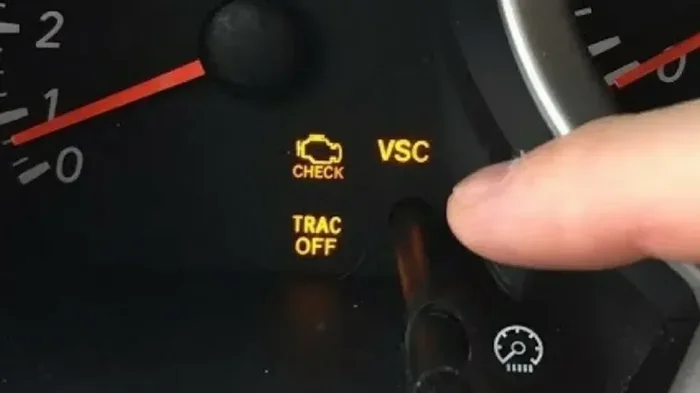
Your Toyota dashboard has many warning lights. It can be hard to tell them all apart. The TRAC off light usually looks like a car with squiggly lines behind it. It may also say “TRAC OFF” in text.
If the light is steady, it usually means TRAC is manually turned off. If the light flashes, it often means there is a system fault. A flashing TRAC light needs your attention right away.
Here is a simple way to remember it:
- Steady TRAC off light: The system is manually disabled. Press the button to turn it back on.
- Flashing TRAC off light: There is a fault in the system. Get it checked by a mechanic.
- TRAC off light with check engine light: There is likely a sensor or electrical issue. Use an OBD-II scanner to read the fault codes.
How to Reset the TRAC Off Light
If you accidentally turned TRAC off, resetting it is easy:
- Press the TRAC off button on the steering wheel.
- Hold it for a few seconds.
- The TRAC off light should turn off.
- The system will reactivate automatically.
If the light does not turn off after pressing the button, there is likely a deeper issue. In that case, you should have the car inspected.
Common Mistakes People Make With TRAC Off
There are some mistakes drivers make when dealing with TRAC. Avoiding these can keep you safe and save you money.
Mistake 1: Leaving TRAC Off for Too Long
The most common mistake is forgetting to turn TRAC back on. You turn it off to get unstuck in snow, and then you drive for miles with it still off. This leaves you without an important safety system on roads that may suddenly become slippery.
Fix: Make it a habit to check your dashboard lights every time you start driving. If TRAC is off and the road is clear, turn it back on.
Mistake 2: Ignoring a Flashing TRAC Light
Some drivers see a flashing TRAC light and decide to just ignore it. They assume the car will still drive fine. While the car will run, you are losing a critical safety feature.
Fix: If the TRAC light flashes or stays on, get the car checked. Use an OBD-II scanner to read any fault codes. Common codes related to TRAC issues include codes for wheel speed sensors, ABS module faults, and VSC system errors.
Mistake 3: Turning Off TRAC on the Highway
Some drivers turn off TRAC on the highway because they think it improves performance. This is a dangerous mistake. Highways have unpredictable conditions. Rain, oil slicks, and debris can all make the road slippery without warning.
Fix: Keep TRAC on at all times when driving on highways or high-speed roads. The safety benefits far outweigh any tiny performance gain.
Mistake 4: Confusing TRAC Off with a Bigger Problem
Not every TRAC off light means something is broken. Sometimes it is just a button press. But sometimes it does mean a real problem. Knowing the difference saves you from panic or, worse, ignoring a real issue.
Fix: If you did not press the button and the light is on, do not ignore it. Check for other warning lights. Look for signs of low brake fluid or ABS problems. When in doubt, visit a mechanic.
How to Fix TRAC Off Issues
If your TRAC off light is on and you did not press the button, here are steps you can take to fix the problem.
Step 1: Check the TRAC Off Button
Start with the simplest fix. Press the TRAC off button. Sometimes the button sticks or gets pressed accidentally. A simple press can turn the system back on and clear the light.
Step 2: Check Your Brake Fluid
Low brake fluid can trigger the TRAC off light. Open the hood and check the brake fluid reservoir. It is usually located near the back of the engine bay on the driver’s side. If the fluid is low, top it off with the type recommended in your owner’s manual.
Step 3: Inspect the Wheel Speed Sensors
Wheel speed sensors are small devices near each wheel. They send speed data to the TRAC and ABS systems. If one sensor is dirty or damaged, the system may not work properly. Cleaning the sensors or replacing them is often an affordable fix.
Step 4: Use an OBD-II Scanner
An OBD-II scanner is a handy tool for any car owner. You plug it into a port under your steering column. The scanner reads fault codes stored in your car’s computer. These codes tell you exactly what is wrong with the TRAC system.
Common fault codes related to TRAC include:
- C0035-C0050: Wheel speed sensor circuit issues
- C0040: Left front wheel speed sensor malfunction
- C1201: Engine power output problem affecting VSC
- C1234: VSC system fault
Step 5: Check for Wiring Issues
Sometimes the problem is a loose or corroded wire. Inspect the wiring harness near the wheels and under the car. Look for frayed wires, loose connectors, or corrosion. Fixing a wiring issue can often clear the TRAC off light for good.
Step 6: Visit a Professional Mechanic
If none of the steps above fix the problem, it is time to see a professional. A certified mechanic can run a full diagnostic on the TRAC, VSC, and ABS systems. They have the tools and expertise to find and fix complex issues.
TRAC Off in Different Driving Conditions
Different driving conditions call for different TRAC settings. Here is a quick guide to help you decide when to turn TRAC on or off.
| Driving Condition | TRAC On or Off? | Why? |
|---|---|---|
| Dry highway | ON | TRAC helps maintain stability at high speeds |
| Wet roads | ON | Prevents wheel spin and hydroplaning |
| Ice or snow | OFF (temporarily) | Allows wheel spin to help you get unstuck |
| Loose gravel or dirt | OFF (temporarily) | Prevents TRAC from cutting engine power too early |
| City driving in rain | ON | Keeps you stable during stop-and-go traffic |
| Deep snow (stuck) | OFF | Allows wheels to spin and dig out |
| Normal dry roads | ON | TRAC provides maximum safety and stability |
This table gives you a quick reference. Always use your best judgment. If you feel the car sliding or losing grip, turn TRAC on immediately.
Expert Tips for TRAC Off Driving Safety
Here are some practical tips from experienced drivers and automotive experts:
- Keep the owner’s manual in your glove box: It has specific instructions for your model. If you are unsure about a warning light, the manual can help.
- Do a quick dashboard check every time you start the car: Take two seconds to look at the lights on your dash. This builds a habit of awareness.
- Drive slower when TRAC is off: Without traction control, your wheels can spin more easily. Reduce your speed to compensate.
- Increase following distance: When TRAC is off, your braking distance may increase. Leave more space between you and the car ahead.
- Keep an OBD-II scanner in your trunk: It is a small investment that can save you hundreds of dollars in diagnostic fees at the mechanic.
- Do not rely on TRAC off to fix bad tires: Worn or bald tires are dangerous in any condition. TRAC off does not replace good tires.
Remember, the TRAC system is there to protect you. It is designed to help you stay safe. Turning it off is a tool for specific situations, not a permanent fix.
TRAC Off and the Check Engine Light Connection
Many car owners notice that when the TRAC off light comes on, the check engine light follows. This is not a coincidence. TRAC, VSC, and the engine control module all share data through the same network.
When there is a fault in one system, it can trigger warnings in another. For example, a bad wheel speed sensor can cause the TRAC light to come on. The same fault might also trigger the check engine light because the car’s computer sees an issue with the stability system.
If both lights are on, the problem is likely related to a shared component like a wheel speed sensor, ABS module, or steering angle sensor. Addressing the root cause will usually clear both lights.
Using an OBD-II scanner is the best first step. The scanner will show you the fault codes. From there, you can determine whether it is a simple fix or something that needs professional attention.
How to Maintain Your TRAC System
Like any system in your car, TRAC needs regular maintenance to work properly. Here are a few simple steps you can take:
- Keep your brakes in good shape: The TRAC system uses your brakes. Worn brake pads or low brake fluid can affect how TRAC performs.
- Clean the wheel speed sensors: Dirt and road grime can build up on the sensors. A quick wipe-down during routine car washes can help.
- Check tire pressure regularly: Uneven tire pressure can confuse the TRAC sensors. Keep all tires at the pressure recommended by Toyota.
- Replace worn tires promptly: Bald tires reduce traction and make the TRAC system work harder. Good tires are the foundation of a good TRAC system.
- Get regular diagnostic checks: During oil changes or routine service, ask the mechanic to check the TRAC and ABS systems.
Taking care of your TRAC system means taking care of your safety. A well-maintained TRAC system can make a real difference in an emergency.
Key Takeaways
- TRAC is a safety system: It prevents wheel spin and helps you stay in control on slippery roads.
- You can drive with TRAC off temporarily: It is useful in snow, mud, and loose gravel. But turn it back on when conditions improve.
- The TRAC off light means the system is disabled: It could be manual or a sign of a fault. Learn to tell the difference.
- A persistent TRAC off light needs attention: Common causes include bad wheel speed sensors, low brake fluid, and ABS issues.
- Resetting TRAC is often simple: Try pressing the button again or checking the brake fluid first.
- Always keep TRAC on for normal driving: It is one of the most important safety features in your Toyota.
- Use an OBD-II scanner for diagnostics: It helps you understand fault codes and decide if a problem is minor or serious.
Frequently Asked Questions
Is it safe to drive with TRAC off on the highway?
No, it is not safe to drive with TRAC off on the highway. High-speed driving requires maximum stability. Without TRAC, your wheels can spin unexpectedly on wet or uneven pavement, which can cause you to lose control. Always keep TRAC on when driving at high speeds or on highways.
What does the TRAC off light look like on a Toyota dashboard?
The TRAC off light usually looks like a car icon with wavy lines behind it, or it may simply display the text “TRAC OFF.” If the light is steady, TRAC is manually turned off. If it is flashing, there is likely a system fault that needs attention.
Can a dead battery cause the TRAC off light to come on?
Yes, a dead or weak battery can cause the TRAC off light to come on. When the battery voltage drops, the car’s computer may lose its calibration and trigger warning lights. Jump-starting the car or replacing the battery often clears the light. If it stays on, there may be a separate issue.
How do I know if my TRAC system is working properly?
The best way to check is to start the car and make sure the TRAC off light turns off after a few seconds. If the light stays on, the system may be disabled or faulty. You can also use an OBD-II scanner to check for fault codes related to the TRAC and VSC systems.
Does turning off TRAC save fuel?
No, turning off TRAC does not meaningfully save fuel. The TRAC system uses very little power when active. Any fuel savings from turning it off are negligible. The safety trade-off is not worth it for normal driving conditions.
Can I drive my Toyota with the TRAC off light and check engine light both on?
You can drive a short distance, but you should get the car checked as soon as possible. Both lights together usually point to a shared fault like a bad wheel speed sensor or ABS module issue. Continuing to drive without fixing the problem can reduce your safety and lead to more expensive repairs.
=== CONCLUSION ===
Driving with TRAC off is something many Toyota and Lexus owners do at some point. Whether you are stuck in snow or navigating a loose gravel road, turning off TRAC can help you get through tough spots. But it is important to understand what you are doing and when to turn the system back on.
The TRAC off light on your dashboard is your car’s way of telling you something. Sometimes it means you simply pressed the button. Other times, it means there is a real problem that needs fixing. Learning to read that light is one of the best things you can do as a car owner.
Always keep TRAC on for normal driving. Use it as a safety net. Only turn it off when you have a clear reason, and turn it back on as soon as you can. If the light stays on, do not ignore it. Check the simple things first, like the button and brake fluid. Use an OBD-II scanner to read fault codes. And if you cannot fix it yourself, visit a trusted mechanic.
TRAC is there to protect you. Treat it with respect, keep it maintained, and it will help keep you safe on the road for years to come.