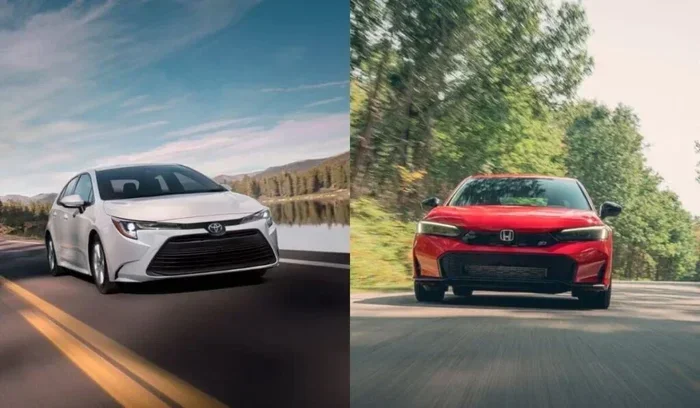
Are Corollas Cheaper Than Civics for Everyday Driving
Are Corollas cheaper than Civics for everyday driving? The answer depends on several factors, including purchase price, fuel costs, maintenance, and long-term ownership expenses. Both the Toyota Corolla and Honda Civic are popular compact sedans known for reliability and fuel efficiency. This article breaks down every cost category to help you make a smart budget car decision.
When you are shopping for a reliable compact sedan, two names almost always come up: the Toyota Corolla and the Honda Civic. These cars have dominated the economy car segment for decades, and for good reason. They are dependable, efficient, and affordable. But here is the question that keeps coming up in car forums and dealerships alike: are Corollas cheaper than Civics for everyday driving?
The answer is not as simple as a yes or no. The purchase price might favor one model, but what about fuel costs, maintenance costs, insurance, and resale value? When you look at the full picture of car ownership, the numbers can surprise you. This car buying guide walks through every major expense category so you can make a confident decision based on real numbers, not just brand loyalty.
Whether you are a first-time car buyer or looking to replace your current daily driver, understanding the true cost difference between these two models matters. Let us dive into the details and find out which one saves you more money over time.
Key Takeaways
- Lower Purchase Price: The Corolla often has a slightly lower starting price than the Civic, making it attractive for budget-conscious buyers.
- Fuel Savings Add Up: Both cars deliver excellent fuel efficiency, but small differences can save you hundreds per year.
- Maintenance Costs Matter: The Toyota Corolla tends to have slightly lower repair costs over time, boosting long-term savings.
- Insurance Rates Vary: Your location and driving history play a big role, but both models generally fall in the affordable range.
- Resale Value Is Strong for Both: The Corolla and Civic hold their value well, which matters when it is time to sell or trade in.
- Total Cost of Ownership: When you add everything up, the Corolla often edges out the Civic as the more affordable daily commuter.
📑 Table of Contents
Purchase Price: Which Car Costs Less Upfront?
The first thing most people check when comparing cars is the sticker price. And when it comes to the purchase price, the Toyota Corolla often has a slight edge over the Honda Civic. But the gap is not huge, and it depends on the trim level and model year you are looking at.
New Model Pricing
When you walk onto a dealership lot, the base Toyota Corolla typically starts around $21,000 to $23,000 depending on the year and trim. The Honda Civic base model usually starts a few hundred dollars higher, often in the $22,000 to $24,000 range. For buyers on a tight budget, that difference can matter.
But here is the catch. The Corolla’s lower starting price applies mainly to the base trims. Once you start adding features like a sunroof, upgraded infotainment, or all-wheel drive, the price gap narrows quickly. Both brands offer mid-range trims that sit at similar price points. So if you want a well-equipped affordable sedan, you might not save much by choosing one over the other.
Used Market Value
The used car market tells a slightly different story. Both the Corolla and Civic are among the most sold cars in the world, which means there is a huge supply of used models. This abundance keeps prices competitive. In general, a three-year-old Toyota Corolla and a three-year-old Honda Civic sell for roughly similar prices, with the Corolla sometimes listing for a few hundred dollars less.
One thing to watch for is the specific trim and mileage. A well-maintained Civic Si or Corolla SE might hold its value better than a base model of the other. Always check the vehicle history report and get a pre-purchase inspection before buying any used car. These steps protect your investment and help you avoid hidden repair costs down the road.
Fuel Efficiency and Daily Driving Costs
For most people, the car sitting in their driveway is a daily commuter. You drive it to work, to the grocery store, and around town. That means fuel efficiency plays a huge role in your monthly budget. Both the Corolla and Civic are known for excellent gas mileage, but let us break down the real numbers.
Real-World MPG Comparison
The base Toyota Corolla with its standard four-cylinder engine delivers around 31 miles per gallon in the city and 40 mpg on the highway. The Honda Civic with its base engine is similar, offering about 32 mpg city and 42 mpg highway. On paper, the Civic has a slight advantage in highway fuel economy.
But in real-world driving, the difference is tiny. If you commute 30 miles each way, five days a week, you will spend roughly $1,200 to $1,500 per year on gas with either car, depending on fuel prices in your area. Over five years of ownership, that adds up to $6,000 to $7,500 in fuel costs. The total cost of fuel is so similar between these two models that it probably will not be a deciding factor.
Now, if you consider the hybrid versions, things change. The Toyota Corolla Hybrid delivers an impressive 52 mpg combined, while the Honda Civic does not offer a hybrid powertrain in most markets. If fuel efficiency is your top priority and you plan to keep the car for a long time, the Corolla Hybrid could save you real money over several years.
Quick Tip: Maximize Your Fuel Savings
- Keep your tires properly inflated. Underinflated tires reduce fuel efficiency by up to 3%.
- Avoid aggressive acceleration and hard braking.
- Use cruise control on highway drives to maintain a steady speed.
- Remove excess weight from your trunk to reduce engine load.
- Stick to the recommended maintenance schedule for optimal engine performance.
Maintenance and Repair Costs
This is where the comparison gets interesting. Maintenance costs and repair costs can vary significantly between two cars, even if they are both compact sedans. When you own a car for 10 or 15 years, these expenses add up fast.
Scheduled Maintenance
Both the Toyota Corolla and Honda Civic have similar maintenance schedules. Oil changes every 5,000 to 7,500 miles, tire rotations every 5,000 to 7,500 miles, and major service intervals at 30,000, 60,000, and 90,000 miles. The cost for a basic oil change ranges from $40 to $70 at most independent shops for either car.
However, Toyota parts are often slightly less expensive than Honda parts, especially for brake pads, filters, and common wear items. Over a 10-year ownership period, this small difference can add up to a few hundred dollars in savings with the Toyota Corolla.
Common Issues and Reliability
Both cars have strong reliability ratings from Consumer Reports and J.D. Power. The Toyota Corolla has a slight reputation edge in long-term dependability, partly because it is one of the best-selling cars in history and Toyota has had decades to refine the design. Common issues on older Corollas include minor electrical gremlins and occasional exhaust leaks, but these are generally inexpensive to fix.
The Honda Civic is also extremely reliable. Some older models have had issues with the ignition switch or fuel pump, but these are well-documented and covered by recalls when applicable. Overall, both cars are solid choices for car ownership with minimal headaches.
Common Mistakes That Increase Maintenance Costs
- Skipping oil changes or extending intervals beyond the manufacturer’s recommendation.
- Ignoring warning lights on the dashboard, even if the car seems to run fine.
- Using low-quality parts or fluids to save money short-term.
- Driving with worn brake pads or tires, which causes damage to other components.
- Neglecting seasonal maintenance like coolant flushes and transmission fluid changes.
Staying on top of regular maintenance is the best way to keep repair costs low for either car. A well-maintained Corolla or Civic can easily go 200,000 miles or more with proper care.
Insurance Rates and Ownership Expenses
Insurance is one of the most overlooked costs of car ownership. Many buyers focus on the purchase price and forget to factor in how much they will pay each month to insure their vehicle. Both the Toyota Corolla and Honda Civic are considered low-risk vehicles by most insurance companies, which is good news for your wallet.
The insurance rates for both models tend to fall in the affordable range. The Corolla’s strong safety ratings and the Civic’s reputation for being a sensible family car both help keep premiums lower. However, your personal insurance rates will depend heavily on your age, driving record, location, and coverage level.
On average, you can expect to pay between $1,200 and $1,800 per year to insure either a Corolla or a Civic. The difference between the two is usually less than $100 per year. If you are financing your car, your lender may require full coverage, which will increase your premium regardless of which model you choose.
One tip that can help you save money on insurance is to bundle your auto policy with your home or renters insurance. Many providers offer multi-policy discounts that can reduce your annual premium by 10% to 20%. This applies whether you drive a Corolla or a Civic.
Resale Value and Long-Term Savings
When you think about the total cost of owning a car, resale value is a huge factor. A car that holds its value better means you lose less money when you sell or trade it in. Both the Toyota Corolla and Honda Civic are known for strong resale value, but which one comes out ahead?
According to industry data, the Toyota Corolla tends to hold its value slightly better than the Honda Civic over a five-year period. After five years, a Corolla might retain about 60% to 65% of its original value, while a Civic might retain 55% to 60%. That difference might amount to $500 to $1,000 at resale, which is nothing to sneeze at.
The reason for the Corolla’s slight resale advantage comes down to brand perception and market demand. Toyota has built a reputation for building cars that last, and that reputation translates into stronger used car demand. The Civic is also a highly desirable used car, but the Corolla’s global popularity gives it a broader buyer pool.
For buyers who plan to keep their car for many years, the resale difference matters less. If you drive your car until it is worn out, the long-term savings come from lower maintenance and fuel costs rather than resale value. But if you like to upgrade every few years, the Corolla’s stronger resale can help offset the cost of your next vehicle.
Which Car Is Right for You?
So, are Corollas cheaper than Civics for everyday driving? The honest answer is that it depends on your priorities and driving habits. Both cars are excellent choices in the compact sedan segment, and both offer strong value for the money.
If your top priority is the lowest possible purchase price and you want a car with a proven track record for reliability, the Toyota Corolla is likely your best bet. It offers a slightly lower upfront cost, marginally cheaper maintenance, and better resale value. For a daily commuter who wants to minimize total cost of ownership, the Corolla is hard to beat.
On the other hand, if you value a slightly sportier driving feel and better highway fuel economy in the base model, the Honda Civic might be the better fit. The Civic has a more engaging driving experience, which matters if you enjoy being behind the wheel. It also has a strong reliability rating and holds up well over time.
Here are a few things to consider before making your final decision:
- Your budget for the upfront purchase and monthly payments.
- Your average daily driving distance and fuel costs in your area.
- Your plans for how long you will keep the car.
- Your insurance costs based on your personal profile.
- Your preference for features, driving feel, and interior comfort.
At the end of the day, both the Corolla and the Civic are budget cars that deliver excellent value. You cannot go wrong with either choice. The best approach is to test drive both models, compare the specific prices at dealerships in your area, and crunch the numbers based on your personal driving habits. That way, you will make a decision you feel confident about for years to come.
The Toyota Corolla and Honda Civic have earned their spots as two of the best-selling cars in the world for a reason. They are practical, reliable, and affordable. Whether you choose the Corolla or the Civic, you are getting a solid economy car that will serve you well as a daily commuter and beyond. Focus on keeping the car well-maintained, drive safely, and enjoy the savings that come with owning one of these proven compact sedans.
Frequently Asked Questions
Is the Toyota Corolla really cheaper to own than the Honda Civic?
In most cases, yes. The Corolla typically has a slightly lower purchase price, marginally cheaper maintenance costs, and better resale value. Over a five-to-ten-year ownership period, these small savings can add up to a few hundred or even a few thousand dollars. However, your actual cost of ownership will depend on your driving habits, location, and how well you maintain the vehicle.
Which car has better fuel economy, the Corolla or the Civic?
The base models are very close in fuel efficiency, with the Civic offering slightly better highway MPG. However, the Toyota Corolla Hybrid significantly outperforms both in combined fuel economy, delivering over 50 mpg. If fuel costs are a major concern for your daily commute, the Corolla Hybrid is worth serious consideration.
Are maintenance costs really lower for the Corolla?
They tend to be slightly lower, but the difference is small. Both cars are affordable to maintain, and both have widely available parts. The Corolla’s parts are often a bit less expensive at independent shops, and Toyota’s reputation for reliability means fewer surprise repairs over time. Regular maintenance costs for both models remain reasonable throughout the vehicle’s life.
Do insurance rates differ much between the Corolla and Civic?
Not by much. Both models are considered low-risk by insurance companies, and your personal rates will depend more on your age, driving record, and location than on which car you choose. On average, expect to pay between $1,200 and $1,800 per year to insure either vehicle. Shopping around for quotes from multiple providers can help you find the best insurance rates regardless of which car you pick.
Which car has a better resale value, the Corolla or Civic?
The Toyota Corolla generally holds its value slightly better than the Honda Civic over a five-year period. After five years, a Corolla might retain 60% to 65% of its original value compared to 55% to 60% for the Civic. That said, both cars have strong resale value for the compact sedan class, and the difference is usually only a few hundred dollars.
Can I trust either car for long-term daily driving?
Absolutely. Both the Toyota Corolla and Honda Civic are among the most reliable cars on the road. With regular maintenance and proper care, either model can easily surpass 200,000 miles. They are proven economy cars that have earned the trust of millions of drivers worldwide. If you take care of your car, it will take care of you for many years.
=== CONCLUSION ===
When you weigh all the factors, are Corollas cheaper than Civics for everyday driving? The evidence points to the Toyota Corolla as the slightly more affordable option over the full ownership cycle. It offers a lower purchase price, slightly cheaper maintenance, better resale value, and a hybrid option that slashes fuel costs. The Honda Civic is an equally excellent car with its own strengths, especially in driving dynamics and highway fuel economy.
But the truth is, both cars represent outstanding value in the compact sedan market. Whether you choose the Corolla or the Civic, you are getting a reliable, efficient, and affordable vehicle that will serve you well as a daily commuter for years to come. Do your research, test drive both, and pick the one that fits your budget and lifestyle best. The smartest car buying guide is the one that helps you choose the right car for you, not just the cheapest one on paper.