Can a Subaru Forester Tow a Camper and What You Need to Know
Yes, a Subaru Forester can tow a camper, but the key is knowing your limits. The towing capacity varies by model year and trim, typically ranging from 1,000 to 1,500 pounds. Choosing the right camper trailer size and setup makes all the difference for a safe and enjoyable road trip.
If you own a Subaru Forester and love camping, you have probably wondered whether your vehicle can handle pulling a camper. The short answer is yes. But the full answer involves a few important details you need to understand before you hit the road.
Towing a camper with a Subaru Forester is absolutely doable. Many Forester owners enjoy weekend camping trips and road trips with small trailers in tow. However, the success of your towing experience depends on knowing your vehicle’s limits, choosing the right camper, and following proper setup and safety practices.
In this article, we will walk you through everything you need to know about Subaru Forester towing. We will cover towing capacity, the best types of campers, hitch installation, safety tips, and common mistakes to avoid. Whether you are a first-time tower or a seasoned camper looking to switch vehicles, this guide has you covered.
Key Takeaways
- Towing Capacity Varies: Most Subaru Forester models can tow between 1,000 and 1,500 pounds depending on the year and trim level.
- The Right Camper Matters: Small teardrop trailers and lightweight pop-up campers are the best fits for a Forester.
- A Proper Hitch Is Essential: Installing the correct towing hitch and wiring harness ensures safe and legal towing.
- Weight Distribution Is Critical: Understanding tongue weight and payload limits helps prevent dangerous towing situations.
- Safety Comes First: Always follow towing safety guidelines, including using a trailer brake controller and checking mirrors.
- Check Your Owner’s Manual: Your specific model year and trim determine the exact towing limits for your vehicle.
- Practice Before You Go: Get comfortable towing in a safe, open area before hitting the open road.
📑 Table of Contents
Understanding the Subaru Forester’s Towing Capacity
The first thing you need to know is your vehicle’s towing capacity. This number tells you the maximum weight your Forester can safely pull. Exceeding this limit can damage your engine, transmission, and brakes. It can also make driving very dangerous.
Towing Capacity by Model Year
Subaru has changed the towing capacity of the Forester over the years. Here is a general breakdown:
- 2009-2012 Models: These older Foresters typically have a towing capacity of around 1,000 to 1,500 pounds.
- 2013-2018 Models: Later models can tow up to 1,500 pounds when properly equipped.
- 2019 and Newer Models: The latest Foresters maintain a towing capacity of around 1,500 pounds for most trims.
Always check your specific vehicle’s owner manual. The exact towing capacity depends on your engine, transmission, trim level, and whether your Forester has a towing package. Some models come factory-ready for towing, while others may need a few upgrades.
What Is Towing Capacity and Why Does It Matter?
Towing capacity is the maximum weight a vehicle can safely pull behind it. This number is set by the manufacturer based on the vehicle’s engine power, braking system, suspension, and frame strength.
When you exceed your towing capacity, several problems can occur. Your brakes take longer to stop. Your engine overheats. Your suspension wears out faster. In extreme cases, you could lose control of the vehicle. This is why knowing your exact towing limits is so important before you load up a camper.
Another key number to understand is your vehicle’s gross vehicle weight rating, or GVWR. This is the total weight of your Forester plus all passengers, cargo, fuel, and anything else inside the vehicle. Your payload capacity is what remains after you subtract the curb weight (the weight of the empty vehicle) from the GVWR.
What Kind of Camper Can a Subaru Forester Tow?
Not all campers are created equal. When it comes to Subaru Forester towing, the type and size of camper you choose matters a lot. Let us look at the best options.
Teardrop Trailers
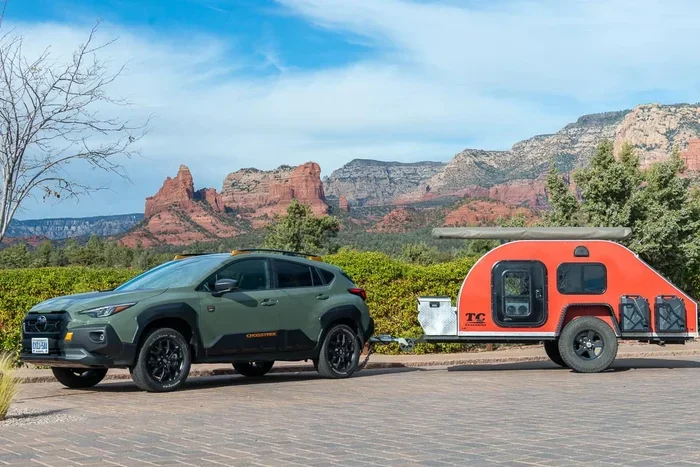
Teardrop trailers are small, lightweight, and aerodynamic. They typically weigh between 500 and 1,500 pounds. Most teardrop trailers are a perfect match for a Subaru Forester. They are easy to tow, fuel-efficient, and come with everything you need for a basic camping setup.
Many Forester owners love teardrop trailers because they are simple to set up. You can sleep two adults comfortably, and many models include a small kitchen area in the rear. These trailers are ideal for couples or solo campers who want a minimalist camping experience.
Pop-Up Campers
Pop-up campers, also known as tent trailers, are another great option. They weigh anywhere from 1,000 to 3,000 pounds depending on the size. Smaller pop-up models fall well within the Forester’s towing limits.
The advantage of a pop-up camper is that it expands once you arrive at your campsite. This gives you more living space without adding weight during transit. They are a popular choice for families who want a bit more room than a teardrop but do not want the weight of a full-size travel trailer.
Camper Shells and Truck Toppers
While not a traditional camper, a camper shell mounted on a truck bed is another option. However, this does not apply to the Forester directly. Instead, some Forester owners use rooftop cargo carriers or roof tents. These add minimal weight and do not require a hitch setup.
A roof tent or rooftop cargo system can be a great alternative if you find that your Forester’s towing capacity is too limited for a full trailer. These options keep the weight on top of the vehicle and do not affect your towing limits.
Travel Trailers and Fifth Wheels
Standard travel trailers and fifth wheels are generally too heavy for a Subaru Forester. Most travel trailers weigh well over 2,000 pounds, and some exceed 5,000 pounds. These are not suitable for a Forester and can cause serious safety issues if you attempt to tow them.
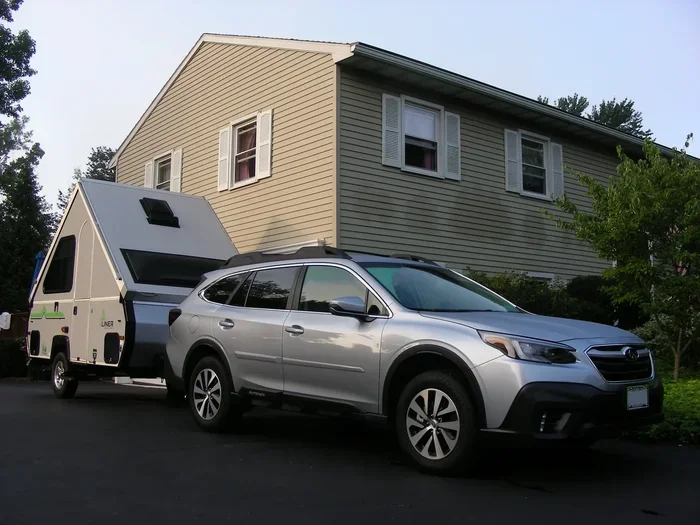
If you are set on a larger camper, you may want to consider a different vehicle with a higher towing capacity. The Subaru Outback, for example, can tow up to 2,700 pounds, making it a better option for heavier trailers.
How to Set Up Your Subaru Forester for Towing
Setting up your Forester for towing involves a few key steps. Doing them correctly ensures safety and protects your vehicle from damage.
Choosing the Right Towing Hitch
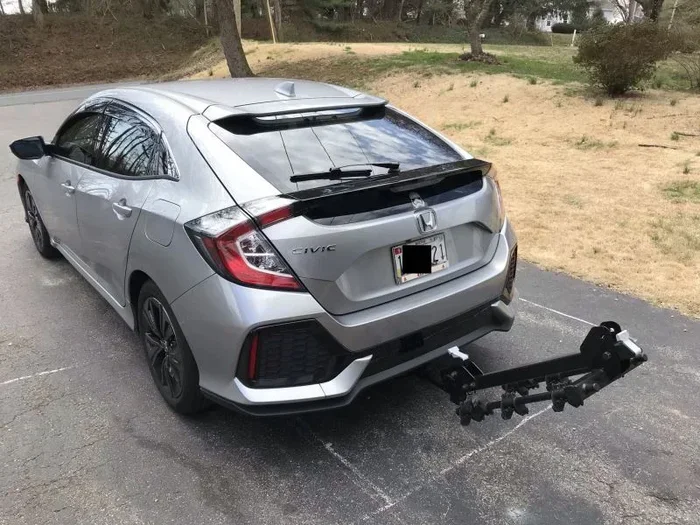
A towing hitch is the connection point between your vehicle and the camper. For a Subaru Forester, you have several options:
- Receiver Hitch: This is the most common type. It attaches to the rear of the vehicle and accepts a ball mount. Receiver hitches come in different sizes, typically Class I or Class II for the Forester.
- Weight Distribution Hitch: This type of hitch helps distribute the camper’s weight more evenly across all axles. It is useful when you are towing closer to your vehicle’s maximum capacity.
- Gooseneck Hitch: This is not typically used with a Forester. Gooseneck hitches are designed for heavy-duty trucks and larger trailers.
For most Forester owners towing a small camper, a Class I receiver hitch is sufficient. It can handle up to 2,000 pounds of towing weight and is relatively easy to install.
Installing a Wiring Harness
A wiring harness connects your vehicle’s lights to the camper trailer. This ensures your brake lights, turn signals, and running lights work properly on the trailer. Most states require a functioning wiring harness for legal towing.
Installing a wiring harness is straightforward. You can buy a plug-and-play kit that matches your Forester’s year and model. Simply connect it to your vehicle’s electrical system and run the cable to the trailer connector.
Adding a Trailer Brake Controller
If your camper has its own brakes, you will need a trailer brake controller. This device lets you apply the trailer’s brakes independently from your vehicle’s brakes. It is an important safety feature, especially when towing heavier loads.
Some Subaru Forester models may not come with a trailer brake controller from the factory. You can install an aftermarket controller easily. Popular brands include Tekonsha and Curt. These controllers are affordable and simple to set up.
Checking Your Towing Package
Some Subaru Forester models come with a factory towing package. This package may include a pre-installed wiring harness, a receiver hitch mount, and specific engine tuning for towing. If your Forester has this package, you are already ahead of the game.
If your model does not have a towing package, you can add the necessary components yourself. Just make sure everything is installed correctly and rated for your towing needs. When in doubt, consult a professional installer or your Subaru dealer.
Towing Safety Tips for Subaru Forester Owners
Towing a camper changes how your vehicle drives. The added weight affects your braking, handling, and fuel economy. Following these safety tips will help you stay safe on the road.
Know Your Tongue Weight
Tongue weight is the downward force the camper puts on the hitch ball. It should be about 10 to 15 percent of the total camper weight. Too much tongue weight can make your rear end sag and reduce steering control. Too little tongue weight can cause the trailer to sway.
You can measure tongue weight using a simple scale or a tongue weight gauge. Adjust the load in your camper until you hit the right range. Proper weight distribution is one of the most overlooked aspects of safe towing.
Check Your Mirrors and Visibility
A camper trailer extends the width of your vehicle significantly. Standard side mirrors may not give you enough visibility. Consider installing extended towing mirrors to see the full width of your trailer and any vehicles beside you.
Good visibility is essential for safe lane changes, turns, and merging. Do not skip this step, even for short trips. Being able to see what is around you at all times keeps you and other drivers safe.
Practice Driving with a Trailer
If you are new to towing, practice in a large, empty parking lot before you go on a real trip. Get a feel for how your Forester handles with the extra weight. Practice turning, braking, and reversing.
Reversing with a trailer takes some getting used to. The trailer will turn in the opposite direction of your steering wheel. Spend time practicing this skill so you feel confident when you arrive at the campsite.
Plan Your Route and Stops
Towing a camper affects your fuel economy. Plan your route with fuel stops in mind, especially if you are traveling through remote areas. Your Forester’s fuel tank may need more frequent fill-ups when you are pulling a trailer.
Also, plan your stops for stretching and checking your load. Stop every couple of hours to inspect your hitch, check your tire pressure, and make sure everything is secure. A quick stop can prevent a major problem on the road.
Follow Speed Limits and Drive Smoothly
When towing a camper, drive at or below the posted speed limit. Sudden acceleration, hard braking, and sharp turns can cause the trailer to sway or shift. Smooth, steady driving keeps everything stable and safe.
Many states have lower speed limits for vehicles towing trailers. Check the laws in the states you plan to drive through and obey them. This keeps you legal and helps prevent accidents.
Common Mistakes When Towing a Camper with a Forester
Even experienced towers make mistakes. Here are some common errors Forester owners should avoid.
Overloading the Camper
The biggest mistake is loading the camper beyond the recommended weight. People tend to pack too much gear, thinking they will need everything. In reality, you can usually get by with less. Every extra pound adds up and can push you past your towing limits.
Weigh your camper fully loaded before you leave. Use a public scale at a truck stop or weigh station. Compare the total weight to your Forester’s towing capacity. If you are close to the limit, consider leaving some items behind.
Ignoring the Owner’s Manual
Your owner’s manual contains all the specific towing information for your vehicle. Skipping this step is a common and risky mistake. The manual tells you your exact towing capacity, the correct hitch class, and any special requirements for your model.
Take 15 minutes to read the towing section of your manual. It could save you from costly repairs or, worse, a dangerous situation on the road.
Skipping the Hitch Installation
Some owners try to tow a camper with just a ball mounted to the bumper. This is not safe and may not be legal. A proper hitch installation ensures a secure connection and distributes the weight correctly.
Invest in a quality hitch that is rated for your towing needs. Have it installed by a professional if you are not comfortable doing it yourself. A properly installed hitch gives you peace of mind and keeps your Forester in good shape.
Forgetting to Check Tire Pressure
Both your vehicle tires and your camper tires need proper inflation before every trip. Underinflated tires can overheat, blow out, or reduce fuel efficiency. This is a simple step that many people skip.
Get a good tire pressure gauge and check all tires the morning of your departure. Follow the recommended pressure levels listed in your owner manual and on the camper’s tire information sticker.
Not Accounting for Wind and Weather
Wind gusts and crosswinds can push a trailer sideways, especially at highway speeds. This is called trailer sway, and it can be very dangerous. Always check the weather forecast before you travel and avoid driving in high winds if possible.
If you feel the trailer starting to sway, do not slam on the brakes. Ease off the accelerator gently and steer straight. Let the vehicle slow down naturally. Most modern vehicles, including the Forester, have stability control systems that help manage trailer sway.
Is a Subaru Forester the Right Towing Vehicle for You?
The Subaru Forester is a versatile and capable vehicle. It handles towing well within its limits. But the real question is whether it fits your camping lifestyle.
If you are a solo camper, a couple, or a small family who enjoys weekend trips with lightweight gear, the Forester is an excellent choice. The Subaru Forester tow a camper setup works best with small teardrop trailers, pop-up campers, or lightweight utility trailers.
On the other hand, if you plan to do full-time camping or need a lot of living space, you may want to consider a vehicle with a higher towing capacity. The Subaru Ascent, for example, can tow up to 5,000 pounds and offers three rows of seating for larger families.
For most casual campers, the Forester hits the sweet spot. It offers AWD capability, good ground clearance, reliable performance, and enough towing capacity for a comfortable camping setup. The key is to stay within the limits and set up your vehicle and camper correctly.
Expert Insights on Subaru Forester Towing
According to automotive experts, the Subaru Forester is one of the best compact SUVs for light towing. Its symmetrical all-wheel drive system provides excellent stability on the road. The boxer engine design lowers the center of gravity, which helps with handling when towing.
Towing experts also recommend that Forester owners invest in a good weight distribution system if they plan to tow regularly. This small upgrade can make a big difference in ride quality and safety. It helps keep the vehicle level and improves braking performance.
Another expert tip is to always do a pre-trip inspection. Check the hitch, wiring, tire pressure, and load balance every single time. A few minutes of preparation can prevent hours of trouble on the road.
Key Takeaways
- Know your towing capacity: The Subaru Forester can tow between 1,000 and 1,500 pounds depending on your model year and trim.
- Choose the right camper: Teardrop trailers and small pop-up campers are the best fits for a Forester.
- Install a proper hitch and wiring harness: This ensures a secure and legal towing setup.
- Follow towing safety tips: Check tongue weight, use extended mirrors, practice driving, and drive smoothly.
- Avoid common mistakes: Do not overload the camper, skip the hitch, or ignore the owner’s manual.
- Consider your camping needs: The Forester is ideal for light camping but may not suit full-time or heavy-duty towing needs.
So, can a Subaru Forester tow a camper? Absolutely. With the right setup, the right camper, and the right attitude, your Forester can take you on many memorable camping adventures. Know your limits, prepare properly, and enjoy the journey. The open road and the great outdoors are waiting for you.
Frequently Asked Questions
Can a Subaru Forester tow a 2000-pound camper?
Most Subaru Forester models have a towing capacity of around 1,500 pounds. A 2,000-pound camper would exceed this limit and is not recommended. You should choose a lighter camper that stays within your vehicle’s towing capacity to ensure safety and avoid damaging your Forester.
Do I need a towing package to tow a camper with a Forester?
A factory towing package makes towing easier, but it is not always required. Many Forester owners install aftermarket hitches and wiring harnesses to tow a camper. Check your owner’s manual to see if your specific model supports towing and what components you may need.
What is the best camper for a Subaru Forester?
Teardrop trailers and small pop-up campers are the best options for a Subaru Forester. They typically weigh between 500 and 1,500 pounds, which falls within the Forester’s towing limits. These campers are easy to tow, fuel-efficient, and perfect for weekend camping trips.
Does towing a camper affect fuel economy in a Subaru Forester?
Yes, towing a camper will reduce your fuel economy. The added weight and aerodynamic drag cause the engine to work harder. Forester owners can expect a noticeable drop in miles per gallon when towing a camper, especially on highway drives.
Can I tow a camper with a Subaru Forester on a highway?
Yes, you can tow a camper on a highway as long as the total camper weight is within your Forester’s towing capacity. Drive at or below the speed limit, use extended mirrors for visibility, and ensure your load is properly balanced. Follow all state and local towing laws.
Is it safe to tow a camper with a Subaru Forester in all weather conditions?
Towing in adverse weather like heavy rain, snow, or high winds requires extra caution. The added weight of a camper affects braking and handling. Always check weather conditions before traveling, reduce your speed in bad weather, and avoid towing during severe storms if possible.
=== CONCLUSION ===
Can a Subaru Forester tow a camper? Yes, and it does so quite well within the right limits. With a towing capacity of 1,000 to 1,500 pounds, the Forester is well-suited for small campers like teardrop trailers and lightweight pop-up models. By choosing the right camper, installing a proper hitch, and following all safety guidelines, you can enjoy countless camping adventures with your Forester.
Remember to always check your owner’s manual, know your towing limits, and never exceed the recommended weight. Proper preparation and a cautious approach to towing will keep you safe and your Forester in great shape. Happy camping and safe travels.