Can I Fix a Power Window Myself A Step by Step Guide
Can I Fix a Power Window Myself? Yes, you can with basic tools and patience. This guide walks you through diagnosing stuck windows, faulty switches, and broken regulators. You will learn to save money and get your car window rolling again.
Can I Fix a Power Window Myself? The answer is a clear yes. Many car owners face a stuck or slow window and assume they need a costly mechanic. In reality, you can handle most power window repair jobs with basic tools and a little know-how.
Whether your car window is stuck open, rattling, or moving at a crawl, this guide will walk you through the fix. I will show you how to diagnose the problem, pick the right parts, and complete the repair safely. You will learn about the window regulator, window motor, and window switch so you can tackle the job with confidence.
By the end of this article, you will know exactly when to DIY and when to call for help. Let us get your window rolling again.
Key Takeaways
- Know Your Window System: Understanding the regulator, motor, and switch helps you pinpoint the real problem.
- Diagnose Before You Buy Parts: A simple test can tell if it is a fuse, switch, or motor issue.
- Gather the Right Tools: A basic socket set, screwdrivers, and a multimeter are all you need.
- Follow the Repair Steps: Replacing a regulator or motor is doable with clear instructions.
- Safety First: Disconnect the battery and work on a stable surface to avoid injury.
- Prevent Future Issues: Lubricating tracks and checking seals keeps windows running smoothly.
- Call a Pro When Needed: Complex electrical faults or shattered glass need a professional touch.
📑 Table of Contents
Understanding How Power Windows Work
Before you start any repair, it helps to know the basic parts. A power window system is simple. It has a few key components that work together. Once you see how they fit, diagnosing issues becomes much easier.
The Basic Components
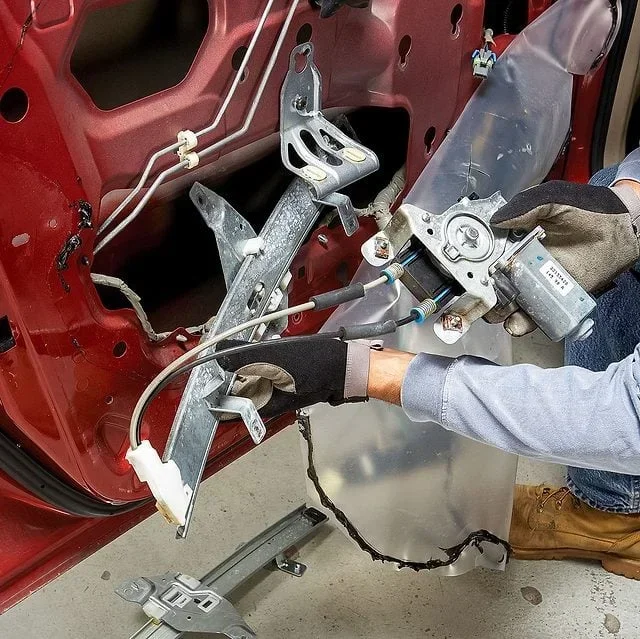
Your car window moves up and down because of a few devices. The window regulator is the mechanical arm that lifts the glass. It connects to the window motor, which provides the power. The window switch sends a signal to the motor. A window control module or relay helps manage the electrical flow. Finally, the window track guides the glass in a straight line.
Most truck window systems work the same way. The window glass sits in a frame and is held by clips or a window seal. When any part fails, the whole mechanism stops. That is why finding the exact cause matters.
Common Power Window Problems
What goes wrong with a power window? Here are the usual suspects.
- Stuck window: The glass will not move at all. Often this is a blown fuse or a dead motor.
- Slow window: The glass moves sluggishly. This points to a weak motor or a gritty track.
- Noisy window: Grinding or squealing sounds mean dry tracks or a worn regulator.
- Window drops into the door: A broken regulator cable or failed clips cause this.
- Intermittent operation: The window works sometimes and not others. This suggests a loose switch or wiring issue.
Knowing these symptoms helps you choose the right fix. You will not waste time on the wrong part.
Diagnosing Your Power Window Problem
Do not guess. Follow a simple diagnostic process. It saves time and money. You will pinpoint the fault quickly.
Is It a Switch or a Motor?
Start with the window switch. Press the button and listen carefully. Do you hear a faint click? If yes, the switch likely sends power. Do you hear a hum or nothing at all? If you hear nothing, the motor may be dead or the fuse is blown.
Here is a quick test. Turn the key to the on position. Try the window switch on the master door panel. If all windows fail, the problem is probably a fuse or relay. If only one window fails, the issue is local to that door.
Use a multimeter to check for voltage at the motor connector. No voltage means a wiring or switch problem. Voltage present but motor silent means the motor is burned out.
Checking the Window Regulator and Track
If the motor runs but the glass does not move, look at the regulator. The window regulator is a cable or gear system. Over time it stretches or breaks. A visual inspection helps. Remove the door panel and look for a frayed cable or a slipped gear.
Also check the window track. Dirt and debris build up inside the track. A clogged track makes the window stick. Run your finger along the track. Feel for rough spots or old grease. A clean track lets the glass glide smoothly.
Sometimes the window seal dries out and grips the glass too tightly. This can slow the window down. Inspect the rubber seal for cracks or hardening.
Essential Tools and Safety Precautions
You do not need a fancy garage. A few basic tools will get the job done. Safety comes first, so follow these steps.
Tools You Will Need
Gather these items before you start your DIY window fix.
| Tool | Use |
|---|---|
| Socket set | Removing door panel bolts |
| Screwdrivers (Phillips and flat) | Unscrewing switch and clips |
| Multimeter | Testing electrical voltage |
| Torque wrench | Tightening bolts to spec |
| Plastic trim tool | Removing clips without cracking plastic |
| Lubricant (silicone spray) | Cleaning tracks and regulators |
| Wire brush | Cleaning corroded connectors |
| Replacement parts (regulator or motor) | Swapping out the broken component |
Having the right window repair tools ready keeps the job smooth. You will not waste time searching for a wrench mid-repair.
Safety First
Work on a flat surface. Set the parking brake. Disconnect the negative battery terminal before touching any wiring. This prevents short circuits and airbag risks. Wear safety glasses to protect your eyes from debris. Keep your hands away from the window glass when it is loose. A heavy car window can shatter or slip unexpectedly.
Never force a stuck window. If it resists, stop and recheck the regulator. Forcing it can break the window glass or strip gears. Patience leads to a clean repair.
Can I Fix a Power Window Myself? A Step-by-Step Repair Guide
Now for the hands-on part. I will walk you through three common fixes. Each step is simple and clear. Follow them in order for the best results.
Fixing a Stuck Window
Start with the easiest fix. A stuck window often has a blown fuse. Locate your fuse box. Find the window motor fuse on the diagram inside the lid. Pull the fuse and inspect it. A broken filament means the fuse is dead. Replace it with an identical amp rating.
If the new fuse blows immediately, you have a short circuit. Stop there and check the wiring. Otherwise, test the window switch. Use the multimeter to confirm power reaches the switch. No power? Replace the switch. Power reaches the switch but the motor does not run? The motor is likely the culprit.
Replacing a Window Regulator
A broken regulator requires more work but is still a doable DIY window fix. Follow these steps.
- Remove the door panel. Use the plastic trim tool to pop off the clips. Unscrew the panel bolts.
- Disconnect the window motor wiring harness. Note the wire positions for reassembly.
- Detach the regulator from the window glass. The regulator attaches with bolts or rivets. Remove them carefully.
- Lower the glass slightly and secure it with masking tape so it does not fall.
- Unbolt the old regulator from the door. Mount the new regulator in the same position.
- Reconnect the motor wiring. Reattach the regulator to the glass.
- Reinstall the door panel. Test the window up and down.
Take your time with each step. A misaligned regulator will cause the window to jam again. Use the torque wrench to tighten bolts properly.
Swapping Out the Window Motor
If the motor is dead, you can replace it. The motor is usually bolted to the regulator. Here is the process.
- Remove the door panel as described above.
- Disconnect the motor wiring harness.
- Unbolt the motor from the regulator assembly.
- Transfer any mounting brackets to the new motor.
- Install the new motor and bolt it securely.
- Reconnect the wiring harness.
- Reattach the regulator to the glass if you removed it.
- Reinstall the door panel and test the window.
Sometimes the motor and regulator come as a single unit. In that case, you swap the whole assembly. This makes the job even faster. Check your car window manual or parts catalog to confirm the setup.
When to Call a Professional Mechanic
Not every problem is a DIY job. Knowing your limits saves time and prevents damage. Here are clear signs you should call a pro.
Signs You Need an Expert
Call a mechanic if you see any of these.
- The window control module needs programming or replacement. This requires dealer-level tools.
- You find damaged wiring inside the door. Water intrusion can corrode wires deep in the hinge area.
- The window glass is shattered. Replacing a car window safely needs special equipment and adhesives.
- Multiple electrical faults appear. A short circuit may affect other systems.
- You feel unsure about any step. Trust your gut. A wrong move can cost more to fix.
A professional has the experience to handle complex electrical issues. They also have warranty coverage on parts and labor.
Cost Considerations
DIY repair saves you labor charges. A new window regulator costs between $30 and $100. A window motor runs $50 to $150. The window switch is often $10 to $30. A fuse costs just a few dollars. Total parts cost for a DIY fix usually stays under $150.
Professional repair adds labor. Expect $150 to $350 for a regulator or motor replacement. A full power window repair at a shop can reach $400 or more. The table below compares the two options.
| Aspect | DIY Repair | Professional Repair |
|---|---|---|
| Parts Cost | $30–$150 | $50–$200 |
| Labor Cost | $0 (your time) | $150–$350 |
| Total Estimate | $30–$150 | $200–$550 |
| Time Required | 1–3 hours | 1–2 hours (drop-off/pick-up) |
| Skill Needed | Basic mechanical | None (you hand it over) |
| Warranty | None (unless you buy one) | Shop warranty included |
Choose the option that fits your budget and comfort level. Both get the job done.
Preventive Maintenance for Long-Lasting Windows
Once your power window works again, keep it that way. A few simple habits extend the life of the system. Regular care prevents most problems.
Keeping Your Window Tracks Clean
Dirt is the enemy of smooth window movement. Every few months, clean the window track with a damp cloth. Spray a silicone-based lubricant into the track. This reduces friction and stops grinding noises. Avoid using grease. Grease attracts dust and makes the track sticky.
Open the window fully and wipe the top edge of the glass. Debris collects there and can scratch the window seal. A clean seal keeps water out of the door.
Checking the Window Seal
The rubber window seal dries out over time. Apply a silicone protectant to the seal twice a year. This keeps it flexible and prevents cracks. A good seal also reduces wind noise and water leaks inside the car.
Check the seal for gaps. If the seal pulls away from the glass, the window may rattle at highway speeds. Replace the seal if it is brittle or torn. A new seal costs under $20 and takes minutes to install.
Also, avoid slamming the door. The impact stresses the regulator and can loosen clips over time. A gentle close preserves the entire window mechanism. Treat your car window with care and it will serve you for years.
Now you know the answer to Can I Fix a Power Window Myself? With basic tools, a little patience, and this guide, most repairs are within your reach. Start with simple diagnostics, gather your tools, and follow the step-by-step process. You will save money and gain confidence. Keep your windows clean and lubricated, and they will run smoothly for a long time. Roll up your sleeves and give it a try.
Frequently Asked Questions
What is the most common cause of a power window that will not move?
A blown fuse or a failed window switch is the most common cause. Before you assume the motor is dead, check the fuse box and test the switch with a multimeter. Many power window repair jobs start with these simple checks.
Can I replace a window regulator without removing the door panel?
No, you must remove the door panel to access the regulator. The panel is held by clips and a few bolts. Use a plastic trim tool to pop the clips off gently. This gives you full access to the window regulator and motor.
How long does a DIY power window repair take?
A simple fuse or switch replacement takes about 15 minutes. Replacing a regulator or motor usually takes 1 to 3 hours, depending on your vehicle. Allow extra time if you are new to the process.
Is it safe to work on a power window with the battery connected?
It is not safe. Always disconnect the negative battery terminal before touching any wiring. This prevents short circuits and protects you from electrical shock. Safety should always come first during any DIY window fix.
How much does it cost to fix a power window at a shop?
Professional repair typically costs between $200 and $550. This includes parts and labor. A regulator replacement may cost $150 to $350, while a motor replacement can be $200 to $400. DIY repair cuts out the labor charge entirely.
Can a stuck window be caused by a broken window track?
Yes, a damaged or bent window track can stop the glass from moving. Dirt buildup in the track also causes sticking. Clean the track regularly and apply silicone lubricant to keep the car window gliding smoothly.