Ford Fusion Wont Start: Common Causes and Solutions
Your Ford Fusion won’t start and you’re stuck? This guide covers the most common causes, from dead batteries to faulty starter motors, and gives you clear solutions. Learn what to check first and how to avoid costly repairs.
You turn the key. Nothing happens. Or maybe you hear a sad little click, and that’s it. Your Ford Fusion won’t start, and you’re standing in the driveway wondering what went wrong. It’s frustrating, especially when you have somewhere to be.
The good news is that most Ford Fusion not starting problems come from a handful of common causes. You don’t need to be a mechanic to figure out what’s going on. With a little know-how, you can often find the problem and fix it yourself. And even when you can’t, knowing what’s wrong helps you talk to the right person.
This guide walks you through every major reason your Ford Fusion won’t start. We’ll cover batteries, starters, fuel systems, and more. By the end, you’ll know exactly what to check and what steps to take next.
Key Takeaways
- Dead battery is the #1 culprit: Most Ford Fusion not starting issues come from a weak or dead battery, especially in older models or cold weather.
- Listen to your car: A clicking noise or silence when you turn the key tells you a lot about what’s wrong with the starter or battery.
- Key fob problems are sneaky: A low key fob battery can prevent your Ford Fusion from starting even when the engine is fine.
- Fuel system failures happen: A bad fuel pump or clogged fuel filter can leave your car unable to start despite a healthy battery.
- Corroded terminals are common: Dirty or corroded battery terminals can block power and cause Ford Fusion not starting problems.
- You can fix many issues yourself: Simple steps like jumping the battery or replacing the key fob battery often solve the problem fast.
- Know when to call a pro: Some Ford Fusion won’t start issues need a trained mechanic, especially starter motor or ignition switch failures.
📑 Table of Contents
Why Your Ford Fusion Won’t Start
When your Ford Fusion won’t start, the problem usually falls into one of five big categories. These are battery issues, starter problems, ignition troubles, fuel system failures, and electrical or sensor glitches. Each one gives you different clues.
Some signs are obvious. You hear a fast clicking sound. The dashboard lights up but the engine stays silent. The key turns but nothing happens at all. Other times, the problem is harder to spot. Your Ford Fusion starts fine one day and refuses the next.
Understanding the Ford Fusion not starting symptoms helps you narrow down the cause fast. Let’s break down each category so you can troubleshoot with confidence.
Here is a quick look at the most common causes and what they feel like when your car won’t start:
| Symptom | Likely Cause | Difficulty to Fix |
|---|---|---|
| No sound at all when turning key | Dead battery or corroded terminals | Easy |
| Rapid clicking noise | Weak battery or bad starter relay | Easy to Moderate |
| Slow cranking | Low battery charge or starter wear | Moderate |
| Key turns but engine won’t fire | Fuel pump failure or no spark | Moderate to Hard |
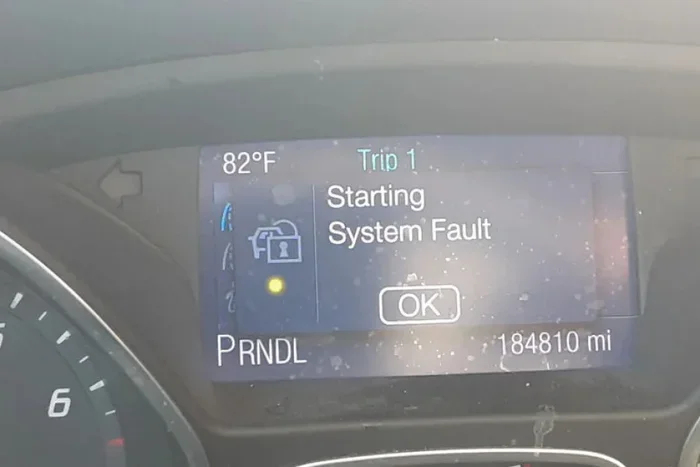
| Dashboard security light flashing | Immobilizer or key fob issue | Easy to Moderate |
| Engine starts then dies immediately | Fuel filter clog or sensor fault | Moderate |
Dead or Weak Battery
A dead battery is the number one reason a Ford Fusion won’t start. It’s also the easiest to fix. Your battery powers the whole electrical system. When it dies, nothing works. No lights, no radio, no engine crank.
Batteries don’t last forever. Most last between three and five years. Cold weather makes them weaker faster. If you live somewhere with harsh winters, your battery may die sooner.
Signs Your Battery Is the Problem
How do you know it’s the battery? Watch for these clear signs:
- The dashboard lights are dim or don’t come on at all.
- You hear nothing when you turn the key. No crank, no click.
- The headlights are bright when off but dim when you try to start.
- Your Ford Fusion started slowly the last few days before quitting completely.
- The battery terminals have a white or greenish crust on them.
How to Test Your Battery
Grab a multimeter if you have one. Set it to DC voltage. Touch the red probe to the positive terminal and the black probe to the negative terminal. A healthy battery reads 12.6 volts or higher. Anything below 12.0 volts means the battery is weak. Below 11.5 volts means it’s probably dead.
You can also try the headlight test. Turn on the headlights and try to start the car. If the lights dim a lot or go dark while cranking, your battery is the problem.
Quick Fix: Jump-Starting Your Ford Fusion
If your battery is dead, jump-starting is the fastest solution. Here is how to do it safely:
- Get a working car and park it nose to nose with your Ford Fusion.
- Turn both cars off. Connect the red clamp to your dead battery’s positive terminal.
- Connect the other red clamp to the good battery’s positive terminal.
- Connect the black clamp to the good battery’s negative terminal.
- Connect the last black clamp to an unpainted metal surface on your Ford Fusion’s engine block.
- Start the working car. Wait two minutes. Then try starting your Ford Fusion.
- Once it starts, remove the cables in reverse order. Let your car run for at least 15 minutes.
Important: Never let the jumper cable clamps touch each other. This can cause a spark and damage both cars.
Preventing Battery Problems
You can avoid many battery issues with simple habits. Turn off all lights and accessories when you park. If you don’t drive your Fusion often, use a battery maintainer trickle charger. Clean the terminals once a year with a wire brush and baking soda solution. And replace your battery every three to four years before it leaves you stranded.
Corroded battery terminals are a hidden cause of Ford Fusion not starting problems. The greenish or whitish buildup blocks the electrical connection. You can clean this with a wire brush and a mix of baking soda and water. Just make sure the battery is disconnected first.
Starter Motor and Solenoid Problems
If your battery is good but your Ford Fusion won’t start, the starter motor might be to blame. The starter motor is the electric motor that cranks your engine. When it fails, your car can’t turn over no matter how much battery power you have.
A faulty starter motor is one of the most common reasons for Ford Fusion not starting in vehicles with higher mileage. Most starters last a long time, but they do wear out eventually.
How to Spot a Bad Starter
Your car gives you clues when the starter is going bad. Listen carefully when you turn the key:
- A single loud click: The starter solenoid engages but the motor doesn’t spin. This often means a bad starter.
- Grinding noise: The starter gear is worn and not meshing properly with the engine flywheel.
- No sound at all: The starter relay or ignition switch might be failing before the motor itself.
- Intermittent failure: The Ford Fusion starts sometimes but not others. This is a classic sign of a dying starter.
Starter Relay and Solenoid
Before replacing the whole starter, check the starter relay and solenoid. The relay sends power to the starter motor. If the relay is fused or stuck, the starter won’t work even if the motor is fine.
You can test the starter relay by swapping it with a similar relay in the fuse box. If your Ford Fusion starts after the swap, the relay was the problem. Relays are cheap and easy to replace.
Replacing the Starter Motor
Starter replacement is a job for a mechanic unless you have experience. The starter sits underneath the engine, which makes access tricky. On most Ford Fusion models, expect to pay between $200 and $400 for parts and labor. The part itself costs $100 to $200.
Quick tip: If your Ford Fusion starts when you tap the starter with a hammer while someone turns the key, the starter motor is almost certainly failing. The internal brushes are worn and need replacement.
Ignition Switch and Key Fob Issues
The ignition switch is the part you turn with your key or push when using a push-button start. It tells the car to wake up and start the starting process. When it fails, your Ford Fusion won’t start even with a perfect battery.
Key fob problems are another sneaky cause of Ford Fusion not starting. The push-button start system uses a smart key fob to recognize your car. If the fob battery dies, the car might not detect it and refuse to start.
Signs of a Bad Ignition Switch
- The key feels stiff or won’t turn smoothly.
- The Ford Fusion stalls randomly while driving and won’t restart.
- Accessories like the radio or power windows work but the engine won’t crank.
- You have to wiggle the key or push the push-button start multiple times.
- The security light on the dashboard stays on or flashes constantly.
Fixing Key Fob Battery Problems
If your Ford Fusion has a push-button start and won’t start, try the key fob battery first. It’s a $5 fix that takes two minutes. Most Ford Fusion key fobs use a CR2032 coin battery.
Here is how to replace it:
- Find the small slot on the side or back of the key fob.
- Use a thin coin or flat tool to pry it open.
- Remove the old battery and note which side faces up.
- Insert the new CR2032 battery with the positive side up.
- Snap the fob back together and try starting the car.
Many Ford Fusion models have a backup start procedure. Hold the key fob directly against the push-button start and press it. This lets the car start even with a dead fob battery. Check your owner’s manual for the exact location of the backup antenna.
Ignition Switch Replacement
A bad ignition switch needs professional replacement. The cost ranges from $150 to $300 depending on your model year. On older Ford Fusion models, the ignition lock cylinder can also wear out and cause the same symptoms. A locksmith can often replace just the cylinder at a lower cost.
Fuel System Failures
Your Ford Fusion needs fuel to run. If the fuel system fails, the engine cranks but won’t fire. This is a common reason for Ford Fusion not starting that many people overlook.
The fuel system includes the fuel pump, fuel filter, fuel injectors, and the tank itself. Any one of these parts can fail and leave you stranded.
Fuel Pump Failure
The fuel pump sends gas from the tank to the engine. When it dies, no fuel reaches the engine. You might hear the fuel pump hum for a second when you turn the key to the ON position. If you hear nothing, the pump could be dead.
Fuel pumps often fail without warning. They can go out from old age, a clogged fuel filter, or contaminated fuel. Common signs before full failure include:
- The Ford Fusion struggles to start after sitting for a while.
- The engine sputters at high speeds.
- You notice a loss of power when carrying heavy loads.
- The car stalls unexpectedly.
Clogged Fuel Filter
The fuel filter catches dirt and debris before they reach the engine. Over time, it gets clogged and restricts fuel flow. A clogged fuel filter causes slow starting and rough running. Most Ford Fusion fuel filters should be replaced every 30,000 to 40,000 miles.
Empty Tank or Bad Fuel
It sounds silly, but an empty tank is a real cause of Ford Fusion not starting. The fuel gauge can be inaccurate, especially on older models. Always check with a dipstick or add a small amount of fuel before assuming something is broken.
Bad fuel is another hidden problem. Water in the gas tank or old degraded fuel can prevent combustion. If your Ford Fusion has been sitting for months, the fuel may have gone stale. Drain the tank and refill with fresh fuel.
Spark Plug and Ignition Coil Issues
Even with fuel and a good battery, your Ford Fusion won’t start without a spark. Worn spark plugs or a failed ignition coil can prevent the engine from firing. If the engine cranks normally but won’t catch, check the spark first. Replacing spark plugs is one of the easiest and cheapest maintenance tasks you can do.
Electrical and Sensor Problems
Modern Ford Fusion models have dozens of sensors and computer modules. When one of them fails, your car might not start. These problems can be tricky because the symptoms often mimic other issues.
Immobilizer System
The immobilizer is a security feature that prevents your Ford Fusion from starting without the correct key. If the system doesn’t recognize your key fob, it will block the engine from starting. You might see the security light flashing on the dashboard.
Immobilizer problems often happen after a battery replacement or when using a spare key. The key needs to be reprogrammed to the car’s computer. A dealer or locksmith can handle this quickly.
Crankshaft Position Sensor
The crankshaft position sensor tells the computer when to fire the spark plugs. If this sensor fails, the engine will crank but never start. This is a common issue on Ford Fusion models and is relatively affordable to fix.
Fusible Links and Blown Fuses
Ford Fusion models use fusible links in the starting circuit. These are thin wire sections designed to break and protect the electrical system during a surge. A blown fusible link can cause Ford Fusion not starting even when the battery and starter are fine.
Check your fuse box for blown fuses related to the starting circuit. A blown fuse is an easy fix and costs just a few dollars. Always replace a fuse with the same amperage rating.
Alternator Problems
The alternator charges your battery while the engine runs. If the alternator fails, the battery drains quickly and your Ford Fusion won’t start the next time you try. Signs of a bad alternator include dim headlights, a battery warning light on the dashboard, and a whining or grinding noise from the engine bay.
A failing alternator won’t directly stop your Ford Fusion from starting right away, but it will leave the battery too weak to restart after the car is turned off. If you need jump-starts frequently, the alternator might be the real culprit.
What to Do When Your Ford Fusion Won’t Start
Now you know the main causes. But what should you actually do when you’re standing in front of a car that won’t start? Follow this simple troubleshooting plan.
Step 1: Check the Basics
Make sure the car is in Park or Neutral. A Ford Fusion won’t start if the transmission is in Drive. Check that the key fob is working. Try the backup start procedure. Look at the dashboard for any warning lights.
Step 2: Test the Battery
Check the battery voltage with a multimeter. Look for corrosion on the terminals. Clean them if needed. Try jump-starting the car. If it starts, the battery was the problem.
Step 3: Listen Carefully
Turn the key and pay attention. A single click points to the starter or solenoid. A rapid clicking points to a weak battery. Silence points to a dead battery, bad ignition switch, or wiring issue.
Step 4: Check the Fuel
Verify you have fuel. Listen for the fuel pump hum when you turn the key to ON. If you hear nothing, the fuel pump might be dead.
Step 5: Call for Help
If none of these steps work, call a tow truck or a mobile mechanic. Trying to force-start the car or keep turning the key can cause more damage. A professional diagnosis saves time and money in the long run.
Here are a few quick tips to keep in mind:
- Always keep jumper cables or a portable jump starter in your trunk.
- Replace the key fob battery once a year as a preventive measure.
- Don’t ignore slow starting. It’s often the first sign of a failing component.
- Keep your fuel tank at least a quarter full to protect the fuel pump.
- Follow the maintenance schedule in your owner’s manual.
Dealing with a Ford Fusion won’t start situation is never fun, but most of the time the cause is something simple and fixable. A dead battery, a weak key fob, or a clogged fuel filter are all problems you can handle with basic tools and a little patience. The key is to stay calm, work through the list, and not panic.
Regular maintenance is your best defense against Ford Fusion not starting issues. Change the battery every three to four years. Replace spark plugs on schedule. Keep the fuel system clean. And never ignore warning signs like slow cranking or dim lights. These small steps save you from big headaches down the road.
If your Ford Fusion won’t start and you’ve checked the battery, the starter, the fuel, and the ignition, don’t give up. Electrical and sensor issues are common on Ford Fusion models, and a good mechanic can diagnose them quickly. The most important thing is to stay safe and get professional help when you need it.
Your Ford Fusion is a reliable car. With the right knowledge and a little care, you can handle most starting problems and get back on the road with confidence.
Frequently Asked Questions
What should I do first if my Ford Fusion won’t start?
Start by checking the basics. Make sure the car is in Park or Neutral. Check if the dashboard lights come on when you turn the key. Listen for any clicking or grinding sounds. These quick checks help you narrow down whether it is a battery, starter, or fuel problem.
Can a dead key fob battery cause my Ford Fusion not to start?
Yes, absolutely. Ford Fusion models with push-button start rely on the key fob to communicate with the car. A dead fob battery means the car cannot verify the key. Try holding the fob directly against the push-button start. This bypasses the antenna and lets you start the car temporarily.
How do I know if my Ford Fusion battery is dead or the starter is bad?
A dead battery causes no sound at all or dim lights when you turn the key. A bad starter usually makes a single loud click or a grinding noise. You can test the battery with a multimeter. If the battery reads above 12.4 volts, the starter is more likely the problem.
Why does my Ford Fusion start sometimes but not others?
Intermittent starting problems often point to a failing starter motor, a bad ignition switch, or corroded battery terminals. The starter’s internal brushes may only work when they happen to make contact. Have a mechanic test the starter and ignition switch to confirm the cause.
How much does it cost to fix a Ford Fusion that won’t start?
The cost depends on the cause. A dead battery replacement costs $100 to $200. A starter motor replacement runs $200 to $400. An ignition switch fix ranges from $150 to $300. Fuel pump replacement is more expensive at $400 to $800. Always get a quote before authorizing major repairs.
Can bad fuel cause a Ford Fusion not to start?
Yes. Old, stale fuel or fuel contaminated with water can prevent the engine from starting. If your Ford Fusion has been sitting for a long time, drain the old fuel and refill with fresh gasoline. A clogged fuel filter can also block fuel delivery and cause starting problems.
=== CONCLUSION ===
Your Ford Fusion won’t start for a reason, and most of those reasons are easy to identify and fix. From a simple dead battery to a tricky immobilizer glitch, the causes fall into clear categories. By working through the troubleshooting steps in this guide, you can save time, money, and a lot of frustration.
Remember the key signs. Listen for clicks and grinding. Check the battery voltage. Replace the key fob battery. Inspect the fuel system. And don’t ignore warning lights on your dashboard. Each clue leads you closer to the answer.
The best way to deal with Ford Fusion not starting issues is to prevent them. Regular maintenance keeps your car reliable and ready to go. Change your battery on schedule. Replace spark plugs and fuel filters when recommended. Keep your terminals clean and your fuel fresh.
When the problem is beyond a simple fix, trust a qualified mechanic. They have the tools and experience to diagnose electrical and sensor issues quickly. But even then, knowing what might be wrong helps you make smarter decisions about repairs.
Now you have the knowledge to handle most Ford Fusion won’t start situations with confidence. Keep this guide handy, share it with a friend who might need it, and remember that most starting problems have straightforward solutions. Your Ford Fusion will be back on the road before you know it.