Can a Toyota Hybrid Be Charged at Home Without Effort
Yes, you can charge a Toyota Hybrid at home, but it depends on the model you own. Standard Toyota Hybrids use regenerative braking to recharge themselves, while plug-in models like the Toyota Prius Prime need a charging cable. Setting up home charging is simpler than most people think, and it can save you money on fuel while cutting your carbon footprint. This guide covers everything you need to know about charging your Toyota Hybrid at home without effort.
Have you ever wondered whether you can charge a Toyota Hybrid right from your garage? It is a question a lot of drivers ask, especially those thinking about switching to a hybrid vehicle. The short answer is yes, but the full story depends on which Toyota Hybrid model you drive.
Some Toyota Hybrids charge themselves while you drive. Others need you to plug them in at home. Either way, the process is straightforward and far less complicated than most people assume. In this article, we will walk you through everything you need to know about charging a Toyota Hybrid at home, from setup to savings.
Whether you own a Toyota Prius or are considering buying one, this guide will help you understand your options. We will cover how Toyota Hybrid technology works, which models support plug-in charging, and the easiest way to set up home charging without any headaches.
Key Takeaways
- Self-Charging Toyota Hybrids: Standard Toyota Hybrid models recharge their battery through regenerative braking and do not need a wall outlet.
- Plug-In Toyota Hybrids: Models like the Toyota Prius Prime can be charged at home using a standard outlet or a dedicated charging station.
- Home Setup Is Simple: All you need is a compatible charging cable and a standard 120V or 240V outlet to start charging overnight.
- Fuel Savings Add Up: Charging at home can significantly reduce your trips to the gas station and lower your overall fuel costs.
- Not All Models Are the Same: Only certain Toyota Hybrids support plug-in charging, so check your specific model before buying equipment.
- Regenerative Braking Helps Everyone: Every Toyota Hybrid benefits from this smart technology that captures energy during braking.
📑 Table of Contents
- What Is a Toyota Hybrid and How Does It Work?
- Can You Charge a Toyota Hybrid at Home?
- How to Set Up Home Charging for Your Toyota Hybrid
- Toyota Hybrid Models That Support Home Charging
- Benefits of Charging Your Toyota Hybrid at Home
- Common Mistakes People Make When Charging a Toyota Hybrid at Home
- Expert Tips for Getting the Most Out of Home Charging
What Is a Toyota Hybrid and How Does It Work?
A Toyota Hybrid is a vehicle that uses two power sources: a gasoline engine and an electric motor. Together, they work to give you better fuel efficiency and lower emissions. The system is often called the Toyota Hybrid Synergy Drive, and it has been refined over decades of innovation.
Here is how it works in simple terms. When you slow down or hit the brakes, the electric motor reverses its role. It becomes a generator and captures energy that would normally be lost. This is called regenerative braking. The captured energy gets stored in the hybrid battery and is used later to help power the car.
Because of this clever system, most Toyota Hybrids never need to be plugged in. They self-charge while you drive. This is one of the biggest reasons why Toyota Hybrid ownership feels so effortless. You just drive, and the car takes care of the rest.
The Role of the Hybrid Battery
The hybrid battery in a Toyota Hybrid is smaller than the battery in a fully electric vehicle. It typically holds enough energy to assist the gasoline engine during acceleration, low-speed driving, and short stops. When you cruise at highway speeds, the gasoline engine does most of the work.
The battery also acts as a buffer. It smooths out the power delivery and ensures the transition between electric and gasoline power feels seamless. Over time, Toyota has improved the durability of these batteries, and many drivers report hybrid battery lifespans well beyond 200,000 miles.
What Is Regenerative Braking?
Regenerative braking is the secret sauce behind the Toyota Hybrid experience. Every time you take your foot off the accelerator or apply the brakes, the electric motor captures kinetic energy and converts it back into electricity. This electricity flows into the hybrid battery and is ready for your next drive.
Think of it like filling a bucket with rainwater. Every time you slow down, a little more water goes in. You never have to think about it. The system just works in the background, keeping your battery topped up without any effort from you.
Can You Charge a Toyota Hybrid at Home?
This is the big question, and the answer is more nuanced than a simple yes or no. It depends entirely on the type of Toyota Hybrid you have.
Standard Toyota Hybrids, like the regular Toyota Prius or the Toyota RAV4 Hybrid, do not have a charging port. They rely entirely on regenerative braking and the gasoline engine to maintain battery levels. You cannot plug them in, and you do not need to. They are designed to be maintenance-free in this regard.
However, plug-in Toyota Hybrid models, often called PHEVs (plug-in hybrid electric vehicles), do have a charging port. These models allow you to connect to an external power source and charge the battery from empty to full at home. Popular plug-in models include the Toyota Prius Prime and the Toyota RAV4 Prime.
Self-Charging vs. Plug-In: What Is the Difference?
The difference between a self-charging Toyota Hybrid and a plug-in Toyota Hybrid is important to understand. A self-charging model never needs a wall outlet. You drive it exactly like a regular car, and the hybrid battery recharges itself through braking and cruising.
A plug-in model, on the other hand, has a larger battery capacity and can run on electric power alone for a certain distance. For example, the Toyota Prius Prime can travel around 25 to 64 miles on electric power alone, depending on driving conditions. Once the electric range is used up, the gasoline engine kicks in just like a standard hybrid.
So if your goal is to charge at home and maximize electric driving, a plug-in Toyota Hybrid is the way to go. If you prefer a set-it-and-forget-it approach, a standard self-charging Toyota Hybrid works perfectly fine.
How to Set Up Home Charging for Your Toyota Hybrid
If you own a plug-in Toyota Hybrid, setting up home charging is surprisingly easy. You do not need an expensive installation or a dedicated garage. Here is what you need to know.
What You Will Need
To charge your plug-in Toyota Hybrid at home, you need three basic things:
- A charging cable: Every plug-in Toyota comes with a mobile charging cable in the trunk. This cable connects the car to a standard power outlet.
- A wall outlet: A standard 120-volt household outlet works for slow charging. For faster charging, you can use a 240-volt outlet, similar to what a clothes dryer uses.
- A charging port on the car: Plug-in Toyota Hybrids have a dedicated charge port, usually located near the front bumper or near the fuel door.
Charging with a Standard Outlet
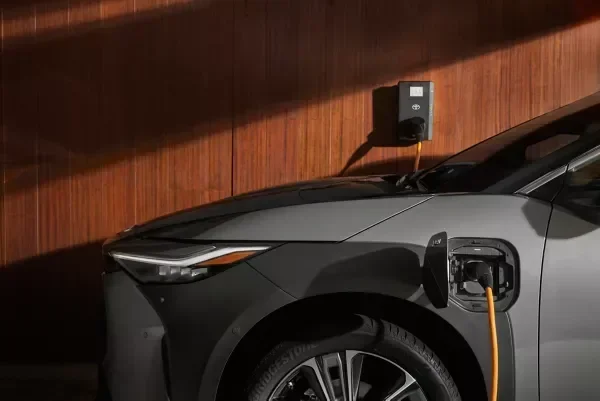
The simplest way to charge a Toyota Hybrid at home is by using the included charging cable and a regular wall outlet. Just plug the cable into the car, plug the other end into a standard 120V outlet, and walk away. This is called Level 1 charging.
Level 1 charging is slow. It typically adds about 3 to 5 miles of electric range per hour. So if you drive 30 miles a day, you will need to charge overnight. The good news is that most people plug in their car when they get home and wake up to a full battery every morning.
Charging with a 240V Outlet for Faster Results
If you want faster home charging, consider installing a 240-volt outlet. This is what electric dryers and ovens use. With a 240V setup, you can charge your Toyota Hybrid in roughly half the time compared to a standard outlet.
Some owners choose to install a dedicated charging station or a Level 2 home charger. These units are designed specifically for electric and plug-in vehicles. They offer faster charging speeds and often come with smart features like scheduling and monitoring through a smartphone app.
Quick Tips for Home Charging
- Always use the cable that came with your vehicle for best compatibility.
- Plug in your car every night so it is ready to go each morning.
- Avoid letting the battery drop to zero before charging, if possible.
- If you install a 240V outlet, have a licensed electrician handle the job.
- Keep the charge port clean and free of debris for a reliable connection.
Common Mistakes to Avoid When Setting Up Home Charging
Even though setting up home charging is simple, there are a few mistakes people make. Here are some to watch out for.
First, do not use an extension cord unless it is rated for the amperage your charger draws. An undersized extension cord can overheat and create a fire hazard. Second, do not ignore the charging cable that comes with the car. Third-party cables may not be compatible and could damage your hybrid battery or the car’s charging system.
Another mistake is assuming all Toyota Hybrids need a charging station. Standard Toyota Hybrids do not need one at all. Only plug-in models benefit from external charging. Before you buy any equipment, double-check whether your specific model has a charge port.
Toyota Hybrid Models That Support Home Charging
Not every Toyota Hybrid can be charged from a wall outlet. Below is a comparison of popular Toyota Hybrid models and their charging capabilities.
| Model | Type | Plug-In Charging | Electric Range | Home Charging Possible |
|---|---|---|---|---|
| Toyota Prius (Standard) | Self-Charging Hybrid | No | N/A | No |
| Toyota Prius Prime | Plug-In Hybrid | Yes | Up to 64 miles | Yes |
| Toyota RAV4 Hybrid | Self-Charging Hybrid | No | N/A | No |
| Toyota RAV4 Prime | Plug-In Hybrid | Yes | Up to 42 miles | Yes |
| Toyota Camry Hybrid | Self-Charging Hybrid | No | N/A | No |
| Toyota Highlander Hybrid | Self-Charging Hybrid | No | N/A | No |
As you can see, only the Prime models from Toyota support plug-in charging at home. If you want the convenience of home charging, look for the “Prime” badge. These models combine the best of both worlds: electric driving for short trips and a gasoline engine for longer journeys.
Why Choose a Plug-In Toyota Hybrid?
Plug-in Toyota Hybrids like the Toyota Prius Prime and Toyota RAV4 Prime offer a compelling mix of electric convenience and gasoline flexibility. For most daily commutes, you can drive entirely on electric power. This means zero gas usage, zero tailpipe emissions, and a quieter ride.
And when you do need to go farther, the gasoline engine takes over seamlessly. You never have to worry about range anxiety, which is a common concern with fully electric vehicles. The Toyota Hybrid plug-in models give you the freedom to charge at home and still go wherever you want.
Benefits of Charging Your Toyota Hybrid at Home
Charging your plug-in Toyota Hybrid at home comes with several real advantages. Let us break them down.
Cost Savings
Electricity is cheaper than gasoline in most parts of the country. When you charge at home, you pay a fraction of what you would spend at the pump. Over time, the savings add up significantly. Many plug-in Toyota Hybrid owners report spending less than 10 dollars a month on fuel.
Some utility companies also offer lower electricity rates during off-peak hours, usually at night. This means you can charge your car while you sleep and pay even less for your energy.
Convenience and Routine
Imagine never having to visit a gas station again. With home charging, your routine becomes simple. Pull into the garage, plug in the cable, and go inside. The next morning, your car is ready to go with a full battery.
It is like charging your phone overnight. You do not think about it. It just becomes part of your daily habit. And once you get used to it, you will wonder how you ever managed without it.
Environmental Impact
Every mile you drive on electric power produces zero tailpipe emissions. By charging your Toyota Hybrid at home, you reduce your personal carbon footprint and contribute less to air pollution. Over months and years, the environmental impact adds up.
Pairing your home charging with renewable energy sources, like solar panels, makes the impact even greater. You can drive on sunshine and feel good about every mile you cover.
Less Wear on the Gasoline Engine
When you regularly charge your plug-in Toyota Hybrid and drive on electric power, the gasoline engine runs less often. This means less wear and tear on engine components. Over the life of the vehicle, this can translate to lower maintenance costs and a longer-lasting car.
Common Mistakes People Make When Charging a Toyota Hybrid at Home
Even though home charging is simple, some people make avoidable mistakes. Here are a few to keep in mind.
Mistake 1: Using the wrong outlet. Always make sure the outlet is properly grounded and in good condition. Old or damaged outlets can cause charging problems or even safety hazards. If your home has older wiring, have an electrician inspect it before setting up your charging station.
Mistake 2: Ignoring the charging schedule. Many plug-in Toyota Hybrids allow you to set a charging schedule through the infotainment system. Use this feature to charge during off-peak hours when electricity rates are lower. It saves money without any extra effort.
Mistake 3: Forgetting to plug in. It sounds obvious, but people forget. If you want to maximize your electric driving range, make plugging in part of your arrival routine. Park, unplug the garage door opener, and plug in the charger. Make it a habit.
Mistake 4: Expecting full electric range all the time. Cold weather, high speeds, and heavy loads can reduce the electric range of your plug-in Toyota Hybrid. This is normal and does not mean anything is wrong. Plan your trips accordingly and remember that the gasoline engine is always there as a backup.
Expert Tips for Getting the Most Out of Home Charging
Want to squeeze every mile of electric driving out of your Toyota Hybrid? Here are some tips from experienced plug-in owners.
First, pre-condition your car while it is still plugged in. In cold weather, heating the cabin using battery power while plugged in preserves your electric range for the road. Most Toyota plug-in models let you do this through the remote app or the car’s settings menu.
Second, drive smoothly. Aggressive acceleration and high speeds drain the hybrid battery faster. Gentle driving maximizes your electric miles and improves overall fuel efficiency. You do not have to drive slowly, just be smooth with the accelerator and brakes.
Third, keep your tires properly inflated. Underinflated tires create rolling resistance, which makes the car work harder and uses more energy. A simple tire pressure check once a month can make a noticeable difference in your electric range and overall performance.
Fourth, take advantage of regenerative braking. Coast to stops whenever possible and avoid hard braking. This feeds energy back into the hybrid battery and helps you maintain electric driving for longer stretches.
Finally, stay informed about software updates. Toyota occasionally releases updates that improve battery management and charging efficiency. Keep your car connected to Wi-Fi when possible so it can download the latest enhancements automatically.
Is Home Charging Worth It?
For most plug-in Toyota Hybrid owners, the answer is a clear yes. The convenience of waking up to a full battery every morning, the savings on fuel costs, and the reduced environmental impact make home charging a smart investment. Even if you only have a standard outlet, the setup costs are minimal and the benefits are real.
If you are still deciding whether a plug-in Toyota Hybrid is right for you, consider your daily driving habits. If your round-trip commute is under 40 miles, a plug-in model could handle most of your driving on electric power alone. You would barely touch the gas tank. That is a powerful combination of savings and convenience.
The beauty of the Toyota Hybrid system is its flexibility. You are never locked into one way of driving. Charge at home when you can, rely on the gasoline engine when you need to, and let regenerative braking fill in the gaps. It is a system designed around real life, not ideal conditions.
So go ahead and plug in your Toyota Hybrid tonight. Tomorrow morning, you will be ready to roll with a full battery and a full tank of confidence. Home charging is not just possible, it is one of the best things about owning a plug-in Toyota Hybrid.
Frequently Asked Questions
Do all Toyota Hybrids need to be plugged in to charge?
No, most Toyota Hybrids are self-charging and do not need to be plugged in. They use regenerative braking and the gasoline engine to keep the battery charged. Only plug-in models like the Toyota Prius Prime and Toyota RAV4 Prime need external charging.
How long does it take to charge a Toyota Hybrid at home?
With a standard 120V outlet, a plug-in Toyota Hybrid takes about 5 to 6 hours to charge fully. Using a 240V outlet or a dedicated charging station cuts that time in half, typically to about 2 to 3 hours.
Can I use a regular household outlet to charge my Toyota Hybrid?
Yes, you can. Every plug-in Toyota Hybrid comes with a mobile charging cable that works with a standard 120V household outlet. It is the slowest method but requires no special equipment or installation.
Will charging my Toyota Hybrid at home increase my electricity bill?
Yes, but only slightly. The cost of charging a plug-in Toyota Hybrid at home is typically much lower than the cost of gasoline. Many owners report spending less than 10 dollars per month on additional electricity for charging.
Is it safe to leave my Toyota Hybrid charging overnight?
Yes, it is completely safe. Toyota plug-in Hybrids have built-in safety systems that stop charging once the battery is full. You can plug in your car before bed and unplug it in the morning with no worries.
What is the difference between a Toyota Hybrid and a Toyota plug-in Hybrid?
A standard Toyota Hybrid self-charges through regenerative braking and cannot be plugged in. A plug-in Toyota Hybrid has a larger battery, a charging port, and can run on electric power alone for a limited distance before the gasoline engine kicks in.
=== CONCLUSION ===
Charging a Toyota Hybrid at home is easier than most people think. Whether your car self-charges through regenerative braking or you plug in a Toyota Prius Prime every night, the process fits seamlessly into your daily life. With the right setup, you can enjoy lower fuel costs, reduced emissions, and the convenience of starting every morning with a full battery.
The key is understanding which type of Toyota Hybrid you own and setting up your home charging accordingly. Standard models need nothing extra. Plug-in models benefit from a simple outlet or a dedicated charging station. Either way, the effort required is minimal, and the rewards are significant.
Take the time to learn your car’s charging capabilities, follow the setup tips in this guide, and make home charging part of your routine. Once you do, you will wonder why you ever worried about it. Your Toyota Hybrid is built to be convenient, efficient, and smart, and charging it at home is just another way to enjoy that design.