Can a Prius Run With a Dead Battery The Surprising Answer
Yes, a Prius can run with a dead 12-volt battery in certain situations, but it depends entirely on which battery has failed. The Toyota Prius uses two separate battery systems: a standard 12-volt auxiliary battery and a high-voltage hybrid traction battery. If the small 12V battery dies, your Prius may still start and drive using the hybrid battery. However, if the high-voltage traction battery is dead, your Prius will not run at all. Understanding how these two systems work together is essential for every Prius owner. In this guide, we will walk you through everything you need to know about Prius battery failure, symptoms, jump-starting, and prevention.
You turn the key or press the start button on your Toyota Prius, and nothing happens. The dashboard stays dark. The engine does not turn over. Your mind races through the same thought every driver dreads: can a Prius run with a dead battery?
The answer might surprise you. Unlike a traditional gas-powered car, the Prius operates with two completely different battery systems. This unique setup means that a dead battery does not always mean a dead car. Whether you are dealing with a drained 12-volt auxiliary battery or a failing high-voltage hybrid battery, understanding what is happening under the hood can save you time, money, and a lot of stress.
In this detailed guide, we will explore exactly what happens when your Prius battery dies. We will cover the two battery systems, the warning signs to watch for, how to jump-start your vehicle, and what you can do to prevent battery problems in the first place. If you own a Prius or are thinking about buying one, this information is essential.
Key Takeaways
- Two Battery Systems: The Prius uses both a 12V auxiliary battery and a high-voltage hybrid battery that work together.
- Dead 12V Battery: A Prius can often still run with a dead 12-volt battery if the hybrid battery is healthy.
- Dead Hybrid Battery: If the high-voltage traction battery fails, the Prius will not start or drive.
- Jump-Starting is Possible: You can jump-start a Prius with a dead 12V battery using standard procedures.
- Warning Signs Matter: Recognizing early symptoms of battery failure can save you from being stranded.
- Prevention is Key: Regular maintenance and smart driving habits extend battery life significantly.
- Replacement Costs Vary: Hybrid battery replacement can be expensive, but proper care reduces the risk.
📑 Table of Contents
- How the Prius Hybrid Battery System Works
- Can a Prius Run With a Dead Battery? The Surprising Answer
- Warning Signs Your Prius Battery Is Failing
- How to Jump-Start a Prius With a Dead Battery
- Preventing Battery Failure in Your Prius
- When to Replace Your Prius Battery
- Frequently Asked Questions About Prius Batteries
- Conclusion
How the Prius Hybrid Battery System Works
Before we answer the big question, it helps to understand the system you are dealing with. The Toyota Prius is a hybrid vehicle, which means it uses both an electric motor and a gasoline engine. These two power sources work together through a clever system called the Prius hybrid system. At the heart of this system are two batteries that most people do not even know exist.
The Role of the 12-Volt Auxiliary Battery
Every Prius has a standard 12-volt auxiliary battery. This is the same type of battery you find in a conventional car. It powers the lights, the radio, the computer systems, and it provides the initial electrical power needed to start the car. When you press the power button, the 12V battery wakes up the hybrid system and gets everything running.
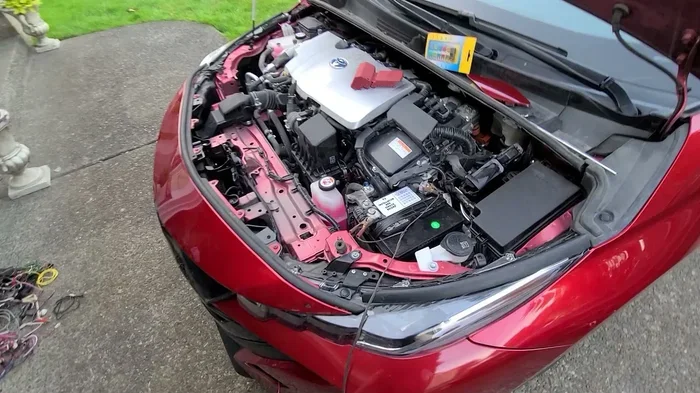
This small battery is located in the engine bay, usually on the right side of the vehicle. It is a conventional lead-acid battery, and it can die just like any other car battery. Age, extreme temperatures, and leaving lights on can all drain it over time.
The High-Voltage Traction Battery Explained
The second battery is the big one. The high-voltage traction battery, also called the hybrid battery or the hybrid car battery, is a large pack of nickel-metal hydride or lithium-ion cells. This battery stores electrical energy that powers the electric motor. It also gets recharged through a process called regenerative braking, which captures energy normally lost during braking.
This battery operates at a much higher voltage, typically around 200 to 250 volts. It is located in the rear of the vehicle, usually beneath the cargo area. Unlike the 12V battery, this one is designed to last the lifetime of the vehicle. However, it can and does fail in some cases, especially as the car ages or after very high mileage.
| Feature | 12-Volt Auxiliary Battery | High-Voltage Traction Battery |
|---|---|---|
| Voltage | 12 volts | 200 to 250 volts |
| Location | Engine bay | Under cargo area |
| Type | Lead-acid | Nickel-metal hydride or lithium-ion |
| Function | Powers electronics and starts the car | Powers the electric motor |
| Lifespan | 3 to 5 years | 8 to 15 years or more |
| Replacement Cost | $100 to $250 | $2,000 to $4,000+ |
| Can Car Run Without It? | No (for starting) | No (for driving) |
Can a Prius Run With a Dead Battery? The Surprising Answer
So, can a Prius run with a dead battery? The answer is: it depends on which battery is dead. This is where the Prius system surprises many people who are used to traditional gasoline cars.
What Happens When the 12V Battery Dies
If your 12-volt auxiliary battery is completely dead, you might think your Prius is a goner. But here is the good news: in many cases, the car can still operate. The high-voltage hybrid battery can provide enough electrical power to run the car’s computer systems and even start the gasoline engine.
However, there is a catch. Without a working 12V battery, you cannot use the standard push-button start. You may need to jump-start the 12V battery first to wake up the hybrid system. Once the system is alive, the car can drive normally using the hybrid battery alone.
Some Prius owners have reported that their car would not go into ready mode until the 12V battery was charged or replaced. The hybrid system needs the 12V battery to communicate between components. So while the car is not completely dead, a dead 12V battery can still leave you stranded in the driveway.
What Happens When the High-Voltage Battery Fails
Now for the not-so-good news. If the high-voltage traction battery dies, your Prius will not run. Period. The electric motor needs this battery to function. Without it, the gasoline engine alone cannot power the car the way the hybrid system is designed to.
When the high-voltage battery fails completely, you will notice several things right away. The car will not enter ready mode. Warning lights will appear on the dashboard. The gasoline engine may try to start but will shut off immediately. In some cases, the car will not move at all, even with a full tank of gas.
A failed high-voltage battery is a serious issue. It requires professional diagnosis and often a full battery replacement. This is why understanding the warning signs early is so important.
Expert Insight: According to Toyota service technicians, the high-voltage hybrid battery in most Prius models is designed to last 100,000 to 150,000 miles or more. Regular maintenance and avoiding extreme discharge cycles can help the battery reach or exceed its expected lifespan. If your Prius is under 10 years old and has fewer than 100,000 miles, a hybrid battery failure is relatively rare.
Key Takeaways:
- A dead 12V battery does not always mean your Prius cannot run.
- A dead high-voltage hybrid battery means the car will not start or drive.
- The two batteries serve completely different purposes in the hybrid powertrain.
- Understanding which battery is dead is the first step to solving the problem.
Warning Signs Your Prius Battery Is Failing
One of the best things about the Prius is that it gives you plenty of warning before a battery completely dies. Paying attention to these hybrid battery warning signs can help you address problems before you are left stranded.
Symptoms of a Weak 12V Battery
The 12-volt auxiliary battery shows clear signs when it is starting to fail. Watch for these common symptoms:
- Slow or sluggish start: The dashboard lights come on slowly or feel dim when you press the power button.
- Warning lights on the dashboard: The battery light or check engine light may illuminate.
- Electrical issues: Power windows move slowly, the radio cuts out, or the headlights dim at idle.
- Car will not enter ready mode: The ready light does not turn on when you press the start button.
- Corroded terminals: You may see a white or blue powdery substance on the battery terminals.
Red Flags for Hybrid Battery Problems
The high-voltage hybrid battery also gives warning signs, though they tend to be more serious:
- Check hybrid system warning light: This is the most obvious sign. A red or yellow triangle with an exclamation point appears on the dashboard.
- Reduced fuel economy: If your hybrid battery is failing, the gasoline engine has to work harder. You will notice you are visiting the gas station more often.
- Unusual engine noise: The gasoline engine may run louder or stay on more often than normal.
- Battery state of charge drops: The onboard computer shows the hybrid battery is constantly low or draining.
- Car goes into limp mode: The Prius limits power to protect the system. You will feel a significant loss of performance.
- Battery voltage drops below normal: A healthy hybrid battery should read between 200 and 250 volts. If it drops significantly, there is a problem.
Quick Tips:
- Check your 12V battery voltage regularly with a multimeter. It should read 12.6 volts or higher when the car is off.
- Keep an eye on the hybrid battery state of charge on the dashboard display.
- Do not ignore warning lights. Address them immediately to prevent further damage.
- Keep a portable jump starter in your trunk, especially if your Prius is older than 5 years.
How to Jump-Start a Prius With a Dead Battery
If your Prius will not start, a jump start might be all you need. The process is similar to jump-starting a regular car, but there are a few differences you should know about. Here is a complete guide to getting your Prius back on the road.
Step-by-Step Jump-Start Guide
Follow these steps carefully to safely jump-start your Prius:
- Turn off all electrical loads: Turn off the radio, lights, air conditioning, and any other electronics in the car.
- Locate the 12V jump-start terminal: Under the hood, you will find a dedicated jump-start terminal. It is usually located in the engine bay, near the fuse box. This is separate from the actual 12V battery.
- Connect the red jumper cable: Attach one end to the positive (+) terminal on the assisting vehicle. Attach the other end to the red jump-start terminal on your Prius.
- Connect the black jumper cable: Attach one end to the negative (-) terminal on the assisting vehicle. Attach the other end to an unpainted metal surface on your Prius engine block, away from the battery.
- Start the assisting vehicle: Let it run for a few minutes to charge the Prius 12V system.
- Press the Prius power button: Press the start button on your Prius while keeping your foot on the brake pedal. The hybrid system should wake up.
- Select drive and drive carefully: Once in ready mode, select drive and drive the car for at least 20 minutes to allow the hybrid system to recharge the 12V battery.
- Disconnect the cables carefully: Remove the cables in reverse order, starting with the black cable.
Common Mistakes to Avoid
Jump-starting a Prius is straightforward, but mistakes can cause problems. Here are common errors to avoid:
- Never connect cables to the hybrid battery terminals: The high-voltage battery terminals are orange and carry dangerous voltage. Only use the designated 12V jump-start terminal.
- Do not jump-start in the rain: Water and electricity do not mix. Wait for dry conditions if possible.
- Do not leave cables connected too long: Once the Prius is running, disconnect the cables promptly.
- Do not attempt to push-start a Prius: Unlike some manual transmission cars, a Prius cannot be push-started because the electric motor and transmission are integrated.
- Do not ignore repeated failures: If you need to jump-start your Prius frequently, the 12V battery or alternator may need replacement.
Common Mistakes Section: Many Prius owners make the mistake of assuming a dead car means a dead hybrid battery. In reality, the 12V battery is the culprit more often than not. Before you assume the worst, always check the small auxiliary battery first. It is cheaper, easier to replace, and is the most common cause of no-start conditions in Toyota hybrid vehicles.
Preventing Battery Failure in Your Prius
The best way to deal with a dead battery is to prevent it from happening in the first place. Prius maintenance is not complicated, and a few simple habits can keep both battery systems healthy for years.
Simple Maintenance Tips
Here are the most effective ways to prevent battery problems in your Toyota Prius:
- Drive the car regularly: The hybrid battery recharges through driving. If your Prius sits unused for weeks, the 12V battery can drain and the hybrid battery may lose charge too.
- Keep the 12V battery terminals clean: Check for corrosion every few months. Clean any buildup with a wire brush and baking soda solution.
- Avoid short trips: Short trips do not give the hybrid system enough time to fully recharge the 12V battery. Take longer drives when possible.
- Turn off electronics when parked: Do not leave lights, the radio, or USB devices charging when the car is off.
- Check the 12V battery age: Most 12V batteries last 3 to 5 years. Replace yours proactively before it fails.
- Use a battery maintainer: If you park your Prius for extended periods, a trickle charger or battery maintainer can keep the 12V battery healthy.
Quick Tips for Longer Battery Life
Quick Tips:
- Keep your Prius plugged in if it is a plug-in hybrid model (Prius Prime). This ensures the hybrid battery stays topped off.
- Avoid fully draining the hybrid battery. Try to keep the state of charge above 20 percent.
- Park in a garage or shaded area to protect both batteries from extreme heat and cold.
- Have the hybrid battery health checked during every oil change or annual service visit.
- Use the Eco driving mode to reduce strain on the battery system during daily driving.
Expert Insights: Toyota engineers recommend that Prius owners in extremely hot or cold climates pay extra attention to battery health. Extreme temperatures accelerate battery degradation. In very hot climates, the high-voltage battery can lose capacity faster. In very cold climates, the 12V battery struggles to hold a charge. Using a battery insulator or thermal blanket can help in these conditions.
Key Takeaways:
- Regular driving keeps both battery systems healthy.
- Clean terminals prevent electrical problems.
- A battery maintainer is invaluable for cars that sit for long periods.
- Proactive replacement of the 12V battery prevents unexpected failures.
- Extreme weather conditions require extra battery care.
When to Replace Your Prius Battery
Eventually, every battery needs to be replaced. Knowing when that time has come can save you from unexpected breakdowns and expensive towing bills.
Battery Replacement Cost and Lifespan
The cost of replacing a Prius battery varies widely depending on which battery needs replacement and which model year you own.
For the 12V auxiliary battery, replacement is straightforward and affordable. You can expect to pay between $100 and $250 for the battery itself, plus labor if you have a dealer or mechanic install it. Many Prius owners replace the 12V battery themselves with basic tools.
For the high-voltage hybrid battery, the cost is significantly higher. A new OEM hybrid battery typically costs between $2,000 and $4,000 or more, depending on the model year. However, there are alternatives:
- Refurbished batteries: These cost $800 to $1,500 and come with warranties.
- Reconditioned batteries: A professional can recondition your existing battery for $500 to $1,000.
- Aftermarket batteries: Third-party manufacturers offer compatible batteries at lower prices than OEM.
Most hybrid battery replacement costs are covered by Toyota’s warranty for 8 years or 100,000 miles (10 years or 150,000 miles in some states). If your car is still under warranty, a failing hybrid battery may be replaced at no cost to you.
Expert Insights on Battery Longevity
Expert Insight: Most Prius owners report that their hybrid batteries last well beyond 150,000 miles. The key factors that shorten battery life include frequent deep discharging, exposure to extreme temperatures, and lack of regular maintenance. If you take care of your Prius, the batteries will take care of you for many years.
If you are experiencing hybrid battery failure symptoms and your car is out of warranty, consider getting a second opinion from an independent hybrid specialist. Dealerships sometimes recommend full battery replacement when a simpler repair, like a failing cell module or a bad connection, could solve the problem at a fraction of the cost.
| Battery Type | Average Lifespan | Replacement Cost | DIY Friendly? |
|---|---|---|---|
| 12V Auxiliary Battery | 3 to 5 years | $100 – $250 | Yes |
| High-Voltage Hybrid Battery | 8 to 15 years | $2,000 – $4,000+ | No (professional required) |
| Refurbished Hybrid Battery | 5 to 10 years | $800 – $1,500 | No (professional required) |
| Reconditioned Hybrid Battery | 5 to 10 years | $500 – $1,000 | No (professional required) |
Key Takeaways:
- The 12V battery is cheap and easy to replace. Do it proactively.
- The high-voltage hybrid battery is expensive but designed to last a long time.
- Warranty coverage may eliminate the cost of hybrid battery replacement.
- Always get a second opinion before committing to a full hybrid battery replacement.
- Refurbished and aftermarket options can save thousands of dollars.
Frequently Asked Questions About Prius Batteries
Many Prius owners have questions about their hybrid battery systems. Here are answers to the most common questions we hear.
Can I drive my Prius if the hybrid battery warning light comes on?
In most cases, yes. If the warning light comes on, your Prius will likely switch to a protective mode where the gasoline engine takes over. You can drive to a service center, but you should not ignore the light. Continuing to drive with a failing hybrid battery can cause further damage to the hybrid powertrain and lead to more expensive repairs.
How do I know if my Prius 12V battery is dead or the hybrid battery is dead?
The easiest way to tell is by the symptoms. If the dashboard lights come on but the car will not enter ready mode, the 12V battery is likely the problem. If the car shows no signs of life at all and warning lights flash, the high-voltage hybrid battery may have failed. A simple voltage check with a multimeter can confirm which battery is the issue.
How long does a Prius 12V battery last?
A Prius 12V auxiliary battery typically lasts 3 to 5 years, similar to a conventional car battery. However, because the Prius hybrid system relies on the 12V battery to communicate with the hybrid components, a weak 12V battery can cause hybrid system problems even before it fully dies. Regular testing helps you replace it before it causes issues.
Is it safe to jump-start a Prius?
Yes, it is safe to jump-start a Prius as long as you follow the correct procedure. Always use the designated 12V jump-start terminal under the hood, never the high-voltage hybrid battery terminals. The orange cables and connectors are for the high-voltage system and should never be touched. If you are unsure, consult your owner’s manual or call a professional.
Can a Prius run on the gasoline engine alone if the hybrid battery dies?
No, a Prius cannot run on the gasoline engine alone if the high-voltage hybrid battery is completely dead. The hybrid system integrates the electric motor with the gasoline engine, and both are needed for normal operation. Without the hybrid battery, the car will not start or move, even with a full tank of gas. This is why maintaining the hybrid battery is so critical.
What should I do if my Prius battery dies while I am on the road?
If your Prius battery dies while driving, pull over safely and turn on your hazard lights. If it is the 12V battery, you may be able to jump-start the car using another vehicle or a portable jump starter. If it is the hybrid battery, you will need a tow truck to take the car to a Toyota dealership or qualified hybrid mechanic. Keeping a portable jump starter in your trunk is a smart precaution for any Prius owner.
Conclusion
The answer to the question can a Prius run with a dead battery is more nuanced than most people expect. The dual-battery system in the Toyota Prius provides redundancy and flexibility that traditional cars simply do not have. A dead 12V auxiliary battery does not necessarily mean your Prius is finished. A dead high-voltage hybrid battery, on the other hand, will keep your car from running entirely.
Understanding how your Prius battery systems work gives you the power to diagnose problems quickly and take the right action. Whether you are dealing with a simple jump-start situation or a more serious hybrid battery failure, knowing what to expect makes all the difference.
Prevention remains the best strategy. Regular maintenance, smart driving habits, and paying attention to warning signs can keep both batteries healthy for years. And when replacement does become necessary, you now know the costs, options, and warranty coverage available to you.
Your Prius is a remarkable machine that combines efficiency, reliability, and innovative technology. By taking care of its battery systems, you ensure that it continues to serve you well for many miles to come. Stay proactive, stay informed, and your Prius will keep running strong.