Can a 4Runner Tow 6500 Lbs Everything You Need to Know
Can a 4Runner Tow 6500 lbs? is a question many truck and SUV owners ask when looking for a dependable towing vehicle. The Toyota 4Runner is a rugged, capable SUV, but its towing capacity maxes out around 5,000 lbs for most models. This guide covers towing specs, setup requirements, safety tips, and the real answer to whether your 4Runner can handle a 6,500 lb load.
Many Toyota 4Runner owners wonder about the limits of their beloved SUV. The question Can a 4Runner Tow 6500 lbs comes up often in forums, social media groups, and dealer conversations. The short answer is that most 4Runner models are not rated for 6,500 lbs of towing. However, the full story is more nuanced than a simple yes or no.
The Toyota 4Runner has earned a reputation as one of the most durable SUVs on the road. It handles trails, off-road terrain, and daily commutes with ease. But when it comes to towing heavy loads, the numbers are what they are. Understanding your vehicle’s towing capacity is crucial for safety and performance.
In this guide, we will break down everything you need to know about 4Runner towing capacity. We will cover towing specs, setup requirements, safety tips, and common mistakes. By the end, you will know exactly what your 4Runner can handle and how to tow safely.
Key Takeaways
- Standard Towing Limit: Most 4Runner models are rated to tow around 5,000 lbs, not 6,500 lbs.
- Tow Package Matters: Equipping your 4Runner with the proper towing package is essential for safe hauling.
- Year and Trim Differences: Towing specs vary by model year, engine, and trim level.
- Safety First: Exceeding towing limits can damage your vehicle and create dangerous driving conditions.
- Right Setup Is Key: The correct hitch, braking system, and weight distribution make a big difference.
- Know Your Numbers: Always check your specific 4Runner’s owner manual for exact towing ratings.
- Alternatives Exist: If you need to tow 6,500 lbs regularly, consider a truck or larger SUV.
📑 Table of Contents
Understanding 4Runner Towing Capacity
The towing capacity of a Toyota 4Runner depends on several factors. These include the model year, engine type, trim level, and whether you have the tow package installed. Let us look at the numbers more closely.
Towing Specs by Model Year
Different generations of the 4Runner have different towing ratings. Here is a general breakdown of towing capacity by model year:
- 1984-2002: Early 4Runner models could tow between 4,000 and 5,000 lbs depending on the engine and configuration.
- 2003-2009: The second-generation 4Runner with the V6 engine and towing package was rated to tow up to 5,000 lbs.
- 2010-2023: The third-generation 4Runner maintained a towing capacity of around 5,000 lbs with the proper tow package.
- 2024 and newer: The all-new 2024 4Runner is rated to tow up to 5,000 lbs as well.
As you can see, the towing capacity has remained fairly consistent across generations. The maximum is generally around 5,000 lbs, which is below the 6,500 lb mark.
Comparison Table: 4Runner Towing Capacity by Generation
| Model Years | Engine | Base Towing Capacity | With Tow Package |
|---|---|---|---|
| 1984-2002 | 2.4L or 3.0L V6 | 4,000 lbs | 5,000 lbs |
| 2003-2009 | 4.0L V6 | 4,500 lbs | 5,000 lbs |
| 2010-2023 | 4.0L V6 | 4,500 lbs | 5,000 lbs |
| 2024+ | 2.4L Turbo I4 or Hybrid | 5,000 lbs | 5,000 lbs |
These numbers are approximate and can vary based on your specific configuration. Always refer to your owner manual for the exact towing rating of your vehicle.
Why the Tow Package Matters
Not all 4Runners come with the towing package from the factory. The tow package includes several important components that make towing safe and possible. These include a wiring harness, a towing hitch receiver, a transmission cooler, and a weight-distributing hitch system.
Without the tow package, your 4Runner may not be rated to tow at all. Even if it can physically pull a trailer, doing so without the proper equipment can damage your transmission and engine over time.
Expert Insight: According to Toyota’s official guidelines, the tow package is not optional if you plan to tow regularly. Skipping the tow package to save money can lead to costly repairs down the road. Always invest in the proper setup before towing.
What Affects Your 4Runner Towing Ability
Several factors influence how much your 4Runner can safely tow. Understanding these variables helps you make informed decisions about towing.
Gross Vehicle Weight Rating (GVWR)
The Gross Vehicle Weight Rating is the maximum weight your 4Runner can carry, including passengers, cargo, fuel, and the trailer tongue weight. The 4Runner’s GVWR typically ranges from 6,000 to 6,500 lbs depending on the model year. This means your available towing capacity is reduced by the weight of passengers and gear inside the vehicle.
Tongue Weight
Tongue weight is the downward force the trailer hitch puts on the 4Runner’s rear axle. The general rule is that tongue weight should be about 10 to 15 percent of the total trailer weight. For a 5,000 lb trailer, that means 500 to 750 lbs of tongue weight. Too much tongue weight can make the 4Runner sag at the rear and reduce stability.
Cargo and Passenger Weight
Every pound you add inside the 4Runner reduces the amount you can tow. If you have four adults, gear, and supplies in the back, your effective towing capacity drops. Always account for all weight when calculating what you can safely tow.
Engine and Transmission Cooling
Towing puts extra strain on your engine and transmission. The 4Runner’s 4.0L V6 engine is strong, but it is not designed for sustained heavy towing without proper cooling. The tow package includes a transmission cooler that helps prevent overheating during long hauls.
Quick Tips:
- Always check your owner manual for the exact towing rating of your specific 4Runner.
- Account for all weight inside the vehicle before towing.
- Install a transmission cooler if you plan to tow frequently or in hot climates.
- Use a weight-distributing hitch for trailers over 3,000 lbs.
The Right Towing Setup for Your 4Runner
Having the right towing setup is essential for safety and performance. The wrong hitch or wiring can lead to dangerous situations on the road.
Choosing the Right Towing Hitch
The most common hitch class for the 4Runner is a Class III hitch receiver. This type of hitch is rated for trailers up to 6,000 lbs gross trailer weight and up to 600 lbs tongue weight. It is the right choice for most 4Runner towing applications.
Make sure the hitch is properly installed and secured to the frame of the 4Runner. A loose hitch can come off while driving, which is extremely dangerous. Always have your hitch installed by a certified professional if you are not confident in your skills.
Wiring and Lighting
Proper wiring is essential for towing. Your 4Runner needs a seven-pin connector to power the trailer’s brake lights, turn signals, and running lights. Without working lights, other drivers cannot see your trailer, which creates a serious safety hazard.
The tow package includes the wiring harness and connector. If your 4Runner does not have the tow package, you can have a wiring harness installed separately. This is a relatively affordable upgrade that greatly improves towing safety.
Towing Mirrors and Braking
Wide mirrors or towing mirrors are essential for seeing past your trailer. Stock 4Runner mirrors may not provide enough visibility when towing a wide trailer. Consider installing extended towing mirrors before your first trip.
For trailers over 1,500 lbs, a separate trailer braking system is highly recommended. The 4Runner’s brakes are sized for the vehicle’s weight, not for pulling a heavy trailer. A trailer brake controller helps you stop safely and reduces wear on your 4Runner’s brakes.
Common Mistake: Many 4Runner owners tow without the proper wiring or mirrors. This is a safety risk and can also result in a traffic ticket in many states. Always ensure your towing setup is complete before hitting the road.
Weight Distribution Systems
A weight distribution hitch helps distribute the trailer’s tongue weight more evenly across all four axles. This improves handling, reduces sway, and keeps your 4Runner level when towing. For trailers in the 3,000 to 5,000 lb range, a weight distribution system is highly recommended.
The 4Runner handles well when properly equipped for towing. However, without a weight distribution system, heavier trailers can cause the rear end to sag and the front end to rise, reducing steering control.
Safety Tips for Towing with a 4Runner
Towing safely with a 4Runner requires attention to detail and preparation. Here are some essential safety tips every 4Runner owner should know.
Pre-Trip Inspection
Before every towing trip, perform a quick inspection of your setup. Check the following:
- Hitch Connection: Make sure the hitch pin is secure and the latch is locked.
- Safety Chains: Cross the safety chains under the trailer tongue in a crisscross pattern.
- Tire Pressure: Check both the 4Runner’s tires and the trailer’s tires before departure.
- Lights: Test all trailer lights, including brake lights and turn signals.
- Fluid Levels: Check your engine oil, transmission fluid, and coolant levels.
Driving Habits While Towing
Driving with a trailer requires different habits than driving without one. Keep these tips in mind:
- Slow Down: Reduce your speed when towing. The 4Runner is not as aerodynamic with a trailer attached, and wind resistance increases fuel consumption and heat.
- Increase Following Distance: A loaded trailer takes longer to stop. Leave extra space between you and the vehicle ahead.
- Use Lower Gears: On steep descents, use a lower gear to help with braking. This reduces wear on your brake pads and prevents overheating.
- Avoid Sudden Moves: Jerky steering or braking can cause the trailer to sway. Make smooth, gradual inputs.
Expert Insight: Experienced 4Runner towing enthusiasts recommend practicing in an empty parking lot before hitting the highway. Get a feel for how your 4Runner handles with a trailer attached. This builds confidence and helps you react better in real traffic situations.
Towing in Different Conditions
Weather and road conditions play a big role in towing safety. Here is what to keep in mind:
- Wind: Strong crosswinds can push a trailer sideways. Reduce speed and grip the steering wheel firmly.
- Rain: Wet roads reduce traction. Increase your following distance and avoid sudden braking.
- Mountain Roads: Use lower gears on steep grades. Let engine braking do the work instead of riding your brakes.
- Hot Weather: High temperatures can cause overheating. Monitor your temperature gauge and pull over if it rises too high.
Common Mistakes When Towing with a 4Runner
Even experienced 4Runner owners make towing mistakes. Here are the most common ones to avoid.
Exceeding the Towing Rating
The biggest mistake is trying to tow beyond the 4Runner’s rated capacity. Some owners think the vehicle can handle more because it looks strong. But the towing rating is based on engineering limits, including engine power, braking capability, frame strength, and suspension design. Exceeding this limit puts stress on every component of the vehicle.
Overloading can lead to transmission failure, brake fade, tire blowouts, and even structural damage. These repairs are expensive and dangerous.
Ignoring Tongue Weight
Improper tongue weight is a leading cause of trailer sway. If the tongue weight is too light, the trailer can fishtail in wind or on highways. If it is too heavy, it can lift the front wheels of the 4Runner off the ground slightly, reducing steering control.
Use a tongue weight scale to check your trailer’s tongue weight before every trip. Adjust the load in the trailer until you hit the sweet spot of 10 to 15 percent of total trailer weight.
Skipping Maintenance
Towing puts extra wear on your 4Runner. Skipping oil changes, transmission fluid checks, and brake inspections can lead to breakdowns on the road. Follow the maintenance schedule in your owner manual and consider more frequent service intervals if you tow often.
Not Using the Right Tires
Your 4Runner’s tires are rated for a specific load capacity. If you are towing near the maximum weight, make sure your tires can handle the extra load. Consider upgrading to tires with a higher load rating if you tow frequently.
Quick Tips:
- Never exceed the 4Runner’s rated towing capacity under any circumstances.
- Check tongue weight with a scale before every trip.
- Follow a more frequent maintenance schedule when towing regularly.
- Invest in quality towing mirrors and a trailer brake controller.
- Practice towing in a safe, empty area before long trips.
Can a 4Runner Tow 6500 Lbs? The Real Answer
The direct answer to the question Can a 4Runner Tow 6500 lbs is no, not in standard configurations. The Toyota 4Runner is rated to tow a maximum of approximately 5,000 lbs when equipped with the proper tow package. This rating applies across most model years and trim levels.
Some owners may wonder if there are any tricks or modifications that can push the 4Runner to tow 6,500 lbs. The truth is that no safe or reliable modification can increase the factory-rated towing capacity by 30 percent. Aftermarket upgrades like stronger hitches or better brakes help with safety, but they do not change the fundamental engineering limits of the vehicle.
Why 6500 Lbs Is Beyond the 4Runner’s Limits
The 4Runner’s frame, suspension, brakes, and engine are all engineered for a specific towing range. The 4.0L V6 engine produces around 270 horsepower and 278 lb-ft of torque. While this is plenty for towing up to 5,000 lbs, it simply does not have the output needed to safely and reliably tow 6,500 lbs up hills or through mountain passes.
The braking system is also a limiting factor. The 4Runner’s brakes are designed to stop a vehicle that weighs around 4,500 lbs plus a 5,000 lb trailer. Adding another 1,500 lbs of trailer weight would overwhelm the braking system, especially in emergency situations or on steep downhills.
What If You Need to Tow 6500 Lbs?
If your towing needs regularly exceed 5,000 lbs, the 4Runner is not the right vehicle for the job. Consider these alternatives:
- Toyota Tacoma: The Tacoma can tow up to 6,500 lbs when properly equipped with the towing package.
- Toyota Tundra: The full-size Tundra can tow 10,200 to 12,000 lbs depending on the configuration.
- Ford Explorer or Expedition: These SUVs offer towing capacities in the 5,600 to 6,800 lb range.
- Chevy Tahoe or Suburban: These full-size SUVs can tow 6,500 to 8,300 lbs depending on the engine.
If you only need to tow 6,500 lbs occasionally, consider renting a truck for that specific trip. This saves you money and avoids the risks of overloading your 4Runner.
What the 4Runner Excels At
The 4Runner shines in many areas beyond towing. It is an excellent off-road vehicle, a reliable daily driver, and a spacious family SUV. Its cargo capacity, ground clearance, and rugged build make it a favorite among outdoor enthusiasts. If your towing needs are within the 5,000 lb range, the 4Runner is a fantastic choice.
Expert Insight: Many 4Runner owners use their vehicles for camping, hauling ATVs, and pulling small boat trailers. For these applications, the 5,000 lb towing capacity is more than sufficient. The 4Runner’s reliability and off-road capability make it one of the best SUVs for active lifestyles, even if it cannot tow 6,500 lbs.
Conclusion
The Toyota 4Runner is a remarkable SUV with a long history of reliability and capability. When it comes to towing, the 4Runner can handle up to 5,000 lbs with the proper tow package. The answer to Can a 4Runner Tow 6500 lbs is no, not in any standard factory configuration.
Understanding your vehicle’s limits is the key to safe and enjoyable towing. Always check your owner manual, invest in the right setup, and follow safety guidelines. The 4Runner is an incredible vehicle for towing within its rated capacity, and it excels in many other areas as well.
If your towing needs go beyond 5,000 lbs, consider a larger vehicle that is rated for the weight. Towing within your vehicle’s limits keeps you safe, protects your 4Runner, and ensures many years of reliable service. Respect the numbers, prepare properly, and enjoy the journey.
Frequently Asked Questions
What year 4Runner can tow the most?
Most 4Runner models across all generations are rated to tow up to 5,000 lbs when equipped with the tow package. There is no 4Runner model year that is rated for 6,500 lbs or higher in standard factory configuration. Always check your specific model year and trim for the exact rating.
Do I need a special hitch to tow with a 4Runner?
Yes, you need a Class III towing hitch receiver that is compatible with the 4Runner’s frame. The tow package includes the hitch, wiring harness, and transmission cooler. Installing the hitch properly is essential for safe towing and maintaining your warranty.
Can I tow a travel trailer with a 4Runner?
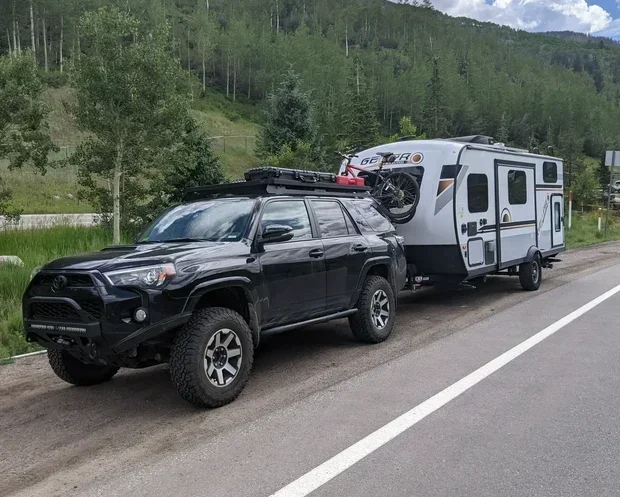
Yes, you can tow a travel trailer with a 4Runner as long as the trailer’s gross weight is within the 4Runner’s rated towing capacity of approximately 5,000 lbs. Make sure you have the tow package installed and use a weight-distributing hitch for trailers over 3,000 lbs.
What happens if I exceed the towing capacity of my 4Runner?
Exceeding the towing capacity can cause transmission overheating, brake failure, tire blowouts, and frame damage. It also voids your warranty and creates dangerous driving conditions for you and other motorists. Always stay within the factory-rated limits.
Does towing affect 4Runner fuel economy?
Yes, towing significantly reduces fuel economy. The 4Runner’s gas mileage drops from around 16 to 20 mpg to approximately 10 to 13 mpg when towing a heavy trailer. Plan for more frequent fuel stops on long towing trips.
Do I need towing mirrors for my 4Runner?
Yes, extended towing mirrors are highly recommended for the 4Runner. Stock mirrors may not provide enough visibility past a wide trailer. Most states require that you can see at least 200 feet behind your vehicle while towing, and proper mirrors help you meet this requirement safely.