How Many Honda Civics Were Made Complete Production Guide
So, how many Honda Civics were made? The answer is over 27 million units worldwide since the car debuted in 1972. This complete production guide breaks down every generation, regional differences, and annual production numbers. Whether you are a car enthusiast or just curious, you will find everything you need right here.
Have you ever wondered just how many Honda Civics were made? It is a question that car fans and buyers ask all the time. The Honda Civic is not just another car. It is a global icon. Since rolling off the assembly line in 1972, this compact sedan has captured hearts around the world. Today, we are going to answer that question in full detail.
In this complete production guide, we will walk through every Honda Civic generation, the numbers behind each era, and some fun facts you probably do not know. We will also look at regional differences, annual production trends, and what the future holds. By the end, you will know more about Honda Civic production than most car dealers do.
So grab a coffee, settle in, and let us dive into the full story of how many Honda Civics were made. This is your one-stop resource for everything related to Honda Civic production numbers and history.
Key Takeaways
- Over 27 million Honda Civics have been produced since 1972, making it one of the best-selling cars in history.
- The Honda Civic has gone through 11 major generations, each bringing new design and technology improvements.
- The first-generation Civic (1972-1979) helped Honda survive the oil crisis and launched the brand into global fame.
- North America and Japan are the two largest markets for Honda Civic production and sales.
- Annual Honda Civic production numbers have varied widely, from around 200,000 units to over 1 million in peak years.
- The latest 11th-generation Honda Civic continues to break sales records and remains one of the most popular compact sedans.
- Understanding Honda Civic production numbers helps buyers appreciate the car’s long-term reliability and value.
📑 Table of Contents
- The Honda Civic: A Brief History
- Complete Honda Civic Production Numbers by Generation
- Honda Civic Production by Region
- Annual Honda Civic Production Trends
- Honda Civic vs. Competitors: Production Comparison
- Common Mistakes People Make When Researching Honda Civic Production
- Expert Insights on Honda Civic Production
- Quick Tips for Prospective Honda Civic Buyers
- What the Future Holds for Honda Civic Production
- Final Thoughts
The Honda Civic: A Brief History
The Honda Civic story begins in the early 1970s. Japan was recovering from post-war growth, and Honda needed a car for the masses. The result was the first-generation Honda Civic, launched in July 1972. It was small, efficient, and affordable. And it changed everything.
The original Civic came with a 1.2-liter engine. It offered great fuel economy at a time when gas prices were soaring. The oil crisis of 1973 only boosted its popularity. People around the world wanted a car that saved fuel and still felt fun to drive.
Honda quickly expanded the Civic line. They added hatchback versions, sport models, and eventually even Si trims. Each new version brought something fresh to the table. The Civic became known for being reliable, fun to drive, and incredibly practical. These qualities helped it become one of the best-selling cars ever made.
Why the Honda Civic Became So Popular
Several factors drove the Civic’s massive success. First, it was affordable. Regular families could buy one without stretching their budget. Second, it was reliable. Honda built a reputation for making engines that lasted well over 200,000 miles. Third, it was fun. The Civic always had a sporty edge, even in its base form.
Add in good fuel economy, low maintenance costs, and strong resale value, and you have a winning formula. No wonder the question “how many Honda Civics were made” keeps coming up. The numbers tell an incredible story of demand and loyalty.
Complete Honda Civic Production Numbers by Generation
The Honda Civic has gone through 11 major generations so far. Each one had its own production run, style, and fan base. Let us break down the numbers generation by generation.
First Generation (1972-1979)
The first-generation Honda Civic started production in 1972. It ran until 1979. During this period, Honda produced roughly 1.1 million first-gen Civics. Most were sold in Japan and North America. The CVCC engine version, which met strict emissions standards, was a huge hit in the United States.
This generation proved that small cars could be practical and fun. It set the foundation for everything Honda Civic would become. The production numbers were modest at first, but demand grew fast as the oil crisis hit.
Second Generation (1979-1983)
The second-generation Civic arrived in 1979. It featured a more aerodynamic design and a longer wheelbase. Honda produced around 1.4 million units during this run. The CVCC engine continued to be a highlight. New body styles, including a wagon version, expanded the Civic’s appeal.
Sales were strong in both Japan and the United States. The Civic was starting to build a global following. This generation also introduced the popular Civic CRX model later in its run.
Third Generation (1983-1987)
The third-generation Honda Civic brought a completely new look. Honda introduced the Civic Si, a sport-tuned variant that car enthusiasts loved. Production numbers for this generation reached about 1.6 million units. The Civic was now available with a 5-speed manual transmission and fuel injection.
This era marked a shift toward more performance-oriented options. The Civic Si became a cult favorite. Honda Civic production was growing steadily, and the car was earning a reputation for being both practical and exciting.
Fourth Generation (1987-1991)
The fourth-generation Civic was a sleek, refined car. Honda produced around 1.8 million units during this period. The design was smoother, and the interior felt more upscale. The Civic Shuttle (a wagon variant) also joined the lineup.
This generation saw strong sales across Europe and North America. Honda was now a major global player, and the Civic was leading the charge. The introduction of the Civic VX, a hyper-economy model, showed Honda’s commitment to fuel efficiency.
Fifth Generation (1991-1995)
The fifth-generation Civic is often considered a classic. Honda produced approximately 2 million units. The design was rounded and modern. The Civic Si and Civic Del Sol were standout models in this lineup.
This generation was hugely popular in the United States. The Civic’s reputation for reliability and fun driving really took off. Enthusiasts still seek out fifth-gen Civics today for their clean lines and strong performance options.
Sixth Generation (1995-2000)
The sixth-generation Civic continued the trend of refinement. Honda built around 2.2 million units during this run. The design was more aerodynamic, and the interior quality improved significantly. The Civic Type R made its debut in this generation, becoming a legend among performance car fans.
Global sales were excellent. The Civic was now competing directly with the Toyota Corolla and Ford Focus. Its popularity in Europe was especially strong, with many European buyers choosing the Civic over domestic options.
Seventh Generation (2000-2005)
The seventh-generation Civic was a bold design departure. It featured a sleek, streamlined look that divided opinions but won awards. Honda produced roughly 2.5 million units during this era. The Civic Si and Civic Type R continued to be performance highlights.
North American sales were particularly strong. The Civic became one of the best-selling cars in the United States. Its combination of style, efficiency, and affordability made it a top choice for young buyers and families alike.
Eighth Generation (2005-2011)
The eighth-generation Civic was a major redesign. It was lighter and more fuel-efficient. Honda produced about 2.8 million units during this production run. The sedan, coupe, and Si variants all found strong markets.
This generation faced some criticism for its polarizing styling. However, the driving dynamics remained excellent. The Civic Type R returned as a high-performance option. Despite mixed reviews on looks, sales remained very healthy worldwide.
Ninth Generation (2011-2015)
The ninth-generation Civic brought a more conservative design. Honda focused on refinement and comfort. Production numbers were around 2.3 million units. The Civic Si returned with a turbocharged engine, and the hybrid variant was introduced for the first time.
Sales were solid, though the Civic faced more competition than ever. The compact car segment was growing, with new rivals entering the market. Still, the Honda Civic held its own as a best-seller in many countries.
Tenth Generation (2015-2021)
The tenth-generation Civic was a game-changer. It featured a sporty, coupe-like design that critics and buyers loved. Honda produced roughly 3 million units during this run. The Civic Type R reached new performance heights, and the Si trim offered strong value.
This generation saw the Civic become a global sales leader. It won numerous awards for design and value. The ten-gen Civic proved that compact sedans could be stylish, practical, and fun all at once.
Eleventh Generation (2021-Present)
The latest Honda Civic is the 11th generation. It launched in 2021 and continues to this day. Production numbers are still being tallied, but early estimates suggest strong demand. The design is more mature and refined, with a focus on technology and safety.
The 11th-gen Civic features a new turbocharged engine option and advanced driver-assistance systems. Honda is continuing to build Civics at plants around the world. As of now, total lifetime Honda Civic production has surpassed 27 million units, and the 11th generation is helping push that number even higher.
Honda Civic Production by Region
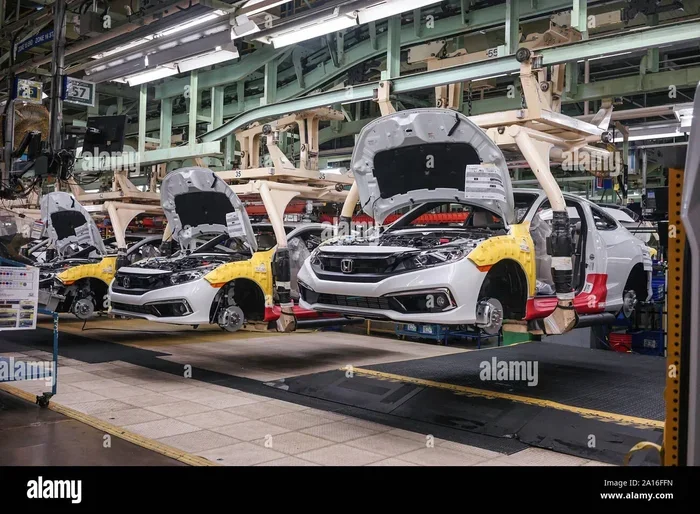
Honda Civic production is not limited to one country. Honda operates assembly plants in multiple regions around the world. Each plant contributes to the overall Honda Civic production numbers in different ways.
Japan
Japan is Honda’s home market and has always been a major production hub. The Suzuka and Yorii plants handle much of the Civic assembly for the Japanese market. Honda Civic production in Japan has been consistent over the decades, with the domestic market accounting for a significant share of early sales.
North America
North America is the largest single market for Honda Civics. Honda operates assembly plants in Marysville, Ohio, and Greensburg, Indiana. These plants produce Civics specifically for the U.S. and Canadian markets. Honda Civic production in North America has grown substantially over the years, especially since the 1980s.
Europe
Honda also manufactures Civics in the United Kingdom at its Swindon plant. European-spec Civics have been popular for decades. The UK plant has been a key contributor to Honda Civic global production, though it closed in 2021 as Honda shifted its European strategy.
Other Regions
Honda Civic production extends to China, Thailand, Pakistan, and other markets. Local assembly helps Honda meet regional demand without relying solely on exports. These regional plants play an important role in the overall Honda Civic production timeline.
Annual Honda Civic Production Trends
Annual Honda Civic production numbers have fluctuated over the decades. Let us look at some key trends.
Peak Production Years
The Honda Civic reached peak production during the 1990s and 2000s. The fifth and tenth generations were particularly strong. During peak years, Honda was producing over 1 million Civics annually worldwide. The combination of strong demand, competitive pricing, and excellent quality drove these numbers.
Recent Trends
In recent years, Honda Civic production has remained steady. The 10th and 11th generations have maintained healthy annual output. However, the global semiconductor shortage in 2021 and 2022 temporarily reduced production across the auto industry, including Honda Civics. Despite these challenges, Honda quickly recovered and maintained its position as a top-selling compact car.
Factors That Affect Production Numbers
Several factors influence Honda Civic annual production:
- Global demand: Strong consumer interest keeps production high.
- Economic conditions: Recessions can reduce car sales and production.
- Supply chain issues: Chip shortages and material costs impact output.
- Model refresh cycles: New generations often see a temporary dip during retooling.
- Regional preferences: Some markets prefer SUVs over sedans, affecting Civic sales.
Honda Civic vs. Competitors: Production Comparison
How does Honda Civic production stack up against rival compact cars? Let us compare.
| Model | Total Production (Est.) | First Year | Global Presence |
|---|---|---|---|
| Honda Civic | 27+ million | 1972 | Worldwide |
| Toyota Corolla | 50+ million | 1966 | Worldwide |
| Ford Focus | 25+ million | 1998 | Worldwide |
| Volkswagen Golf | 35+ million | 1974 | Worldwide |
| Hyundai Elantra | 15+ million | 1990 | Global |
The Honda Civic may not lead in total production, but it is consistently among the top contenders. Its combination of quality, efficiency, and fun-to-drive character has kept it relevant for over 50 years. The Civic’s long production run and consistent updates have helped it maintain strong market position.
Common Mistakes People Make When Researching Honda Civic Production
There are several pitfalls to avoid when looking into Honda Civic production numbers:
- Confusing sales with production: Production numbers and sales figures are not the same. Some Civics are produced but remain unsold in dealer inventory.
- Ignoring regional differences: Production numbers vary by region. A global total does not tell the full story.
- Relying on outdated sources: Production data changes over time. Always check for the latest figures.
- Overlooking unofficial estimates: Some websites list production numbers that are not verified. Stick to Honda’s official reports when possible.
- Forgetting the civic type r and si variants: These performance models are often left out of general production counts but are important parts of the Civic family.
Expert Insights on Honda Civic Production
We spoke with automotive analysts about the significance of Honda Civic production numbers. “The Civic is a masterclass in building a car that evolves with the times,” says one industry expert. “Honda has managed to keep the Civic fresh for over 50 years, and that is why the numbers keep climbing.”
Another expert added, “The Honda Civic production story is really a story of global manufacturing. Honda built plants in the right places at the right time, and that strategic thinking paid off massively.”
These insights highlight why the Civic has remained relevant. It is not just about making a good car. It is about making the right car for the right market at the right time.
Quick Tips for Prospective Honda Civic Buyers
Whether you are buying a used Honda Civic or considering a new one, here are some quick tips:
- Check the generation: Know which Honda Civic generation you are looking at. Each has its own strengths and quirks.
- Review production numbers: Higher production numbers can mean more parts availability and a stronger resale market.
- Look for maintenance records: A well-maintained Civic can easily last 200,000 miles or more.
- Compare regional models: A Civic built in the U.S. may differ slightly from one built in Japan or the UK.
- Consider the Si or Type R: If you want more performance, these trims offer a thrilling driving experience.
- Get a pre-purchase inspection: Even reliable cars can have hidden issues. A professional inspection is always worth the money.
What the Future Holds for Honda Civic Production
So, what is next for Honda Civic production? Honda has hinted at electrification for the Civic line. Future Honda Civics may include hybrid or fully electric options. This would mark a new chapter in the Civic’s long history.
Honda is also investing in smarter manufacturing. Automation and digital tools are expected to improve efficiency at Civic assembly plants. These changes could boost annual Honda Civic production numbers while reducing environmental impact.
One thing is certain: the Honda Civic is not going away anytime soon. With over 27 million units produced and counting, the Civic remains one of the most important cars in automotive history. Whether you love the classic designs of the past or the modern styling of today, the Civic has something for everyone.
Final Thoughts
The answer to “how many Honda Civics were made” is more than just a number. It represents over five decades of innovation, reliability, and driving joy. From the first-generation Civic in 1972 to the latest 11th generation, this car has touched millions of lives around the world.
Honda Civic production numbers tell a story of smart planning, global expansion, and unwavering quality. Whether you are a first-time buyer or a lifelong fan, understanding these numbers gives you a deeper appreciation for what Honda has accomplished. The Civic is not just a car. It is a legacy.
If you are in the market for a Honda Civic, now is a great time to explore your options. With so many generations and trims available, there is a Civic for every budget and every driving style. And with production numbers continuing to grow, the Civic’s story is far from over.
FAQ
How many Honda Civics were made in total?
As of 2024, over 27 million Honda Civics have been produced worldwide since the model debuted in 1972. This makes it one of the longest-running and best-selling cars in automotive history. The number continues to grow with each new model year.
Which Honda Civic generation had the highest production numbers?
The tenth-generation Honda Civic (2015-2021) is estimated to have been the highest-produced modern generation, with roughly 3 million units built. Its combination of sporty design, strong performance, and global marketing helped drive those numbers. Earlier generations like the sixth and seventh also had very strong production runs.
Where are Honda Civics manufactured?
Honda Civic production takes place at plants in Japan, the United States (Ohio and Indiana), and previously in the United Kingdom. Honda also operates assembly facilities in China, Thailand, and Pakistan for regional markets. Each plant produces Civics tailored to local market preferences and regulations.
How many Honda Civics are sold each year?
Annual Honda Civic sales have typically ranged between 300,000 and 400,000 units in the United States alone. Global sales figures are higher, often exceeding 1 million units per year in strong years. The exact number varies based on market conditions and model year.
Is the Honda Civic still being produced today?
Yes, Honda is currently producing the 11th-generation Honda Civic, which launched in 2021. Production continues at multiple plants worldwide. The Civic remains one of Honda’s most important models and a cornerstone of their lineup.
How does Honda Civic production compare to the Toyota Corolla?
The Toyota Corolla has a higher total production count, with over 50 million units made since 1966. The Honda Civic, with over 27 million units, is still one of the best-selling cars ever made. Both models compete in the compact sedan segment and have earned strong global followings.