How Do I Turn On Cruise Control Everything You Need
Knowing how to turn on cruise control is a simple skill that makes every drive more comfortable and less tiring. Whether you are on a long highway road trip or just commuting through town, cruise control helps you maintain a steady speed without pressing the gas pedal. This guide walks you through everything from finding the cruise control button to troubleshooting common problems, so you can use your cruise control system with confidence and ease.
Have you ever wondered how do I turn on cruise control? It is one of those car features that seems simple but can feel confusing the first few times you try it. Maybe you are on a long highway drive and your foot is getting tired. Or perhaps you just bought a new car and are not sure where all the buttons are. Either way, learning to use cruise control properly is a game changer.
Cruise control lets you set a steady speed and take your foot off the gas pedal. This means less fatigue on long trips and a more relaxed driving experience. But there is more to it than just pressing one button. You need to know how to set it, adjust it, and when to turn it off. In this guide, we will walk you through every step so you can use your cruise control system with full confidence.
We will cover everything from finding the cruise control button on your car to understanding the difference between traditional and adaptive systems. You will also learn about common problems, safety tips, and expert advice that will make you a smarter driver. Let us get started.
Key Takeaways
- Easy to Use: Turning on cruise control is straightforward once you know where the buttons are on your steering wheel or stalk.
- Saves Fuel: Using cruise control on highways helps maintain a steady speed, which can improve your fuel efficiency over long distances.
- Different Types Exist: Traditional cruise control and adaptive cruise control work differently, and knowing the difference helps you use each one properly.
- Safety First: Always stay alert and be ready to take over when road conditions change, even with cruise control engaged.
- Common Issues Are Fixable: Most cruise control problems have simple solutions, from a blown fuse to a dirty brake light switch.
- Works Best on Highways: Cruise control shines on open roads with steady speed limits and minimal stops.
- Know Your Vehicle: Every car is slightly different, so always check your owner manual for model specific instructions.
📑 Table of Contents
- What Is Cruise Control and Why Does It Matter
- How to Turn On Cruise Control Step by Step
- Different Types of Cruise Control Systems
- Using Cruise Control Safely
- Troubleshooting Common Cruise Control Problems
- Cruise Control Tips for Different Driving Situations
- How Cruise Control Affects Fuel Efficiency
- Key Features to Look for in a Cruise Control System
- Conclusion
What Is Cruise Control and Why Does It Matter
Cruise control is a system in your car that lets you set a specific speed and maintain it without you having to keep your foot on the gas. It has been around for decades and is now a standard feature in most modern vehicles. The system uses a small computer and sensors to manage your vehicle speed automatically.
How Cruise Control Works
When you activate cruise control, the system takes over the throttle. It keeps your car moving at the speed you set. You can still steer and brake at any time. The system simply removes the need to constantly press the accelerator pedal.
Here is how the basic process works:
- You press the cruise control button to turn the system on.
- You accelerate to your desired speed.
- You press the set button to lock in that speed.
- The car maintains that speed automatically.
- You can adjust the speed up or down with the plus and minus buttons.
It is really that simple. Once you set the speed, your foot can rest comfortably. This is especially helpful during long road trips where you are driving on open highways for hours at a time.
Why Cruise Control Matters for Your Driving
There are several real benefits to using cruise control regularly. First, it reduces driver fatigue. When you do not have to keep pressing the gas pedal, your leg muscles stay relaxed. This is especially important on long highway drives where you might be on the road for several hours.
Second, cruise control can help improve your fuel efficiency. Maintaining a steady speed is better for your engine than constantly speeding up and slowing down. Studies have shown that steady driving habits can save you money at the pump over time.
Third, it helps with speed management. When you are on a road trip, it is easy to accidentally speed up without noticing. Cruise control keeps your vehicle speed consistent and within the legal limit, which also helps you avoid speeding tickets.
How to Turn On Cruise Control Step by Step
Now that you understand what cruise control does, let us get into the practical steps. The exact process varies slightly depending on your vehicle, but the general steps are very similar across most cars, trucks, and SUVs.
Finding the Cruise Control Buttons
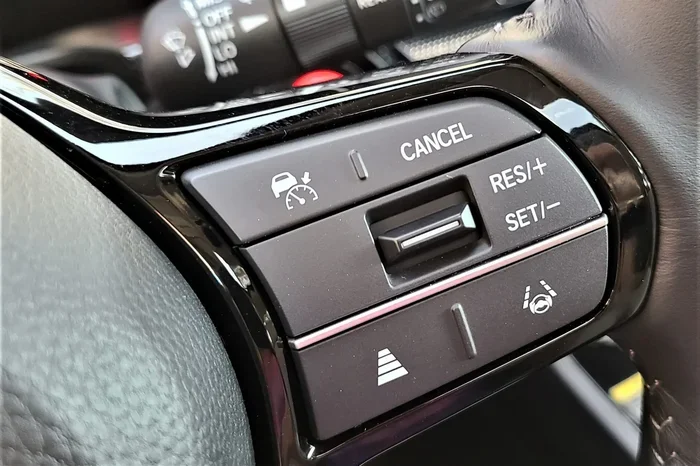
The first step is to locate the cruise control controls on your car. These are usually found in one of three places:
- On the steering wheel: Most modern cars have cruise control buttons on the steering wheel. Look for a button that says Cruise, Set, or has a speedometer icon.
- On the steering column stalk: Some vehicles, especially older models, have cruise control levers on the steering column near the turn signal stalk.
- On the dashboard: A few cars have cruise control buttons on the dashboard or center console, though this is less common in newer vehicles.
Once you find the buttons, you are ready to move to the next step. If you are not sure where they are on your specific car, check the owner manual. It will have a diagram showing all the cruise control functions.
Setting Your Speed
Here is the step by step process to turn on cruise control:
- Press the On button to activate the cruise control system. You will usually see a light or icon on your dashboard turn on.
- Accelerate to the speed you want to maintain. This should be a safe and legal speed for the road you are on.
- Press the Set button. This locks in your current speed.
- Take your foot off the gas pedal. The car will now maintain that speed on its own.
That is all it takes to turn on cruise control. The system is now active and your car will hold its speed without any input from you.
Adjusting Cruise Control Settings
Once cruise control is on, you can make adjustments as needed. Most cars have plus and minus buttons on the steering wheel that let you increase or decrease the set speed in small increments. You can usually adjust the speed by one or five miles per hour at a time.
If you need to make a bigger change, you can simply press the accelerator pedal to speed up temporarily. When you take your foot off the pedal, most systems will return to the previously set speed. Some newer vehicles also allow you to set a minimum speed or adjust the sensitivity of the system.
Different Types of Cruise Control Systems
Not all cruise control systems are the same. Over the years, automakers have developed different versions of this technology. Understanding the differences helps you use each system to its full potential.
Traditional Cruise Control
Traditional cruise control is the original system. It maintains a fixed speed that you set. It works great on flat highways and open roads. However, it does not adjust for traffic or changes in road elevation. If you are going uphill, the car may slow down slightly. If you are going downhill, it may speed up a bit.
With traditional cruise control, you are still responsible for braking when needed. The system only controls the throttle, not the brakes. This is an important distinction to keep in mind.
Adaptive Cruise Control
Adaptive cruise control, often called ACC, is a more advanced system. It uses radar, cameras, or sensors to detect the vehicle ahead of you. If the car in front slows down, your car will automatically slow down too. When the road clears, it will speed back up to your set speed.
Adaptive cruise control is especially useful in stop and go traffic or on crowded highways. It takes a lot of the stress out of driving in heavy traffic. Many new cars come with this feature as standard or as part of a driver assistance package.
How They Differ
Here is a quick comparison of the two main types:
| Feature | Traditional Cruise Control | Adaptive Cruise Control |
|---|---|---|
| Speed Adjustment | Fixed speed only | Adjusts based on traffic |
| Sensor Technology | None needed | Radar, cameras, or sensors |
| Best For | Open highways | All driving conditions |
| Cost | Standard on most cars | Often a premium feature |
| Driver Input | Full braking control | Some systems include auto braking |
Both systems are valuable. Traditional cruise control is great for long, open highway drives where traffic is light. Adaptive cruise control shines in more complex driving situations where you need the car to respond to changing conditions around you.
Using Cruise Control Safely
While cruise control is a helpful feature, it is not a replacement for attentive driving. Using it safely requires understanding when it is appropriate and when you should turn it off.
When to Use Cruise Control
Cruise control works best in certain driving situations. Here are the ideal conditions for using it:
- You are driving on a highway with steady traffic flow.
- The road is clear and you can see far ahead.
- The speed limit is consistent and there are no frequent stops.
- Weather conditions are good with clear visibility.
- You are feeling tired and need to reduce leg fatigue.
In these situations, cruise control can make your drive more comfortable and efficient. It takes the pressure off your right foot and lets you focus more on steering and scanning the road ahead.
When to Turn Off Cruise Control
There are also times when you should definitely turn off cruise control:
- You are driving in heavy traffic with frequent stops.
- The road has sharp curves or winding sections.
- Weather conditions are poor, such as rain, snow, or ice.
- You are driving on wet or slippery roads.
- You are approaching a construction zone with changing speed limits.
In these situations, you need full control of your vehicle. Cruise control is designed for steady driving, not for the unpredictable nature of city traffic or bad weather.
Quick Tips for Safe Cruise Control Use
Here are some practical tips to keep in mind whenever you use cruise control:
- Always keep both hands on the steering wheel, even with cruise control on.
- Stay alert and scan the road ahead constantly.
- Be ready to brake or steer at any moment.
- Do not use cruise control when you are overly tired or drowsy.
- Adjust your following distance when using adaptive cruise control.
- Turn off cruise control before entering a sharp curve or turn.
Troubleshooting Common Cruise Control Problems
Sometimes cruise control does not work the way it should. Before you panic or call a mechanic, there are a few common issues you can check yourself. Most cruise control problems have simple solutions.
Common Problems and Easy Fixes
Here are the most frequent cruise control issues and how to address them:
- Cruise control will not turn on: Check if the system is switched on. Some cars have a separate on/off button. Also check your fuse box for a blown fuse related to the cruise control system.
- Cruise control will not set: Make sure you are going at least 25 to 30 miles per hour before pressing the set button. Most systems require a minimum speed to engage.
- Cruise control cancels unexpectedly: Check if your brake light switch is working. Many systems cancel cruise control when the brake pedal is pressed. A faulty brake light switch can cause the system to disengage randomly.
- Cruise control does not resume after braking: Press the resume button after you have slowed down and are ready to return to your set speed. Not all systems resume automatically.
- Cruise control warning light stays on: This could indicate a sensor problem or a fault in the system. Have a diagnostic scan done to identify the specific issue.
When to See a Mechanic
While many cruise control issues can be fixed with simple checks, some problems require professional help. If you have checked the basics and your cruise control still does not work, it is time to visit a mechanic. Issues with the throttle body, vehicle speed sensor, or cruise control module often need specialized tools and expertise to diagnose and repair.
Also, if your cruise control warning light is flashing or staying on constantly, do not ignore it. This is your car telling you something needs attention. Getting it checked early can prevent more serious and expensive repairs down the road.
Cruise Control Tips for Different Driving Situations
Using cruise control effectively depends on the type of driving you are doing. Different situations call for different approaches. Here are some practical tips for the most common driving scenarios.
Highway Driving
Highway driving is where cruise control shines the most. On long, straight stretches of highway, setting your cruise control at the speed limit lets you drive comfortably for hours. You can focus more on scanning traffic and road conditions instead of keeping your foot on the pedal.
Here are some highway specific tips:
- Set your cruise control at or slightly below the speed limit.
- Use adaptive cruise control if traffic is heavy and variable.
- Turn off cruise control when approaching exits or merges.
- Be extra cautious in construction zones where speed limits change.
Long Road Trips
For long road trips, cruise control is your best friend. It reduces fatigue and helps you maintain a consistent pace. On a multi hour drive, the difference between using cruise control and not using it can be significant in terms of how tired you feel when you arrive at your destination.
Consider these tips for road trips:
- Take breaks every two hours to stretch and rest your legs.
- Use cruise control on flat, open stretches of road.
- Turn it off on hilly or mountainous terrain where you need more control.
- Stay hydrated and alert even with cruise control engaged.
Hilly Terrain
Driving on hilly roads with cruise control can be a bit tricky. Traditional cruise control does not adjust for hills very well. Your car may struggle to maintain speed going uphill and may pick up too much speed going downhill.
For hilly terrain, it is often better to turn off cruise control and drive manually. This gives you full control over your speed and throttle. If you must use cruise control on hills, keep your foot near the pedals and be ready to intervene at any time.
City and Suburban Driving
Cruise control is generally not recommended for city driving. The constant stopping and starting, traffic lights, and lower speeds make it impractical. However, some modern cars with adaptive cruise control can handle low speed stop and go traffic. If your vehicle has this feature, you can use it in moderate traffic conditions, but you should still stay alert and ready to take over at all times.
In suburban areas with moderate traffic, you might find cruise control useful on long stretches between traffic lights. Just be mindful of speed limit changes and school zones where you need to slow down.
How Cruise Control Affects Fuel Efficiency
Many drivers wonder whether cruise control actually saves gas. The answer is yes, in most cases. Maintaining a steady speed is more fuel efficient than constantly accelerating and decelerating. Your engine works less hard when it does not have to keep adjusting to changes in speed.
Here is what you should know about cruise control and fuel economy:
- Steady highway speeds improve fuel efficiency by up to 14 percent according to some studies.
- Cruise control is most effective on flat highways with consistent speed limits.
- On hilly terrain, cruise control may use more fuel as the system works harder to maintain speed on inclines.
- Using cruise control at moderate speeds (55 to 65 miles per hour) is the sweet spot for fuel savings.
So not only does cruise control make driving more comfortable, it can also save you money on fuel. That is a win win for any driver.
Key Features to Look for in a Cruise Control System
If you are shopping for a new car or considering a vehicle upgrade, here are some cruise control features worth looking for:
- Adaptive cruise control: Adjusts speed based on traffic ahead of you.
- Speed limiter function: Prevents your car from exceeding a set speed.
- Resume function: Automatically returns to your set speed after slowing down.
- Touchscreen controls: Allows you to set cruise control from the infotainment screen.
- Voice activation: Lets you control cruise control with voice commands.
- Auto cancel on braking: Safely disengages cruise control when you tap the brake.
These features make the cruise control experience more seamless and intuitive. If you are in the market for a new vehicle, prioritize models that offer the cruise control features that match your driving habits and needs.
Conclusion
Learning how do I turn on cruise control is a simple but valuable skill for any driver. From finding the cruise control button on your steering wheel to setting your speed and adjusting it on the fly, the process is quick and easy once you know the steps. Whether you drive a sedan, SUV, or truck, cruise control can make your drives more comfortable, more fuel efficient, and less tiring.
Remember to always use cruise control safely. Use it on open highways and steady roads, and turn it off when conditions require more active driving. Keep your hands on the wheel and your eyes on the road at all times. And if you run into any problems, many common cruise control issues have simple fixes that you can do yourself.
With the knowledge you have gained from this guide, you are now ready to use your cruise control system with confidence. Take the next long drive and put these tips into practice. You will wonder how you ever drove without it.
Frequently Asked Questions
Can I use cruise control in the rain?
It is best to avoid using cruise control on wet roads. When the road is slippery, you need full control of your vehicle. Cruise control can cause your wheels to spin if you hit a patch of water or ice, which can lead to a loss of control. Turn it off and drive manually in rainy or icy conditions.
What is the difference between cruise control and adaptive cruise control?
Traditional cruise control maintains a fixed speed you set. Adaptive cruise control uses sensors and cameras to detect the vehicle ahead and automatically adjusts your speed to maintain a safe following distance. Adaptive cruise control is more advanced and works well in varying traffic conditions.
Does cruise control save fuel?
Yes, cruise control can help save fuel by maintaining a steady speed on highways. Avoiding constant acceleration and deceleration reduces fuel consumption. However, on hilly terrain or in stop and go traffic, cruise control may not provide the same fuel benefits and could even use slightly more fuel.
Can I turn off cruise control while driving?
Yes, you can turn off cruise control at any time while driving. Simply press the cancel button, tap the brake pedal, or turn off the system using the main on/off switch. Your vehicle will return to manual control immediately, and you can resume using cruise control when conditions are safe again.
Why does my cruise control keep turning off by itself?
This is often caused by a faulty brake light switch, which is a common and inexpensive fix. Other possible causes include a blown fuse, a malfunctioning vehicle speed sensor, or an issue with the cruise control module. Check the brake light switch first, and if the problem persists, visit a mechanic for a proper diagnosis.
Is it safe to sleep while cruise control is on?
No, it is never safe to sleep or become disengaged while driving, even with cruise control active. Cruise control only manages your vehicle speed. It does not steer, brake automatically (in most systems), or respond to changing road conditions. Always stay alert and keep your hands on the wheel while driving.