How Do I Know If My 4WD Is Engaged Learn the Simple Signs
Knowing whether your 4WD is engaged is essential for safe off-road driving and better traction on tough terrain. You can check dashboard warning lights, listen for drivetrain sounds, and feel for changes in steering and handling. This guide walks you through every simple sign so you can confirm your 4WD is engaged with confidence every time you hit the trail.
Key Takeaways
- Dashboard lights are your first clue: Most modern vehicles display a 4WD indicator on the instrument cluster when the system is active.
- Listen for mechanical changes: A distinct engagement sound from the transfer case or front axle often confirms 4WD mode.
- Feel the difference in steering: When your 4WD is engaged, you may notice tighter turning and increased pull from all four wheels.
- Check the transfer case shifter: The physical position of the shifter or dial tells you whether you are in 4WD high or 4WD low.
- Watch for warning signs: Flashing lights or error messages mean something is wrong with your drivetrain engagement system.
- Manual locking hubs matter: Older 4WD trucks require manual hub engagement that many drivers forget to check.
- When in doubt, consult your owner manual: Every 4WD system has unique features, and the manual provides model-specific guidance.
📑 Table of Contents
How Do I Know If My 4WD Is Engaged
You are heading down a muddy back road. The rear wheels start to spin. You reach for the 4WD lever. But did it actually engage? This is a question many drivers ask, especially those new to four-wheel drive vehicles. The good news is that your truck or SUV gives you several clear signs. You just need to know what to look for.
Understanding whether your 4WD system is active can save you from getting stuck. It also protects your drivetrain from costly damage. In this guide, we will walk you through every simple sign. From dashboard lights to physical sensations, you will learn to confirm your 4WD is engaged in seconds. Let us break it down step by step.
Why Knowing Your 4WD Status Matters
Driving with your 4WD disengaged on slippery terrain is risky. Your wheels can spin freely. You lose all traction. This can lead to accidents or getting completely stuck. On the other hand, driving in 4WD on dry pavement can damage your transfer case and front axle. So knowing the difference is not just helpful. It is essential for vehicle safety and longevity.
Most modern 4WD vehicles come with electronic indicators. Older models may rely on mechanical clues. Either way, you can learn to read the signs. Once you know what to look for, checking your drivetrain status becomes second nature.
Dashboard Indicators and Warning Lights
Your vehicle’s instrument cluster is the first place to check. Nearly every modern 4WD truck or SUV has a dedicated warning light for the drivetrain system. These lights vary by manufacturer, but they all serve the same purpose. They tell you whether your 4WD mode is active.
Common dashboard indicators include a picture of all four wheels with an exclamation mark. Some brands show “4WD” or “4HI” text on the display. Others use a simple icon that lights up in green or amber. If you see any of these, your 4WD is likely engaged.
What Different Lights Mean
A solid green or white light usually means your 4WD is fully engaged. This is normal and expected. A flashing amber light often signals a problem. It could mean the system is having trouble engaging the front axle. A red warning light is more serious. It may indicate a fault in the transfer case or wheel speed sensors.
If you see a flashing light, pull over safely. Check your owner manual for the specific meaning. Some vehicles display a message on the digital screen that explains the issue. Do not ignore these warnings. They protect both you and your drivetrain.
Where to Find the 4WD Light
The location of the 4WD indicator depends on your vehicle. Most trucks place it behind the steering wheel on the gauge cluster. Some newer models show it on the infotainment screen. You can usually find it in the vehicle information or trip display section. Familiarize yourself with its location before you need it on the trail.
Physical Signs Your 4WD Is Engaged
Beyond lights, your vehicle gives you physical feedback when the 4WD system activates. These signs are easy to notice once you know what to feel for. They work whether you have a modern electronic system or an older mechanical setup.
Changes in Steering Feel
When you engage 4WD high, you may notice the steering feels tighter. This happens because all four wheels are now turning together. The front wheels are pulling along with the rear wheels. Some drivers describe it as a slight increase in effort when turning the wheel. This is completely normal and confirms engagement.
In 4WD low, the steering feel changes even more. The vehicle moves at a much slower speed with increased torque. You will feel a strong sense of power and control. This is exactly what you want when crawling over rocks or steep inclines.
Sounds of Engagement
Your drivetrain makes distinct sounds when the 4WD system activates. A clicking or clunking noise often comes from the front axle. This is the engagement mechanism locking the front wheels in. The transfer case may also produce a brief mechanical sound as it shifts modes.
Do not be alarmed by these noises. They are normal. However, if you hear grinding or continuous rattling, something may be wrong. In that case, stop driving and inspect the vehicle. Persistent abnormal sounds can signal a failing front differential or damaged driveshaft.
Vehicle Behavior on Different Surfaces
One of the best ways to confirm engagement is to observe how the vehicle behaves. When your 4WD is engaged on a loose surface like gravel or mud, you should feel more grip. The vehicle pulls forward more confidently. The wheels stop spinning as freely. If you notice improved traction, your 4WD system is likely working correctly.
Try a simple test on a safe, loose surface. Gently press the accelerator. If all four wheels spin together, your four-wheel drive is engaged. If only the rear wheels spin, the system is still in two-wheel drive mode.
How to Check the Transfer Case
The transfer case is the heart of your 4WD system. It distributes power from the engine to both the front and rear axles. Checking this component is one of the most reliable ways to confirm your drivetrain status. Here is how to do it.
Locating the Transfer Case Shifter
On most trucks, the transfer case shifter is located on the floor between the front seats. Some vehicles have a lever. Others have a dial or electronic switch. The shifter will have positions marked for 2HI, 4HI, and 4LO. When the shifter is in 4HI or 4LO, your 4WD is engaged.
Make sure the vehicle is stopped before shifting. Moving the shifter while driving can damage the drivetrain. Always follow the proper procedure outlined in your owner manual. This keeps your system working smoothly for years.
Manual Locking Hubs
Older 4WD vehicles often have manual locking hubs on the front wheels. These hubs physically connect the front wheels to the drivetrain. If your truck has them, you must turn them by hand to fully engage the front axle. Even if you shift the transfer case into 4HI, the vehicle will not be fully in four-wheel drive without locked hubs.
Some newer vehicles use automatic locking hubs. These engage and disengage automatically when you shift the 4WD mode. You do not need to get out and turn them manually. Check your vehicle to see which type you have. This makes a big difference in how you confirm engagement.
Electronic Engagement Systems
Many modern 4WD trucks use electronic push-button systems. You simply press a button on the dash or center console to activate the 4WD system. The vehicle’s computer handles the engagement process. A motor or solenoid locks the front axle automatically. You can confirm engagement by checking the dashboard display or the shifter position indicator.
These systems are convenient but can sometimes malfunction. If the button does not respond, check the fuse box first. A blown fuse can prevent the 4WD activation from working. If the fuse is fine, the issue may be with a sensor or the electronic control module.
Common 4WD Engagement Problems
Sometimes your 4WD system does not work as expected. Understanding common problems helps you diagnose issues quickly. Here are the most frequent reasons your 4WD may not engage properly.
Faulty Wheel Speed Sensors
Your vehicle relies on wheel speed sensors to monitor how fast each wheel is turning. If a sensor fails, the 4WD system may not engage. The computer thinks the wheels are already spinning at the same speed. It does not send the signal to lock the front axle. A faulty sensor is one of the most common reasons for engagement failure.
Low Transfer Case Fluid
The transfer case needs proper fluid levels to operate smoothly. Low fluid means the internal gears cannot engage correctly. Check your transfer case fluid regularly. If it looks dark or smells burnt, it is time for a change. Fresh fluid keeps the drivetrain running reliably.
Vacuum Leaks in Older Models
Older 4WD trucks use vacuum actuators to engage the front axle. Over time, vacuum lines can crack or leak. This prevents the front differential from locking properly. If you have an older vehicle, inspect the vacuum lines under the hood. Replacing a cracked line is a simple fix that restores full 4WD function.
Damaged Front Axle or Driveshaft
A broken front driveshaft means power cannot reach the front wheels. Even if the 4WD system is fully engaged, the vehicle behaves like it is in two-wheel drive. Inspect the driveshaft for dents, rust, or worn universal joints. A damaged front axle also prevents proper power delivery to the front wheels.
Electrical Issues
Modern 4WD systems depend on wiring and electronic controls. Corroded connectors, broken wires, or a faulty control module can prevent engagement. If your dashboard lights behave erratically, the electrical system may be the culprit. A simple diagnostic scan at a repair shop can often pinpoint the exact issue.
Tips for Safe 4WD Driving
Knowing how to confirm your 4WD is engaged is only half the battle. Driving safely in four-wheel drive mode requires good habits. Follow these practical tips to get the most out of your 4WD system.
Always Disengage 4WD on Pavement
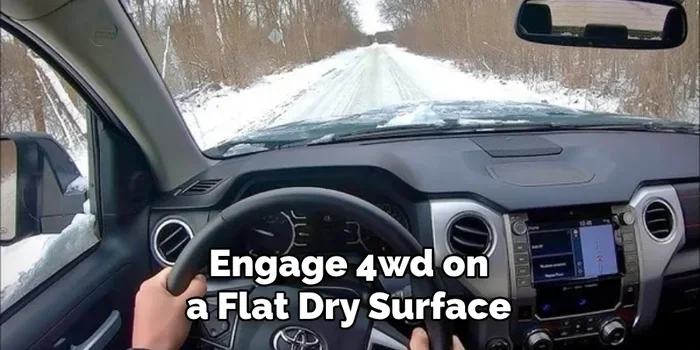
Driving in 4WD high on dry, paved roads can cause damage. The front and rear wheels rotate at different speeds during turns. In 4WD, they are forced to spin at the same rate. This creates stress on the transfer case, front axle, and driveshaft. Always return to 2WD when driving on highways or dry pavement.
Know When to Use 4WD Low
4WD low provides maximum torque at very slow speeds. Use it for rock crawling, steep inclines, and deep mud. Do not use it at high speeds. The gearing is designed for slow, controlled movement. Driving fast in 4LO can overheat the drivetrain and cause serious mechanical failure.
Check Your System Before Every Off-Road Trip
Before heading off-road, take a moment to confirm your 4WD mode. Shift into 4HI or 4LO while still on solid ground. Listen for engagement sounds. Check the dashboard indicator. This simple habit ensures you are never caught off guard on a difficult trail.
Practice in a Safe Area
If you are new to off-road driving, practice in an open field or empty parking lot. Get comfortable with how your vehicle feels in different 4WD modes. Learn the sounds, the steering feedback, and the handling changes. This preparation builds confidence and keeps you safe when the terrain gets tough.
Maintain Your Drivetrain Regularly
Regular maintenance keeps your 4WD system in top shape. Change the transfer case fluid on schedule. Inspect the front and rear differentials. Check the locking hubs and vacuum lines. A well-maintained drivetrain engages smoothly and lasts for many years of adventure.
Quick Tips to Confirm 4WD Engagement
Here is a quick checklist you can follow every time you need to confirm your 4WD is engaged:
- Look at the dashboard: Find the 4WD indicator light. Is it on? What color is it?
- Check the shifter position: Is the transfer case lever in 4HI or 4LO?
- Listen carefully: Do you hear a click or clunk from the front axle area?
- Feel the steering: Does the steering feel tighter than normal?
- Test on a loose surface: Do all four wheels pull together on gravel or dirt?
- Check manual hubs: Are the front locking hubs turned to the locked position?
- Read the owner manual: Your specific model may have unique confirmation methods.
Keep this checklist in mind. With a little practice, checking your 4WD engagement takes only seconds. You will never have to wonder again whether your drivetrain is active.
Expert Insights on 4WD Engagement
We spoke with experienced off-road mechanics about the most common mistakes drivers make with their four-wheel drive systems. Here is what they had to say.
Always shift into 4WD before you need it. Trying to engage the system while already stuck in deep mud or snow is very difficult. The wheels need to be turning slowly for the engagement mechanism to work. Get into 4WD while the surface is still firm. This simple habit saves a lot of headaches.
Do not rely on one sign alone. The best approach is to check multiple indicators. Look at the dashboard light. Listen for engagement sounds. Feel the steering response. When all three confirm engagement, you can drive with full confidence. Trusting just one sign can lead to mistakes, especially on older vehicles where dashboard lights may not always work correctly.
Understand the difference between part-time and full-time 4WD. Part-time 4WD systems require manual engagement. You must shift into 4WD yourself. Full-time 4WD systems are always active to some degree. They use a center differential to allow the front and rear wheels to spin at different speeds. Knowing which type you have helps you understand how your system works and how to confirm it is functioning properly.
Key Takeaways
- Dashboard lights are your first clue: Most modern vehicles display a 4WD indicator on the instrument cluster when the system is active.
- Listen for mechanical changes: A distinct engagement sound from the transfer case or front axle often confirms 4WD mode.
- Feel the difference in steering: When your 4WD is engaged, you may notice tighter turning and increased pull from all four wheels.
- Check the transfer case shifter: The physical position of the shifter or dial tells you whether you are in 4WD high or 4WD low.
- Watch for warning signs: Flashing lights or error messages mean something is wrong with your drivetrain engagement system.
- Manual locking hubs matter: Older 4WD trucks require manual hub engagement that many drivers forget to check.
- When in doubt, consult your owner manual: Every 4WD system has unique features, and the manual provides model-specific guidance.
Conclusion
So how do you know if your 4WD is engaged? The answer is simpler than you think. You have multiple ways to confirm it. Dashboard lights give you a visual signal. Physical sounds and steering changes provide tactile feedback. The transfer case shifter gives you a direct mechanical confirmation. Together, these signs leave no room for doubt.
Taking a few seconds to verify your 4WD system status can make a huge difference. It keeps you safe on the trail. It prevents costly drivetrain damage. It gives you confidence when the terrain gets tough. Whether you drive a modern electronic 4WD truck or a classic manual-locking model, the signs are always there. You just need to know where to look.
Use the checklist in this guide every time you head off-road. Make it a habit. Share it with fellow drivers who are new to four-wheel drive vehicles. The more you practice, the more natural it becomes. Soon, confirming your 4WD engagement will be as automatic as buckling your seatbelt.
Your vehicle works hard to get you through tough terrain. Understanding how to confirm its 4WD mode is one of the best things you can do as a driver. Stay informed, stay prepared, and enjoy every adventure with confidence.
Frequently Asked Questions
Can I shift into 4WD while driving on the highway?
Most modern vehicles allow you to shift from 2HI to 4HI while driving at low speeds. However, you should never shift into 4LO while moving at highway speeds. Always slow down to a complete stop or very low speed before engaging 4WD low. Check your owner manual for specific speed limits and shifting procedures for your model.
What does the 4HI position on my transfer case mean?
The 4HI position engages your four-wheel drive system for normal-speed off-road driving. It provides extra traction on gravel, mud, snow, and wet roads. You can use 4HI on most off-road surfaces and even on lightly paved roads. It is the most commonly used 4WD mode for everyday trail driving and light off-roading.
Why does my 4WD light keep flashing on the dashboard?
A flashing 4WD light usually indicates a problem with the drivetrain system. Common causes include faulty wheel speed sensors, low transfer case fluid, or a malfunctioning engagement motor. Do not ignore a flashing light. Have your vehicle inspected by a qualified mechanic as soon as possible to prevent further damage to the drivetrain.
Do I need to disengage 4WD before driving on dry pavement?
Yes, you should always return to 2WD when driving on dry, paved surfaces. Part-time 4WD systems are not designed for high-speed pavement driving. The locked front and rear axles force all wheels to spin at the same rate, which causes excessive wear on the transfer case, front axle, and tires. Switching back to 2WD protects your vehicle and improves fuel efficiency.
How often should I check my transfer case fluid?
Most experts recommend checking your transfer case fluid every 30,000 to 60,000 miles. However, if you frequently use your 4WD system in tough conditions, check it more often. Dirty or low fluid can cause poor engagement and internal wear. Fresh fluid keeps the gears lubricated and your 4WD system running smoothly.
What is the difference between automatic and manual locking hubs?
Automatic locking hubs engage the front wheels on their own when you shift into 4WD. You do not need to get out of the vehicle to turn them manually. Manual locking hubs require you to physically twist the hub on each front wheel to lock it in place. Manual hubs are common on older trucks and require a bit more effort, but they are simple and reliable when properly maintained.
=== CONCLUSION ===
Now you know exactly how to confirm your 4WD is engaged. From dashboard lights to steering feel and transfer case position, you have every tool you need. Use the tips in this guide on your next off-road adventure and drive with total confidence.