Can a Wrapped Car Go Through a Carwash Without Damage
Yes, a wrapped car can go through a carwash, but not all carwash types are safe. Touchless car washes are the best choice for vinyl wraps, while automatic brush and rotary brush washes can cause serious damage. This guide covers everything you need to know about keeping your car wrap safe at the carwash, including tips, risks, and expert advice.
You just spent good money on a vinyl wrap for your car. Maybe it was a bold color change, a sleek matte finish, or a full vehicle branding wrap for your business. Either way, you want that wrap to look amazing for as long as possible. So when you pull up to the carwash, a single question pops into your head: can a wrapped car go through a carwash?
The short answer is yes, but with some important caveats. Not every carwash is safe for a wrapped vehicle. Some methods can ruin your wrap, peel the adhesive, or scratch the vinyl surface. In this guide, we will walk you through everything you need to know about washing a wrapped car safely. You will learn which carwash types to avoid, which ones are fine, and how to keep your wrap looking brand new for years.
Whether you have a full car wrap or a partial wrap, this article covers the steps you need to take. We will break down the risks, share expert tips, and answer the most common questions car owners ask. Let us dive in and make sure your investment stays protected.
Key Takeaways
- Touchless car washes are the safest option for vehicles with vinyl wraps, as they avoid physical contact that can peel or scratch the wrap.
- Avoid rotary brush and automatic brush car washes, which use harsh bristles that can damage the wrap adhesive and surface.
- Hand washing is the gold standard for wrapped cars, giving you full control over pressure and cleaning products used.
- Wrap edges and seams are the most vulnerable spots, so extra care should be taken around those areas during any wash.
- Regular maintenance extends wrap lifespan, keeping your investment looking fresh for years instead of months.
- Always check your wrap warranty before using any carwash method, as improper washing may void coverage.
📑 Table of Contents
- Understanding Vinyl Wraps and How They Work
- Types of Car Washes and Their Impact on Wrapped Cars
- Can a Wrapped Car Go Through a Touchless Carwash Safely?
- Risks of Using the Wrong Carwash on a Wrapped Car
- Best Car Wash Practices for Wrapped Cars
- Expert Insights on Wrapped Car Maintenance
- Common Mistakes People Make When Washing Wrapped Cars
- Comparison Table: Car Wash Methods for Wrapped Cars
- How to Tell If Your Wrap Has Been Damaged by a Carwash
- Final Words on Washing Your Wrapped Car
Understanding Vinyl Wraps and How They Work
Before we talk about carwashes, it helps to understand what a vinyl wrap actually is. A vinyl wrap is a layer of specially engineered vinyl film that adheres directly to your car’s exterior surface. It sits on top of your factory paint, acting as a protective shield and a visual upgrade all at once.
Modern wraps are made from high-quality cast or calendered vinyl. They come with adhesive backing that bonds to the paint without causing damage when removed properly. Most wraps last between five and seven years, but that lifespan depends heavily on how well you maintain them.
The surface of a vinyl wrap is smooth but not indestructible. It can scratch, peel, or lift if exposed to the wrong cleaning methods or harsh environments. That is exactly why knowing how to wash a wrapped car matters so much.
What Makes a Vinyl Wrap Vulnerable?
A wrap’s biggest vulnerability is its edges and seams. These are the areas where the vinyl lifts slightly from the car’s surface. Water, dirt, and debris can sneak underneath and cause the wrap to bubble or peel. The adhesive itself can also weaken if exposed to certain chemicals or excessive heat.
Another factor is the quality of the installation. A professionally installed wrap with proper edge sealing holds up much better to carwashing than a poorly applied one. This is why choosing an experienced installer matters just as much as choosing the right wash method.
Types of Car Washes and Their Impact on Wrapped Cars
Not all carwashes are created equal. Some are perfectly safe for wrapped cars, while others can cause immediate or gradual damage. Let us break down the most common types and see how they stack up.
Touchless Car Washes
A touchless car wash uses high-pressure water jets and specialized cleaning chemicals to wash your car without any physical contact. This is the safest type of carwash for a wrapped vehicle. Since there are no brushes or cloths touching the surface, there is no risk of scratching or peeling the vinyl.
Most detailers and wrap installers recommend touchless washes as the go-to option. The high pressure does a solid job of removing dirt and grime from the surface. Just make sure the chemicals used are mild and pH-neutral, as harsh detergents can degrade the vinyl over time.
Automatic Brush Car Washes
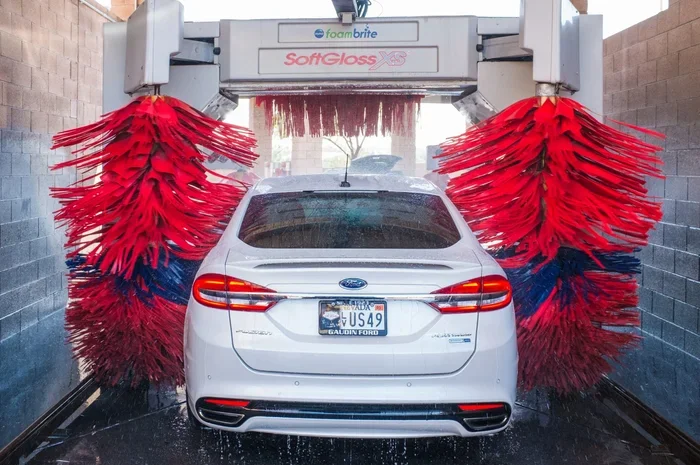
These are the carwashes with spinning brushes that physically scrub your car as it moves through the tunnel. They might feel thorough, but they are a nightmare for wrapped cars. The bristles create friction that can scratch the vinyl, lift edges, and even strip the adhesive.
Avoid automatic brush car washes at all costs if your car has a wrap. Even soft-bristle brushes can cause micro-scratches that accumulate over time and dull the finish of your wrap. The risk simply is not worth the convenience.
Rotary Brush Car Washes
Similar to automatic brush washes but with rotating cylindrical brushes, these machines are even more aggressive. They apply significant pressure across the entire surface of the car. For a wrapped vehicle, this can lead to edge lifting, seam separation, and visible scratches.
If you have ever seen a freshly wrapped car come out of a rotary brush wash looking dull or with edges peeling, now you know why. These carwashes are a definite no for wrapped vehicles.
Hand Washing
Hand washing is the gold standard for wrapped cars. When you wash your car by hand, you control every aspect of the process. You choose the water pressure, the cleaning products, and the tools you use. This gives you the safest and most thorough clean possible.
Use a soft microfiber mitt or sponge and a gentle, pH-neutral car wash soap. Wash in straight lines rather than circular motions to minimize the risk of swirl marks. Rinse thoroughly and dry with a clean, soft microfiber towel. This method takes a little more time, but it is the best thing you can do for your wrap.
Can a Wrapped Car Go Through a Touchless Carwash Safely?
Let us answer the big question directly. Can a wrapped car go through a carwash? Yes, specifically a touchless carwash. This type of wash uses water pressure and soap without any physical scrubbing action. It cleans effectively while keeping the vinyl wrap completely safe from abrasion.
Most wrap installers and automotive experts agree that touchless washes are the only automated carwash method safe for wrapped cars. The key is to make sure the water pressure is not set too high, as extreme pressure near the edges could potentially lift the vinyl. If you are unsure, you can ask the carwash attendant to avoid the highest pressure setting around the trim and edges.
Some touchless carwashes also offer undercarriage rinses, which are perfectly fine for wrapped cars. Just avoid any additional services that involve physical contact, such as brush scrubbing or wax application via rotating pads.
Quick Tips for Touchless Car Washes
- Choose a touchless wash only and decline any add-ons that involve brushes or pads.
- Roll up your windows slightly to prevent water from seeping into the interior.
- Keep the car moving at a steady pace through the wash tunnel.
- Dry the car afterward with a microfiber towel to prevent water spots on the wrap.
- Check the edges and seams after washing for any signs of lifting or bubbling.
Risks of Using the Wrong Carwash on a Wrapped Car
Using the wrong carwash method can cause a range of problems for your wrapped car. Understanding these risks helps you make smarter decisions every time you pull up to a wash bay.
Edge Lifting and Seam Separation
The most common damage from aggressive carwashes is edge lifting. When brushes or high-pressure jets hit the edges of the wrap, they can gradually push the vinyl away from the car’s surface. Once the edge lifts, water and dirt get underneath, which accelerates the peeling process.
Seam separation happens in the same way but affects the joints between wrap panels. Over time, these seams can open up, exposing the underlying paint and compromising the wrap’s appearance and protection.
Adhesive Breakdown
Carwash chemicals, especially those used in automated washes, can be harsh. Strong detergents and solvents can break down the adhesive backing of the vinyl over time. This leads to a weakened bond that makes the wrap more prone to peeling, shifting, or bubbling.
Heat from dryer systems in automated carwashes can also soften the adhesive temporarily, making the wrap more susceptible to damage from friction or water intrusion.
Surface Scratches and Swirl Marks
Even the softest brush in an automated carwash creates micro-scratches on vinyl. Over dozens of wash cycles, these scratches build up and give the wrap a dull, worn-out appearance. This is sometimes called swirl marking, and it is almost impossible to remove without re-wrapping the affected area.
Color Fading and Oxidation
While vinyl wraps are designed to resist UV damage, repeated exposure to harsh chemicals in carwashes can accelerate color fading. The clear coat on some wraps can also become oxidized, losing its glossy or matte finish depending on the original wrap type.
Best Car Wash Practices for Wrapped Cars
Now that you know what to avoid, let us focus on what you should do. Following a consistent car wash routine keeps your wrap looking great and extends its lifespan significantly.
How Often Should You Wash a Wrapped Car?
You should wash your wrapped car at least once every two weeks. If you drive in areas with heavy pollution, salt, or bird droppings, wash it more frequently. These contaminants can eat into the vinyl and degrade the adhesive if left too long on the surface.
Regular washing also prevents dirt buildup in the seams and edges, which is one of the leading causes of wrap failure over time.
Products to Use and Avoid
Stick to pH-neutral car wash soaps specifically designed for vinyl or delicate surfaces. Avoid anything with harsh solvents, abrasive cleaners, or wax-based products. Waxes can build up in the vinyl’s pores and create a hazy appearance that is difficult to remove.
For stubborn spots like bug splatter or bird droppings, use a dedicated vinyl cleaner or a mild soap solution. Never use abrasive pads, steel wool, or rough sponges on a wrapped surface.
Drying Your Wrapped Car
Always dry your wrapped car after washing. Use a clean, soft microfiber towel and pat the surface dry gently. Avoid dragging the towel across the wrap, as this can create fine scratches.
If you prefer to air dry, make sure you do so in a shaded area. Direct sunlight combined with water droplets can create spots on the wrap, especially on darker colors.
Should You Wax a Wrapped Car?
Most wrap manufacturers advise against waxing a vinyl wrap. The wax can fill in the vinyl’s texture and create an uneven appearance. It can also make the wrap harder to clean in the future. Instead, use a vinyl-specific sealant or protectant if you want extra shine and protection.
Some premium wraps come with a built-in clear coat that provides enough protection on its own. Check with your wrap installer to see if waxing or sealing is recommended for your specific wrap type.
Expert Insights on Wrapped Car Maintenance
We spoke with several professional wrap installers and automotive detailers to get their top recommendations for maintaining a wrapped car. Here is what the experts had to say.
“The number one rule is simple: if it touches your car, make sure it is soft and clean.” This means using only microfiber cloths, soft mitts, and gentle cleaning solutions. One gritty sponge or a dirty towel can leave marks that are visible on a vinyl surface.
“I always tell my clients to skip the automated carwash entirely,” says a certified wrap installer from Los Angeles. “A hand wash takes twenty minutes, and it is worth it for the peace of mind. Your wrap will last longer and look better.”
Another expert added that ceramic coating a wrapped car can provide an extra layer of protection. A ceramic coat creates a hydrophobic barrier that repels water, dirt, and contaminants. This makes the wrap easier to clean and reduces the frequency of washes needed.
“Just make sure the ceramic coating is wrap-safe,” the expert cautioned. Not all coatings are compatible with vinyl, so always check with your wrap installer before applying any additional products.
Common Mistakes People Make When Washing Wrapped Cars
Even with the best intentions, car owners sometimes make mistakes that harm their wraps. Here are the most common errors to avoid.
Using a Rotary Brush Car Wash
This is the biggest mistake wrapped car owners make. The convenience of a drive-through carwash is tempting, but the rotary brush causes more harm than good. It scratches, peels, and degrades the wrap over time.
Ignoring Edge Seal Integrity
After every wash, take a moment to check the edges and seams of your wrap. If you notice any lifting, get it repaired immediately. Catching small issues early prevents them from becoming expensive problems later.
Using Household Cleaners
Never use household cleaning products like dish soap, window cleaner, or all-purpose spray on a vinyl wrap. These products are not formulated for vinyl and can strip the finish or weaken the adhesive.
Washing in Direct Sunlight
Washing your wrapped car in direct sunlight can cause water spots and soap residue to bake onto the vinyl. Always wash in a shaded area or in the early morning or late afternoon.
Skipping Regular Washes
Some car owners let dirt and grime sit on their wrap for weeks. This is a mistake. Built-up contaminants eat into the vinyl and break down the adhesive faster than regular washing ever could.
Comparison Table: Car Wash Methods for Wrapped Cars
| Car Wash Type | Safe for Wraps? | Risk Level | Recommendation |
|---|---|---|---|
| Touchless Car Wash | Yes | Low | Recommended |
| Hand Wash | Yes | Very Low | Highly Recommended |
| Automatic Brush Wash | No | High | Avoid |
| Rotary Brush Wash | No | Very High | Avoid |
| Pressure Wash (Manual) | Yes, with caution | Medium | Use low pressure, avoid edges |
| Self-Service Bay | Yes | Low | Recommended with gentle settings |
How to Tell If Your Wrap Has Been Damaged by a Carwash
Sometimes damage happens despite your best efforts. Knowing the signs of wrap damage helps you catch problems early and get them fixed before they worsen.
Visual bubbles or blisters under the vinyl are a clear sign that water has gotten underneath the wrap. This usually happens at the edges or seams and is often caused by aggressive carwashing.
Peeling edges are another telltale sign. If the corners or borders of your wrap are starting to lift, the adhesive has likely been compromised. This can result from repeated exposure to harsh carwash chemicals or high-pressure water jets.
A dull or cloudy appearance across the wrap surface suggests micro-scratching from brushes or abrasive cloths. This type of damage is permanent and can only be fixed by re-wrapping the affected panels.
Color fading in patches may indicate chemical damage from harsh detergents. If you notice uneven color after a carwash, rinse the car thoroughly with clean water and inspect the wrap closely.
If you notice any of these signs, stop using the carwash method that caused the damage and consult a professional wrap installer. Early intervention can save you from a full re-wrap.
Final Words on Washing Your Wrapped Car
So, can a wrapped car go through a carwash? The answer is a careful yes, as long as you choose the right method. A touchless carwash or a careful hand wash will keep your wrap looking great without any risk of damage. Avoid brush-based automated carwashes at all costs, and always be gentle around the edges and seams.
Your vinyl wrap is a significant investment, whether it is for cosmetic reasons or business branding. Taking proper care of it ensures you get the full lifespan out of the wrap and protect the paint underneath at the same time. Follow the tips in this guide, stick to a regular washing routine, and your wrapped car will turn heads for years to come.
Remember, when in doubt, hand wash. It is the safest, most effective, and most affordable way to keep your wrapped car looking its absolute best. A few extra minutes of care now saves you from expensive repairs or a premature re-wrap down the road.
Frequently Asked Questions
Can I take my wrapped car through an automatic carwash?
Only if it is a touchless automatic carwash. Any carwash that uses brushes, cloths, or rotating pads should be avoided. These can scratch, peel, and damage the vinyl wrap over time.
How long does a vinyl wrap last with regular carwashing?
With proper care and safe washing methods, a vinyl wrap typically lasts between five and seven years. Hand washing or using touchless carwashes helps maximize that lifespan significantly.
Is it safe to use a pressure washer on a wrapped car?
Yes, but only on a low-pressure setting. High-pressure water can lift the edges of the wrap and push water underneath. Always keep the nozzle at least twelve inches from the surface and avoid spraying directly at seams and edges.
Will a carwash void my wrap warranty?
This depends on the manufacturer and installer. Some warranties remain valid as long as you follow care guidelines. Others may be voided if damage is linked to using an unsafe carwash method. Always check your warranty terms before using any automated carwash.
Can I wax my wrapped car for extra protection?
Most wrap manufacturers do not recommend waxing vinyl wraps. Wax can fill the vinyl texture and create a hazy appearance. Instead, use a vinyl-specific sealant or protectant that is safe for wrapped surfaces.
What is the best way to wash a wrapped car at home?
The best method is to use a soft microfiber mitt, pH-neutral car wash soap, and clean water. Wash in straight lines, rinse thoroughly, and dry with a clean microfiber towel. Avoid circular motions and never use abrasive tools or harsh chemicals.
=== CONCLUSION ===
Taking care of a wrapped car does not have to be complicated. The key is knowing which carwash methods are safe and which ones to avoid. A touchless car wash or a careful hand wash will keep your vinyl wrap looking fresh and protect the adhesive bond that holds everything together. Stay away from brush-based automated carwashes, check your wrap edges regularly, and use gentle cleaning products every time.
With the right car wrap maintenance routine, your wrap will stay vibrant and durable for years. Share this guide with other car owners who have wraps, and help them keep their investment looking as good as the day it was installed. Your wrapped car deserves the best care, and now you know exactly how to give it.