Can a Bad Thermostat Cause Overheating and Engine Damage
Yes, a bad thermostat can absolutely cause your engine to overheat and lead to costly damage. When your thermostat fails, it disrupts coolant flow, traps heat, and pushes your engine past safe temperatures. In this guide, we explain how a faulty thermostat triggers overheating, what warning signs to watch for, and how to prevent engine damage before it happens.
Your car’s engine runs hot. Really hot. But it needs to stay within a narrow temperature range to work properly. That’s where the thermostat comes in. It’s a small valve that controls how much coolant flows through your engine. When it works right, your engine stays cool and runs smoothly. But when it goes bad, things can spiral fast.
So, can a bad thermostat cause overheating? The short answer is yes. And not just overheating. A failing thermostat can also lead to serious engine damage that costs thousands to fix. Let’s break down exactly how this happens, what signs to look for, and what you can do about it.
Whether you’re a seasoned car owner or a complete beginner, this guide will help you understand why your thermostat matters so much. You’ll learn the symptoms of a bad thermostat, how to test it yourself, and when it’s time to call a mechanic. Let’s dive in.
Key Takeaways
- Thermostat failure is a leading cause of engine overheating and can happen without warning.
- A stuck-closed thermostat blocks coolant flow, causing rapid temperature spikes.
- Ignoring overheating signs can result in warped heads, blown gaskets, and cracked blocks.
- Common symptoms include a high temperature gauge, no heat, and coolant leaks.
- Replacing a bad thermostat is affordable compared to the cost of engine repairs.
- Regular cooling system maintenance helps prevent thermostat failures.
- DIY thermostat testing is simple and can save you a trip to the mechanic.
📑 Table of Contents
How Your Thermostat Works and Why It Matters
Your thermostat is a small but mighty part of your car’s cooling system. It sits between the engine and the radiator. Its job is to regulate the flow of coolant. When the engine is cold, the thermostat stays closed. This lets the engine warm up quickly. Once it reaches the right temperature, the thermostat opens up. Coolant then flows through the engine and carries heat to the radiator.
Think of it like a door. When your engine is cold, the door stays shut so heat builds up fast. When things get too hot, the door swings open to release that heat. It’s a simple idea, but it’s essential for engine health.
The Role of Coolant Flow
Coolant is the lifeblood of your engine’s cooling system. It absorbs heat from the engine block and heads. Then it carries that heat to the radiator, where it cools down. The cycle repeats over and over. But if the thermostat gets stuck, that cycle breaks. Coolant can’t move where it needs to go. Heat builds up. And your engine starts to suffer.
Without proper coolant flow, hot spots develop inside the engine. These areas can reach extreme temperatures in seconds. That’s when metal warps, seals crack, and damage begins.
What Happens When the Thermostat Fails?
A thermostat can fail in two main ways. It can get stuck open or stuck closed. Each one causes different problems.
Stuck closed: This is the most common cause of overheating. The valve stays shut, so coolant can’t reach the radiator. Heat has nowhere to go. Your temperature gauge climbs fast, and you’re in trouble.
Stuck open: This one is trickier. The thermostat never closes, so the engine takes too long to warm up. You might notice poor fuel economy, rough idling, or the heater blowing cold air. It’s less dramatic than a stuck-closed thermostat, but it still causes problems over time.
Common Signs Your Thermostat Is Going Bad
Catching a bad thermostat early can save you from a major repair bill. Here are the most common signs to watch for.
- Temperature gauge reading high: Your needle climbs into the red zone quickly, especially on hot days or in traffic.
- Temperature gauge acting erratically: The needle bounces between normal and hot. This often means the thermostat is opening and closing unpredictably.
- No heat from the heater: If your heater blows cold air even when the engine is hot, the thermostat might be stuck open.
- Coolant leaks near the thermostat housing: A failing thermostat can cause seals to break, leading to visible puddles under your car.
- Strange noises from the engine: Gurgling or boiling sounds can indicate trapped air or boiling coolant.
- Check engine light: A faulty thermostat can trigger the check engine light because the engine control unit detects abnormal temperature readings.
If you notice any of these signs, don’t ignore them. Even a small thermostat issue can snowball into something big fast.
Why Temperature Gauge Behavior Matters
Your temperature gauge is your engine’s health report card. It tells you exactly what’s happening inside. A steady needle in the normal range means everything is working. A needle that spikes or fluctuates is trying to tell you something is wrong. Pay attention to it. It’s one of the easiest ways to catch cooling system problems early.
How a Bad Thermostat Causes Overheating
Now let’s get into the heart of the question: how exactly does a bad thermostat cause overheating? The answer comes down to coolant flow and heat management.
The Stuck-Closed Scenario
When the thermostat is stuck closed, coolant stays trapped in the engine block. It can’t escape to the radiator to cool down. The coolant keeps heating up with no way out. Within minutes, engine temperatures can exceed safe limits.
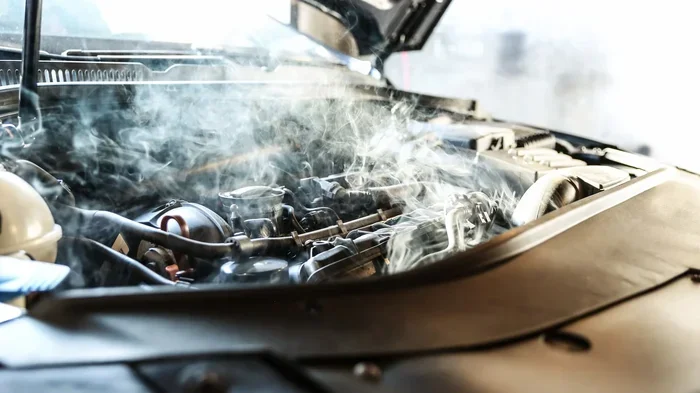
At this point, the water pump is still trying to circulate the coolant, but it’s going in circles. There’s no heat exchange happening. The coolant just gets hotter and hotter. Eventually, it starts to boil, creating steam and pressure inside the cooling system.
You might see steam coming from under the hood. The temperature gauge will be in the red. And if you keep driving, the damage starts mounting quickly.
The Stuck-Open Scenario
A thermostat stuck open doesn’t usually cause sudden overheating. Instead, it keeps the engine running too cool. This might sound better, but it’s not. An engine that runs too cool doesn’t burn fuel efficiently. It also causes increased wear on internal components over time.
In some cases, a stuck-open thermostat combined with other cooling system issues can still lead to overheating. For example, if your radiator fan is also failing, the engine might not get enough airflow to cool down properly.
Partial Sticking and Intermittent Failures
Here’s the tricky part. Sometimes the thermostat doesn’t fully stick. It partially opens or closes. This creates inconsistent coolant flow. One moment the engine is fine. The next moment it’s overheating. These intermittent failures are hard to diagnose but can be just as damaging over time.
Partial sticking often happens as a thermostat ages. The wax element inside wears out, or corrosion builds up on the valve. Either way, the result is the same: unpredictable temperature swings that stress your engine.
Can a Bad Thermostat Cause Engine Damage?
Short answer: yes. A bad thermostat can absolutely cause engine damage, and in some cases, that damage is severe. Let’s look at the specific problems that can arise.
Warped Cylinder Heads
When your engine overheats, the metal expands. Cylinder heads are especially vulnerable. They sit right on top of the engine block and take the brunt of the heat. As temperatures rise, the head can warp. A warped head means a poor seal between the head and the block. This leads to compression loss, oil leaks, and coolant leaks.
In worst cases, a warped head needs to be machined or replaced entirely. That’s an expensive repair that could have been avoided with a simple thermostat replacement.
Blown Head Gasket
The head gasket sits between the engine block and the cylinder head. Its job is to seal combustion chambers and keep coolant and oil separate. When overheating occurs, this gasket can fail. A blown head gasket allows coolant to leak into combustion chambers and oil passages.
Signs of a blown head gasket include white smoke from the exhaust, milky oil, and coolant loss without visible leaks. This is one of the most expensive engine repairs, often costing over a thousand dollars. And it all started with a thermostat that failed to do its job.
Cracked Engine Block
In extreme cases, severe overheating can actually crack the engine block. This happens when metal expands unevenly and creates stress fractures. A cracked block means coolant leaks into the oil or combustion chambers. It also means the engine may need to be replaced or rebuilt.
A cracked engine block is a worst-case scenario. It’s rare but it does happen, especially when drivers ignore overheating warnings and keep pushing the car.
Water Pump Damage
Your water pump relies on coolant flow to stay lubricated and cool. When a thermostat fails and restricts flow, the water pump can overheat too. The bearings wear out faster, and the pump eventually fails. A dead water pump means zero coolant circulation, which means certain engine overheating.
Replacing a water pump is another costly repair. It’s a cascading effect: one bad part triggers failure in another, and the repair bill keeps climbing.
Damaged Radiator and Hoses
Overheating doesn’t just hurt the engine. It can also damage the radiator and hoses. Extreme heat can cause radiator fins to bend and collapse, reducing airflow and cooling efficiency. Rubber hoses can crack and swell, leading to leaks and coolant loss.
Your radiator cap can also be affected. High pressure from boiling coolant can cause the cap to fail, further reducing the system’s ability to maintain proper pressure and temperature.
The Cost of Ignoring a Bad Thermostat
Here’s a quick comparison to put things in perspective.
- Thermostat replacement: $100 to $300 parts and labor.
- Head gasket repair: $1,000 to $2,500 depending on the vehicle.
- Cylinder head machining or replacement: $500 to $2,000.
- Engine rebuild or replacement: $3,000 to $7,000 or more.
See the pattern? A simple thermostat fix that costs a few hundred dollars can turn into a five-figure engine replacement if you ignore it. That’s why catching thermostat problems early matters so much.
How to Diagnose a Bad Thermostat
If you suspect your thermostat is failing, you don’t always need to visit a mechanic. There are some straightforward checks you can do at home.
The Cold Start Test
Start your car when the engine is cold. Let it idle for a few minutes. Feel the upper radiator hose. If the thermostat is working correctly, the hose should stay cool until the engine reaches operating temperature. Then it should suddenly get warm as the thermostat opens and lets coolant flow.
If the hose gets hot right away, the thermostat might be stuck open. If it stays cool even after the engine is hot, the thermostat is likely stuck closed.
Checking the Temperature Gauge
Watch your temperature gauge while driving. Does it run consistently in the normal range? Or does it spike randomly? Erratic behavior often points to a thermostat that’s opening and closing unpredictably. A steady high reading could mean the thermostat is stuck closed.
Inspecting the Thermostat Housing
Look at the thermostat housing for any signs of coolant leaks. A wet or crusty area around the housing can indicate a failing seal. Coolant leaks near the thermostat are a clear sign something is wrong.
Using an OBD2 Scanner
An OBD2 scanner can read trouble codes related to engine temperature. Codes like P0125 (insufficient coolant temperature) or P0128 (coolant thermostat below regulating temperature) can point to thermostat problems. These scanners are affordable and easy to use at home.
When to Call a Professional
If you’re not comfortable doing these checks yourself, a mechanic can diagnose the issue quickly. They can remove the thermostat and test it in boiling water to see if it opens at the right temperature. It’s a simple test that takes just a few minutes.
Thermostat Replacement and Preventive Maintenance
The good news is that replacing a thermostat is one of the easiest and cheapest repairs you can do. Most thermostats cost between $10 and $30 for the part alone. Labor at a shop might add $50 to $150, but many DIYers can do it at home in under an hour.
How Often Should You Replace Your Thermostat?
There’s no strict schedule for thermostat replacement. But as a general rule, consider replacing it every 50,000 to 100,000 miles. Thermostats wear out over time, and replacing one proactively can prevent unexpected failures.
Tips for Thermostat Replacement
- Always replace the thermostat with one rated for your specific vehicle.
- Use OEM or high-quality aftermarket parts for reliability.
- Flush the cooling system when replacing the thermostat to remove debris.
- Check the thermostat housing gasket and replace it if it looks worn.
- Refill the cooling system properly and bleed out any trapped air.
Other Cooling System Maintenance Tips
A thermostat is just one part of your cooling system. To keep your engine running cool, follow these tips:
- Check coolant levels regularly: Low coolant means less heat absorption. Top it off with the correct type.
- Flush the cooling system on schedule: Old coolant loses its effectiveness over time. Follow your owner’s manual for flush intervals.
- Inspect hoses and clamps: Look for cracks, swelling, or loose connections. Replace worn hoses before they fail.
- Test the radiator fan: Make sure the fan kicks on when the engine gets hot. A failing fan can cause overheating even with a good thermostat.
- Watch the water pump: Listen for whining noises or check for coolant leaks around the pump. A failing water pump often accompanies thermostat problems.
Quick Tips to Prevent Overheating
Prevention is always better than repair. Here are some quick tips to keep your engine cool and your thermostat working properly.
- Monitor your temperature gauge every time you drive.
- Never ignore a rising temperature needle.
- Keep coolant at the proper level and mix ratio.
- Replace your thermostat as part of regular maintenance.
- Address coolant leaks immediately, no matter how small.
- Have your cooling system inspected at every oil change.
- Drive with awareness of your vehicle’s temperature, especially in hot weather or heavy traffic.
These simple habits can add years to your engine’s life and save you from expensive repairs down the road.
Conclusion
So, can a bad thermostat cause overheating and engine damage? Absolutely. A failing thermostat disrupts coolant flow, traps heat, and pushes your engine past safe operating temperatures. Whether it’s stuck closed, stuck open, or partially failing, the result is the same: your engine suffers.
The good news is that thermostat problems are easy to spot and even easier to fix. A quick thermostat replacement costs a fraction of what you’d pay for engine damage repairs. By staying alert to warning signs like a high temperature gauge, erratic needle behavior, or coolant leaks, you can catch problems early and avoid disaster.
Take care of your cooling system. Replace your thermostat on schedule. Keep your coolant fresh and at the right level. These small steps go a long way toward protecting your engine and keeping your car running strong for years to come.
Frequently Asked Questions
What are the first symptoms of a bad thermostat?
The first symptoms usually include a rising temperature gauge, no heat from the cabin heater, and erratic temperature readings. You might also notice coolant leaks near the thermostat housing or strange gurgling sounds from the engine bay.
How much does it cost to replace a thermostat?
Most thermostat replacements cost between $100 and $300 total, including parts and labor. The part itself is only $10 to $30, but labor adds the rest. DIY replacement can save you the labor cost entirely.
Can I drive with a bad thermostat?
You should not drive with a bad thermostat, especially if it’s stuck closed. Driving with a stuck thermostat can cause rapid overheating and serious engine damage within minutes. If you notice symptoms, pull over safely and get the car towed to a repair shop.
Does a bad thermostat affect AC performance?
Yes, indirectly. A thermostat stuck open can keep the engine running too cool, which affects how efficiently the AC system works. You might notice weak airflow or the AC not blowing cold air as effectively.
Can a thermostat cause overheating at highway speeds?
Yes, a thermostat stuck closed can cause overheating at any speed, including highway driving. At highway speeds, the airflow through the radiator increases, but if the thermostat isn’t opening to let coolant circulate, that extra airflow can’t help. The engine will still overheat.
How long does a thermostat last before it needs replacement?
Most thermostats last 50,000 to 100,000 miles, but lifespan varies based on driving conditions, coolant quality, and the thermostat’s build quality. Replacing it proactively as part of regular cooling system maintenance is a smart move that can prevent unexpected failures.