When Should You Not Use Adaptive Cruise Control Key Reasons
Adaptive cruise control is a helpful tool, but it is not safe to use in every situation. You should avoid using adaptive cruise control in bad weather, heavy traffic, and winding roads. Understanding when to turn it off keeps you and others safe on the road.
Adaptive cruise control is one of the most popular driver-assist features on modern cars. It uses sensors and radar to keep a safe distance from the vehicle in front of you. Many drivers love it because it reduces fatigue on long highway trips. It also takes some stress out of stop-and-go traffic. But here is the thing people often overlook. Adaptive cruise control is not a replacement for your full attention. There are clear situations where you should not use adaptive cruise control at all.
Knowing when to turn this feature off can save your life. It can also save you from expensive repairs or insurance claims. In this article, we will walk through every situation where adaptive cruise control falls short. We will explain why manual driving is still the safer choice in those moments. By the end, you will have a clear picture of when to rely on this system and when to keep it off.
Key Takeaways
- Bad weather is a top reason: Rain, snow, and fog can confuse the sensors and make adaptive cruise control unreliable.
- Stop-and-go traffic needs full attention: The system may not react fast enough in sudden, low-speed stops.
- Winding and hilly roads are risky: Sharp curves and steep inclines can cause the system to lose track of the vehicle ahead.
- Construction zones demand manual control: Lane shifts, cones, and workers make adaptive cruise control dangerous here.
- Wet and icy roads reduce effectiveness: Traction changes can outpace the system’s braking response.
- Driver fatigue does not justify using it: Relying on cruise control when tired removes your ability to react in time.
- Always stay alert: Adaptive cruise control is a helper, not a replacement for attentive driving.
📑 Table of Contents
- What Is Adaptive Cruise Control and How Does It Work
- When Should You Not Use Adaptive Cruise Control
- Why Drivers Over-rely on Adaptive Cruise Control
- How to Know When Your Adaptive Cruise Control Is Not Working Properly
- Tips for Using Adaptive Cruise Control Safely
- Common Mistakes Drivers Make with Adaptive Cruise Control
- Expert Insights on Adaptive Cruise Control Safety
- Key Takeaways
- Conclusion
What Is Adaptive Cruise Control and How Does It Work
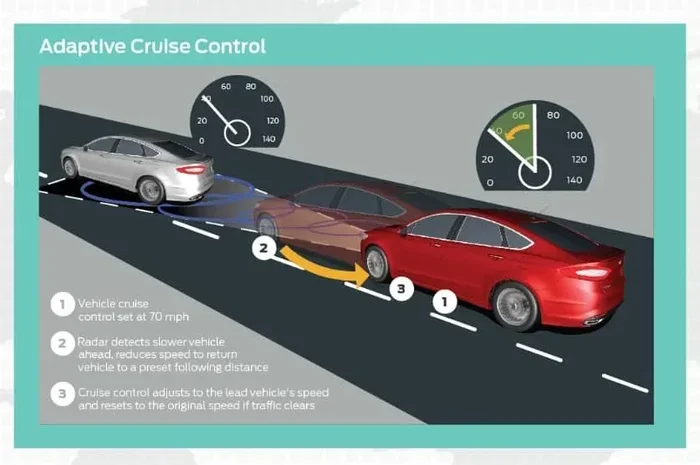
Before we dive into the reasons to avoid it, let us quickly understand how it works. Adaptive cruise control, or ACC, uses a radar sensor or camera mounted on the front of your car. These sensors detect the vehicle ahead. The system then adjusts your speed to maintain a set following distance. When traffic slows down, your car slows down too. When the road clears, it accelerates back to your preset speed.
This is different from traditional cruise control. Regular cruise control only holds a fixed speed. It does not adjust for traffic. Adaptive cruise control is smarter. But smart does not mean perfect. The system depends on clear sensor readings and predictable road conditions. When those conditions change, the system can fail. That is when things get dangerous.
When Should You Not Use Adaptive Cruise Control
In Bad Weather Conditions
Rain, snow, sleet, and fog are the biggest enemies of adaptive cruise control. The sensors on your car need a clear view of the road ahead. Heavy rain can block the radar signal. Snow and ice can cover the sensors, making them blind. Fog reduces visibility, and the system may not detect a slowing car in time.
Here is a real-world example. Imagine driving on a foggy highway. The car ahead of you hits the brakes suddenly. Your adaptive cruise control may not react fast enough because the fog has confused the sensors. You would still need to brake manually. By then, it might be too late. The safest move is simple. Turn off adaptive cruise control when the weather turns bad.
Also, water on the road can cause hydroplaning. The system does not know your tires have lost traction. It may keep accelerating when you need to slow down. This is one of the most important reasons to switch back to manual driving in storms.
In Heavy Stop-and-Go Traffic
Many people assume adaptive cruise control handles traffic jams perfectly. It does help. But it has limits. In very slow, stop-and-go traffic, the system may not respond quickly enough. Some ACC systems only work above 20 or 25 miles per hour. When traffic drops below that, the system may not re-engage properly.
Even in systems that work at low speeds, there is a delay. The car ahead of you might stop suddenly because a pedestrian steps into the road. Your ACC may take a half-second or more to apply the brakes. That half-second can be the difference between a safe stop and a rear-end collision.
Plus, stop-and-go traffic is chaotic. Cars cut in and out of lanes. Merging vehicles appear out of nowhere. The system cannot predict these unpredictable moves. You need to be in full control. Keep your hands on the wheel and your foot near the brake pedal.
On Winding and Mountain Roads
Adaptive cruise control works best on straight, flat highways. When the road curves, the system can lose track of the vehicle ahead. The radar or camera looks straight ahead. On a sharp curve, the car in front of you might be visible only for a few seconds. The system may not brake in time if it has not yet detected the slower vehicle.
Mountain roads add another layer of risk. Steep downhill slopes can cause your car to pick up speed. The ACC system may not downshift or brake hard enough on long descents. Some systems are better than others, but none of them can replace a driver who adjusts speed based on the road ahead.
If you are driving through a winding mountain pass, turn off cruise control. Use manual throttle and braking. It gives you the control you need on those tight curves and steep grades.
In Construction Zones
Construction zones are chaotic. Lane closures, cones, flaggers, and sudden stops make them unpredictable. Adaptive cruise control relies on detecting a steady vehicle ahead. In a work zone, the car in front of you might change lanes without warning. Workers and equipment can appear in your path without much notice.
The sensors on your car may also struggle with the visual clutter. Cones, barriers, and bright signs can confuse the camera system. This can cause the ACC to misjudge distances or fail to brake when needed.
Always reduce your speed and take manual control in construction zones. Follow the posted speed limits. Keep a generous following distance. These simple steps protect both you and the workers on the road.
On Wet, Icy, or Snowy Roads
Traction is everything when driving in winter conditions. Adaptive cruise control does not measure tire grip. It only measures the distance to the car ahead. On icy roads, braking distance increases dramatically. The ACC system may apply brakes too aggressively or too late for the road conditions.
Imagine driving on a frozen highway. The car ahead of you slows down gently. Your ACC system might brake harder than necessary because it does not know the road is slippery. This can cause your wheels to lock up or your car to skid. Manual driving lets you ease off the accelerator and brake gently. You can adjust your speed based on how the car feels under your feet.
Snow-covered roads are another problem. The sensors on your front bumper may be blocked by snow buildup. If the sensors cannot see, the system cannot work. Clear all snow and ice off your car before driving. But even then, it is safer to drive manually in winter weather.
When You Are Tired or Drowsy
This might sound counterintuitive. If you are tired, should you not use a feature that takes some driving tasks off your hands? The answer is yes. Adaptive cruise control is not an autopilot system. It does not steer the car for you. It only manages your speed and following distance.
When you are drowsy, your reaction time slows down significantly. The ACC system may give you a false sense of security. You might think the car is handling everything, so you relax your focus. But if the system encounters a situation it cannot handle, you need to take over. A tired driver is a slow driver. You may not react in time.
If you are feeling sleepy, pull over and take a break. No cruise control system can replace a well-rested, alert driver. Your safety depends on your attention, not on a piece of technology.
During Emergency Situations
Accidents happen fast. A tire blows out. A deer jumps onto the road. A car runs a red light. In these split-second emergencies, you need full control of your vehicle. Adaptive cruise control was not designed to handle sudden, unexpected events.
The system follows the car ahead of you. It does not scan the entire road for hazards. If a car cuts into your lane, your ACC might not react quickly enough. Some newer systems have emergency braking features. But even those are a backup, not a primary safety measure. You should always be ready to brake and steer on your own.
Never rely on cruise control to get you out of an emergency. Keep your hands on the wheel and your eyes scanning the road at all times.
When Your Vehicle Sensors Are Dirty or Damaged
Adaptive cruise control depends on clean, working sensors. The radar unit is usually hidden behind the front grille. The camera is often mounted near the rearview mirror. If either of these is dirty, damaged, or covered, the system will not work correctly.
A dirty sensor might read the distance to the car ahead as longer than it actually is. This means your car could follow too closely. A damaged sensor might stop working altogether. Most modern cars will display a warning light when the ACC system has a problem. But by then, you may already be in a risky situation.
Make it a habit to check your sensors. Wipe them down after driving through rain, mud, or snow. If the ACC warning light comes on, do not ignore it. Have the system inspected by a mechanic before using it again.
When Driving Older Vehicles Without Proper Maintenance
Older cars with adaptive cruise control may not have the latest software or hardware. The sensors on older systems are less accurate than modern ones. If your car has not been properly maintained, the ACC system may not work as designed.
Brake wear is a big factor. Adaptive cruise control uses the car’s braking system to slow down. If your brakes are worn, the system will not stop the car as effectively. Tire condition matters too. Worn tires on wet roads increase stopping distances. The ACC system does not account for tire wear.
Keep up with your vehicle maintenance. Regular brake checks, tire rotations, and sensor cleaning help ensure your ACC system works when you need it. But even with proper maintenance, there are still situations where manual driving is the safer choice.
Why Drivers Over-rely on Adaptive Cruise Control
It is easy to see why drivers trust adaptive cruise control too much. The feature is marketed as a smart, helpful tool. Car commercials show relaxed drivers gliding down open highways. But real-world driving is not always that simple. Roads are unpredictable. Other drivers make mistakes. Conditions change without warning.
One of the biggest problems is complacency. When drivers know the car can slow down on its own, they stop paying full attention. They take their hands off the wheel. They look at their phones or fiddle with the radio. This is exactly the kind of behavior that leads to accidents.
Remember, adaptive cruise control is a driver-assist feature. It is not an autonomous driving system. You are always the driver. You are always responsible for what happens on the road. Stay engaged. Stay alert. Use the technology to help you, not to replace you.
How to Know When Your Adaptive Cruise Control Is Not Working Properly
Most cars give you clear signs when the ACC system has a problem. A warning light on the dashboard usually appears. It might look like a radar dish or a car with a gap in front of it. If you see this light, do not ignore it.
Other signs include the system not braking when it should. Or it might brake too aggressively for no clear reason. Sometimes the system will not maintain the set speed. These are all indicators that something is wrong. Have the system checked by a professional as soon as possible.
Also, if you notice the car following too closely or not responding to traffic changes, turn the system off. Driving manually is always the safer option when you are unsure about the technology.
Tips for Using Adaptive Cruise Control Safely
When conditions are right, adaptive cruise control can be a great tool. Here are some tips to use it safely:
- Keep your hands on the wheel. Even when the system is engaged, you should always have your hands on the steering column.
- Set a safe following distance. Use at least a three- to four-second gap. This gives you more time to react if the system fails.
- Stay in the right lane. This gives you more time to see brake lights ahead and react accordingly.
- Check your sensors regularly. Clean the front of your car, especially after driving in bad weather.
- Know your system. Read your owner manual. Understand what your specific ACC system can and cannot do.
- Be ready to take over. Always have your foot near the brake pedal. Be prepared to brake or steer at any moment.
- Turn it off in doubt. If you are unsure about road conditions, visibility, or traffic flow, switch the system off.
Common Mistakes Drivers Make with Adaptive Cruise Control
Even experienced drivers make mistakes with this technology. Here are some common errors to avoid:
- Assuming the system handles everything. ACC manages speed and distance. It does not steer, and it does not read traffic lights or signs.
- Following too closely. Some drivers set the following distance too short to save time. This reduces the system’s ability to react safely.
- Using it in the wrong conditions. Rain, snow, fog, and winding roads all reduce the system’s effectiveness.
- Ignoring warning lights. A dashboard warning means something is wrong. Do not keep driving with the system active if the light is on.
- Not reading the manual. Every ACC system is different. Know the limits of your specific vehicle before relying on it.
Avoiding these mistakes keeps you safer and helps the adaptive cruise control system work the way it was designed to work.
Expert Insights on Adaptive Cruise Control Safety
Automotive safety experts agree on one thing. Adaptive cruise control is a useful tool, but it is not foolproof. The Insurance Institute for Highway Safety has studied driver-assist systems extensively. Their research shows that drivers who rely too heavily on these systems tend to pay less attention to the road. This increases the risk of accidents over time.
Engineers also stress that sensor technology is still evolving. Radar and camera systems work well in ideal conditions. But real-world driving is rarely ideal. Dust, glare, rain, and glare from oncoming headlights can all interfere with the sensors. The technology is getting better every year. But for now, human judgment remains the most important safety feature in any car.
Driving instructors recommend using adaptive cruise control as a supplement, not a substitute. It helps reduce fatigue on long drives. It keeps you at a steady speed. But it should never replace your active engagement behind the wheel. The best drivers use technology to enhance their skills, not to replace them.
Key Takeaways
- Adaptive cruise control is not designed for bad weather. Rain, snow, fog, and ice can confuse the sensors and reduce effectiveness.
- Stop-and-go traffic requires your full attention. The system may not react fast enough in sudden, low-speed stops.
- Winding and mountain roads demand manual driving. Sharp curves and steep grades can outpace the system’s response.
- Construction zones are unpredictable. Lane changes, workers, and equipment make ACC dangerous in these areas.
- Wet and icy roads increase stopping distances. The system does not account for reduced tire grip.
- Fatigue is not a reason to use cruise control. A tired driver needs to pull over, not rely on technology.
- Always stay alert and keep your hands on the wheel. Adaptive cruise control is a helper, not a replacement for you.
Conclusion
Adaptive cruise control is a great feature when used correctly. It makes long drives more comfortable. It helps maintain safe following distances on highways. But it is not a magic solution for every driving situation. There are clear moments when you should not use adaptive cruise control. Bad weather, heavy traffic, winding roads, construction zones, icy conditions, and driver fatigue all demand your full attention.
The key is to understand what the system can and cannot do. Use it as a helpful tool, not as a crutch. Stay engaged, stay alert, and always be ready to take control. Your safety, and the safety of others on the road, depends on it. Drive smart. Drive aware. And use adaptive cruise control only when the conditions are right for it.
Frequently Asked Questions
Can I use adaptive cruise control in the rain?
It is best to turn it off in heavy rain. The sensors on your car can get confused by water on the road and reduced visibility. Light drizzle might be okay for some systems, but when in doubt, drive manually and stay in full control.
Does adaptive cruise control work in traffic jams?
Some systems do work in slow traffic, but they have limits. Many ACC systems only activate above a certain speed, like 20 miles per hour. Even in systems that work at low speeds, there can be a delay in braking. Always stay alert in stop-and-go traffic.
Can adaptive cruise control steer the car for me?
No. Adaptive cruise control only manages your speed and following distance. It does not steer the vehicle. You must always keep your hands on the wheel and be ready to steer at any time. Some newer cars have lane-centering features that work alongside ACC, but those are still assist systems, not full automation.
What should I do if my adaptive cruise control warning light comes on?
A warning light means the system has detected a problem. Check your owner manual to understand what the specific light means. Usually, it indicates a sensor issue or a system malfunction. Turn off the ACC and have your vehicle inspected by a qualified mechanic before using it again.
Is it safe to use adaptive cruise control on icy roads?
No. Icy roads are one of the most dangerous situations for adaptive cruise control. The system does not measure tire traction or road grip. It may apply brakes too hard or too late on slippery surfaces. Always switch to manual driving on ice and snow.
How can I make my adaptive cruise control work better?
Keep your sensors clean and free of snow, mud, and debris. Make sure your windshield is clear near the camera. Keep up with brake and tire maintenance. Read your owner manual to understand your specific system’s features and limits. And most importantly, always stay engaged and alert while driving.