At What Speed Does the Toyota Pre-Collision System Work
The Toyota Pre-Collision System is designed to detect potential frontal crashes and help drivers avoid or reduce the severity of collisions. It works across a wide speed range, from low-speed city driving up to highway velocities, using radar and camera sensors to monitor the road ahead. Understanding when and how this system activates can help Toyota owners feel more confident and stay safer on every trip.
The Toyota Pre-Collision System is one of the most talked-about safety features in modern Toyota vehicles. If you own a Toyota or are thinking about buying one, you have probably wondered exactly how this system works and at what speeds it kicks in. The answer is more interesting than you might think.
At What Speed Does the Toyota Pre-Collision System Work? The short answer is that it operates across a broad range of speeds. From slow-moving traffic in the city to highway driving at higher velocities, the system is designed to help prevent or reduce the impact of frontal collisions. Let us dive deep into the details and explore everything you need to know about this life-saving technology.
Toyota has built a strong reputation for safety over the decades. The Pre-Collision System is a shining example of how the company uses advanced technology to protect drivers, passengers, and even pedestrians. Whether you are navigating a crowded parking lot or cruising on the interstate, this system works quietly in the background, ready to act if needed.
Key Takeaways
- Wide Speed Range: The system activates from low speeds around 2 mph up to highway speeds, depending on the mode and conditions.
- Uses Advanced Sensors: A radar and camera work together to detect vehicles, pedestrians, and obstacles in real time.
- Part of Toyota Safety Sense: The Pre-Collision System is a core component of Toyota’s comprehensive driver-assist suite.
- Pedestrian Detection Included: The system can identify pedestrians and apply brakes automatically at certain speeds.
- Factors Affect Performance: Weather, road conditions, sensor cleanliness, and vehicle maintenance all influence how well the system works.
- Not a Replacement for Driving: The system assists but does not replace attentive driving and safe habits.
- Model-Specific Variations: Different Toyota models may have slightly different system calibrations and speed ranges.
📑 Table of Contents
- What Is the Toyota Pre-Collision System?
- How Does the System Detect Potential Collisions?
- At What Speed Does the Toyota Pre-Collision System Activate?
- Factors That Affect the System’s Response Time
- Toyota Pre-Collision System Across Different Models
- Common Mistakes That Can Affect the System
- How the System Evolved Over the Years
- Why the Pre-Collision System Matters for Safety Ratings
- Final Thoughts
What Is the Toyota Pre-Collision System?
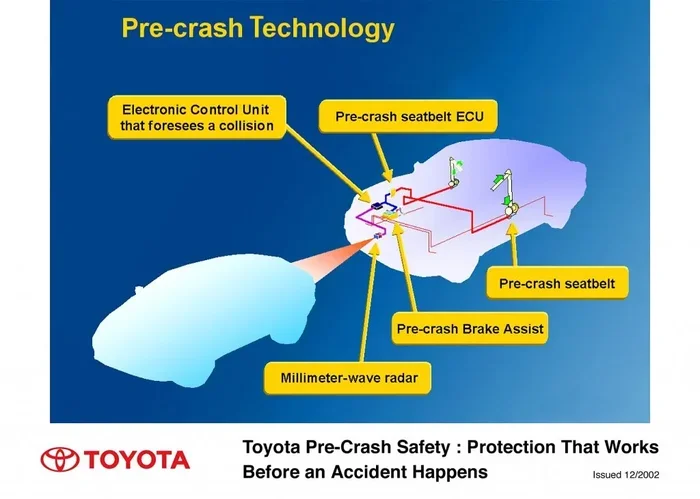
The Toyota Pre-Collision System, often called PCS, is a driver-assist feature designed to detect potential frontal collisions. It uses a combination of radar and camera sensors mounted near the windshield and front bumper to monitor the road ahead constantly.
When the system detects an obstacle, a vehicle, or even a pedestrian in your path, it alerts you with visual and audio warnings. If you do not respond in time, the system can apply the brakes automatically to help avoid a crash or reduce its severity.
This technology is part of the broader Toyota Safety Sense suite, which includes features like adaptive cruise control, lane departure warning, and road sign recognition. Together, these systems create a comprehensive safety net for Toyota drivers.
How the System Differs from Standard Braking
Standard braking relies entirely on the driver. You see a hazard, you react, and you press the brake pedal. The Toyota Pre-Collision System adds an extra layer of protection. It can react faster than a human in many situations, especially during moments of distraction or fatigue.
The system does not replace your driving skills. Instead, it acts as a safety net that can step in when you need it most. Think of it as an extra set of eyes on the road that never gets tired or distracted.
How Does the System Detect Potential Collisions?
Understanding how the system detects threats helps you appreciate its capabilities. The Toyota Pre-Collision System relies on two main types of sensors working together seamlessly.
Radar Sensor
The radar sensor is typically located behind the front grille. It sends out radio waves that bounce off objects ahead and return to the sensor. By measuring the time it takes for the waves to return, the system calculates the distance and relative speed of objects in your path.
This radar works effectively in various conditions, including light rain and fog. However, heavy snow or very dense fog can sometimes reduce its accuracy. Keeping the sensor area clean is essential for optimal performance.
Camera Sensor
The camera sensor is mounted near the rearview mirror, behind the windshield. It captures visual data of the road ahead and helps the system identify lane markings, vehicles, pedestrians, and even bicycles.
The camera works best in clear weather conditions. Direct sunlight, heavy rain, or snow covering the windshield can affect its ability to detect objects accurately. Regular cleaning of the windshield in the sensor area helps maintain reliable detection.
How the System Processes Data
Once the radar and camera gather information, the system’s onboard computer processes the data in milliseconds. It compares the speed and distance of objects ahead with your vehicle’s current speed and trajectory.
If the system determines a collision is likely, it first issues a warning. The warning includes a visual alert on the dashboard and an audible beep. If you do not take action, the system moves to the next stage, which can involve applying the brakes automatically.
At What Speed Does the Toyota Pre-Collision System Activate?
This is the question at the heart of this article. At What Speed Does the Toyota Pre-Collision System Work? The answer depends on several factors, including the specific system mode and the type of detection happening.
Low-Speed Operation
At low speeds, the system is particularly effective in city and urban driving scenarios. The Pre-Collision System can detect vehicles and pedestrians starting from speeds as low as approximately 2 mph. This makes it incredibly useful in stop-and-go traffic, parking lots, and crowded city streets.
For example, imagine you are driving through a busy parking lot at 5 mph. A pedestrian suddenly steps into your path. The system detects the movement, issues a warning, and if you do not brake, it can apply the brakes automatically to prevent a collision.
Low-speed automatic braking is a game-changer for urban driving. It helps reduce the frequency and severity of fender-benders that commonly occur in congested areas.
Highway and High-Speed Operation
The system does not just work at low speeds. At highway speeds, the Toyota Pre-Collision System remains fully active. It can detect vehicles ahead and assess the risk of a collision even when you are traveling at 60 mph, 70 mph, or higher.
The system calculates the closing rate between your vehicle and the one ahead. If it determines that a collision is imminent and you have not reacted, it can apply maximum braking force to help avoid or mitigate the crash.
At higher speeds, the braking distance increases significantly. The system accounts for this by beginning its intervention earlier, giving you more time to respond. This early warning and braking support can make a critical difference in highway scenarios.
Pedestrian Detection Speed Range
The pedestrian detection feature of the Toyota Pre-Collision System operates within a specific speed range. It typically works when your vehicle is traveling between approximately 2 mph and 50 mph. This range covers most everyday driving situations where pedestrians might enter the road.
The system uses the camera sensor to identify pedestrians based on their shape, movement patterns, and size. When a pedestrian is detected in your path, the system alerts you and can apply brakes if needed.
It is worth noting that pedestrian detection works best during daylight hours. Nighttime detection depends on the vehicle’s headlight range and ambient lighting conditions. Always stay alert, especially when driving in low-light areas near crosswalks or residential streets.
Speed Comparison Table
| Speed Range | System Behavior | Detection Targets |
|---|---|---|
| 2 mph to 10 mph | Low-speed automatic braking with forward collision warning | Vehicles, pedestrians, obstacles |
| 10 mph to 50 mph | Full pedestrian detection and automatic braking | Vehicles, pedestrians, cyclists |
| 50 mph to 100 mph | High-speed collision warning and emergency braking | Vehicles, obstacles |
| 100 mph and above | Collision warning remains active; braking support varies | Vehicles, obstacles |
Note: Exact speed thresholds may vary slightly depending on the Toyota model, model year, and specific system configuration. Always consult your vehicle owner’s manual for precise details.
Factors That Affect the System’s Response Time
The Toyota Pre-Collision System is highly advanced, but several factors can influence how quickly and effectively it responds in real-world situations.
Road and Weather Conditions
Weather plays a significant role in system performance. Heavy rain, snow, ice, or fog can affect sensor accuracy. The radar and camera sensors may have reduced visibility in extreme weather, which can delay detection or reduce the system’s confidence in its readings.
Road conditions also matter. Gravel roads, wet surfaces, or roads with poor lane markings can affect how the system interprets the driving environment. The system is designed to work on paved roads under normal driving conditions.
Vehicle Condition and Maintenance
Keeping your vehicle in good condition directly impacts system performance. Dirty sensors, misaligned cameras, or damaged radar units can reduce accuracy. After a front-end collision or windshield replacement, the system may need recalibration.
Regular maintenance checks should include inspection of the sensor areas. Toyota dealerships and qualified service centers can perform system diagnostics to ensure everything is functioning correctly.
Driver Behavior and System Limitations
The Pre-Collision System is a driver-assist feature, not a self-driving system. It cannot replace attentive driving, proper speed management, or safe following distances. The system works best when the driver remains engaged and alert.
Additionally, the system has limitations. It may not detect every object in every situation. Sudden maneuvers by other drivers, very small objects, or animals in unusual positions might not always be detected in time.
Quick Tips for Optimal System Performance
- Keep the front windshield and sensor areas clean and clear of debris.
- Avoid placing objects on the dashboard that could obstruct the camera view.
- Have the system checked after any front-end repairs or windshield replacement.
- Ensure your tires are properly inflated for consistent braking performance.
- Keep the vehicle’s software updated through your Toyota dealer.
Toyota Pre-Collision System Across Different Models
The Toyota Pre-Collision System is available across a wide range of Toyota models. While the core technology remains the same, specific features and calibrations can vary between models.
Toyota Camry
The Toyota Camry comes equipped with the Pre-Collision System as part of its Toyota Safety Sense 2.0 suite. The system provides forward collision warning and automatic emergency braking for both vehicles and pedestrians. The Camry’s system is well-suited for both city commuting and highway driving, with reliable detection across its full speed range.
Toyota RAV4
The Toyota RAV4 features the Pre-Collision System with pedestrian and cyclist detection. As a popular SUV, the RAV4 benefits from the system’s ability to detect smaller objects like pedestrians and cyclists in addition to larger vehicles. The higher seating position can actually improve the camera’s line of sight in many driving scenarios.
Toyota Corolla
The Toyota Corolla offers the Pre-Collision System as a standard feature in most trims. Despite being a compact sedan, the Corolla’s system delivers strong performance in detecting vehicles and pedestrians. It is an excellent example of how Toyota brings advanced safety technology to its most affordable models.
Toyota Highlander
The Toyota Highlander, as a larger SUV, benefits from the Pre-Collision System’s ability to help manage the stopping distance of a heavier vehicle. The system is particularly valuable for families who frequently travel with children and need that extra layer of protection.
Common Mistakes That Can Affect the System
Even the best safety technology can be undermined by common mistakes. Here are some things Toyota owners should avoid to ensure their Pre-Collision System works as intended.
- Ignoring Warning Lights: If the Pre-Collision System warning light stays on, do not ignore it. It could indicate a sensor issue or system malfunction that needs immediate attention.
- Obstructing Sensors: Placing stickers, accessories, or objects near the windshield or front bumper can block the sensors and reduce system effectiveness.
- Over-Reliance on the System: The system assists but does not drive for you. Always keep your hands on the wheel and your eyes on the road.
- Skipping Maintenance: Regular service appointments should include checks on sensor calibration and system diagnostics.
- Driving in Extreme Conditions Without Caution: In heavy rain, snow, or fog, reduce your speed and increase your following distance, even with the system active.
Expert Insight
Toyota engineers have designed the Pre-Collision System to work as a supplement to safe driving habits, not a replacement. The system is most effective when drivers understand its capabilities and limitations. Many Toyota owners report that the system has helped them avoid accidents they did not even notice until it was too late for a human reaction alone.
How the System Evolved Over the Years
The Toyota Pre-Collision System has come a long way since its introduction. Early versions focused primarily on vehicle-to-vehicle detection at moderate speeds. Modern iterations now include pedestrian detection, cyclist detection, and improved performance at both very low and very high speeds.
Each new generation of Toyota Safety Sense has brought enhancements in sensor technology, processing speed, and detection accuracy. The latest versions can distinguish between different types of obstacles and prioritize the most dangerous collision scenarios.
This evolution reflects Toyota’s commitment to continuous improvement in vehicle safety. The company invests heavily in research and development to ensure its safety systems stay at the forefront of automotive technology.
What the Future Holds
Toyota continues to innovate its collision avoidance technology. Future versions may include enhanced nighttime pedestrian detection, improved performance in adverse weather, and integration with connected vehicle systems. The goal remains the same: to help prevent accidents and save lives on the road.
Why the Pre-Collision System Matters for Safety Ratings
The Toyota Pre-Collision System has contributed significantly to Toyota’s strong safety ratings across various crash-testing organizations. The IIHS (Insurance Institute for Highway Safety) and NHTSA (National Highway Traffic Safety Administration) both recognize Toyota’s commitment to active safety technology.
Vehicles equipped with the Pre-Collision System and automatic emergency braking often receive top safety ratings. These ratings not only reflect the vehicle’s crashworthiness but also its ability to help prevent crashes from happening in the first place.
For consumers, these ratings provide peace of mind. Knowing that your Toyota has been tested and recognized for its safety features can make the ownership experience even more rewarding.
Final Thoughts
The Toyota Pre-Collision System is a remarkable piece of technology that works across a wide range of speeds to help protect you and your passengers. From low-speed city driving to highway cruising, the system is always on alert, ready to warn you and apply brakes if needed.
Understanding at what speed the Toyota Pre-Collision System works helps you appreciate its full capabilities and limitations. The system operates from approximately 2 mph up to highway speeds, with pedestrian detection covering most everyday driving scenarios.
By keeping your sensors clean, staying on top of maintenance, and using the system as a supplement to safe driving habits, you can get the most out of this important safety feature. Toyota has once again demonstrated its commitment to protecting what matters most: you and the people you love.
Drive safely, stay informed, and trust the technology that Toyota has built into every vehicle with the Pre-Collision System. It is there for you when you need it most.
Frequently Asked Questions
Can the Toyota Pre-Collision System work at very low speeds in parking lots?
Yes, the system can detect obstacles and pedestrians at speeds as low as approximately 2 mph. This makes it highly effective in parking lots and stop-and-go traffic where collisions often happen at low speeds but can still cause damage or injury.
Does the Pre-Collision System work in all weather conditions?
The system works well in most conditions, but heavy rain, snow, fog, or ice can reduce sensor accuracy. It is always best to drive cautiously in extreme weather, even with the system active. Keeping sensors clean helps maintain performance.
Can the Toyota Pre-Collision System detect motorcycles?
The system is primarily designed to detect vehicles and pedestrians. It may detect motorcycles in some situations, but it should not be relied upon as the primary means of seeing motorcycles. Always check your mirrors and blind spots before changing lanes.
What happens if the Pre-Collision System warning light comes on?
A warning light indicates a potential issue with the system, such as a dirty sensor, misalignment, or electrical problem. Have your vehicle inspected by a Toyota dealer or qualified service center as soon as possible to ensure the system is working correctly.
Is the Pre-Collision System standard on all Toyota models?
The Pre-Collision System is standard on most modern Toyota models, especially those equipped with Toyota Safety Sense. However, some older or base trim models may not include it. Check the specific features of your model or trim level to confirm.
Does the system require any special maintenance beyond regular service?
The system requires minimal special maintenance beyond regular vehicle service. Keeping the front windshield and sensor areas clean, ensuring proper tire inflation, and having the system checked after any front-end repairs will help maintain optimal performance.