Can a Subaru Crosstrek Pull a Trailer with Confidence
The Subaru Crosstrek can absolutely pull a trailer, with a towing capacity of up to 2,000 pounds when properly equipped. Whether you are hauling a small camping trailer, a utility trailer, or a boat, the Crosstrek handles light to moderate towing duties with surprising capability. This guide covers towing specs, hitch setup, safety tips, and real-world towing advice so you can hit the road with full confidence.
Have you ever stood in a parking lot, staring at your Subaru Crosstrek, wondering if it could handle towing a trailer? Maybe you are planning a camping trip and need to haul a small trailer full of gear. Or perhaps you want to tow a utility trailer for a weekend project. Whatever the reason, the question is the same: can your Crosstrek do it?
The short answer is yes. The Subaru Crosstrek is more capable than most people realize when it comes to towing. With the right setup, proper equipment, and a clear understanding of its limits, this compact crossover can pull a trailer with real confidence. In this article, we will walk through everything you need to know about Subaru Crosstrek towing capacity, hitch installation, safety tips, and practical advice for towing with your Crosstrek.
Let us dive in and explore exactly what your Crosstrek can handle on the road and off.
Key Takeaways
- Towing Capacity: The Subaru Crosstrek can tow up to 2,000 pounds when equipped with the proper towing package and trim level.
- Trim Matters: Higher trims like the GT and Limited offer better towing features and more factory-ready towing support.
- Hitch Setup Is Key: Installing a Class II hitch receiver and wiring harness is essential for safe and legal towing.
- Weight Distribution Matters: Stay within the Crosstrek’s curb weight limits and payload capacity to avoid overloading.
- Safety First: Always use trailer brakes, proper lighting, and towing mirrors for a safe towing experience.
- CVT Transmission Handles Towing Well: The continuously variable transmission is designed to manage towing loads without overheating.
- Practical for Many Uses: From camping gear to small boats, the Crosstrek is a versatile and capable towing vehicle.
📑 Table of Contents
- Understanding Subaru Crosstrek Towing Capacity
- Hitch and Towing Equipment for the Crosstrek
- Setting Up Your Crosstrek for Towing
- Driving and Towing Safety Tips
- Common Towing Mistakes to Avoid
- Real-World Towing with the Subaru Crosstrek
- Maintenance Tips for Towing Owners
- Expert Insights on Towing with the Crosstrek
- Key Takeaways
- Conclusion
Understanding Subaru Crosstrek Towing Capacity
Before you attach anything to the back of your Crosstrek, you need to understand the numbers. Towing capacity is not a one-size-fits-all figure. It depends on your trim level, engine, transmission, and whether you have the towing package installed.
What Is the Subaru Crosstrek Towing Capacity?
The base Subaru Crosstrek towing capacity is rated at 2,000 pounds. This figure applies to models equipped with the 2.5-liter four-cylinder engine and a properly installed towing package. This is enough to handle a small utility trailer, a camping trailer, or even a lightweight boat trailer.
However, there are important caveats. The 2,000-pound limit assumes you are using the right hitch, proper wiring, and that your trailer is within the weight limits. Exceeding the towing capacity can damage your vehicle, void your warranty, and create serious safety hazards on the road.
How Trim Levels Affect Towing Ability
Not all Subaru Crosstrek trims are created equal when it comes to towing. Here is how the different trims compare:
- Base Model (2.0L Engine): The standard Crosstrek with the 2.0-liter engine has a lower towing capacity. Most manufacturers recommend against towing with the base 2.0L engine because it lacks the torque needed for sustained pulling.
- 2.5L Engine Models: The 2.5-liter engine is the go-to option for towing. It produces more horsepower and torque, making it much better suited for trailer duty.
- GT Trim: The Crosstrek GT comes with the 2.5-liter engine and often includes a factory towing package. This trim is the best choice for regular towing.
- Limited and Touring Trims: These higher-end trims also feature the 2.5-liter engine and may include additional towing-friendly features like upgraded cooling systems.
Curb Weight and Payload Considerations
Your Crosstrek’s curb weight plays a big role in towing. The curb weight is the weight of the vehicle with no passengers or cargo. Most Crosstrek models have a curb weight between 3,000 and 3,300 pounds. You need to account for this when calculating your total towing load.
The payload capacity is the maximum weight your vehicle can carry, including passengers, cargo, and the tongue weight of the trailer. Overloading your Crosstrek beyond its payload limit can affect handling, braking, and overall safety. Always check your owner’s manual for the exact payload and towing specifications for your specific model year.
Hitch and Towing Equipment for the Crosstrek
You cannot just attach a trailer to your Crosstrek and drive off. You need the right equipment to do it safely and legally. Let us walk through the essential towing setup.
Choosing the Right Hitch Receiver
A Class II hitch receiver is the standard choice for the Subaru Crosstrek. This type of hitch is rated for trailers up to 3,500 pounds gross trailer weight, which aligns well with the Crosstrek’s 2,000-pound towing capacity. A Class II hitch receiver provides a sturdy, secure connection between your vehicle and the trailer.
When selecting a hitch, look for one that is specifically designed for the Crosstrek. Aftermarket manufacturers like Curt, Draw-Tite, and Reese offer bolt-on hitch systems that do not require cutting or welding. These are easy to install and remove, which is great if you do not tow all the time.
Wiring Harness and Trailer Lighting
A proper wiring harness is essential for connecting your trailer’s lights to your Crosstrek. Without it, your brake lights, turn signals, and running lights will not work on the trailer. This is not just a convenience issue, it is a legal requirement in most states.
Most Crosstrek models use a standard 4-pin flat connector. You can purchase a plug-and-play wiring harness that matches your vehicle’s year and trim. Installation is straightforward and usually takes about 30 minutes. Some harnesses even come with a quick-connect feature that lets you detach the wiring when you are not towing.
Trailer Brake Controller
If your trailer has its own brakes, you will need a trailer brake controller. This device syncs the trailer’s braking system with your Crosstrek’s brakes, ensuring both stop at the same time. A brake controller is especially important when towing heavier loads close to the 2,000-pound limit.
There are two main types of brake controllers: time-delay and inertia-based. Inertia-based controllers are generally preferred because they automatically adjust braking force based on the load and road conditions. They are a small investment that can make a big difference in towing safety.
Towing Mirrors and Visibility
A trailer can significantly block your rearview mirror visibility. Extended towing mirrors are a must-have for any Crosstrek towing setup. These mirrors extend outward to give you a clear view of the trailer and the road behind you.
Look for mirrors that clamp onto your existing mirror stalks. They are easy to install and remove, and they make a huge difference in your confidence when changing lanes or merging onto highways.
Setting Up Your Crosstrek for Towing
Once you have the right equipment, proper setup is critical. How you prepare your Crosstrek for towing affects both safety and performance on the road.
Installing the Hitch Receiver
Most aftermarket hitch receivers for the Crosstrek use a bolt-on installation. You do not need to visit a mechanic for this. Here is a basic overview of the process:
- Lift the rear of the vehicle with a jack and secure it on jack stands.
- Remove the rear bumper trim panels to access the mounting points.
- Align the hitch receiver with the factory mounting holes.
- Bolt the hitch into place using the provided hardware.
- Reinstall the bumper trim panels.
- Connect the wiring harness for trailer lights.
Always follow the manufacturer’s installation instructions carefully. A properly installed hitch will last for years and provide a secure connection every time you tow.
Balancing the Load
Load distribution is one of the most overlooked aspects of towing. You want the weight of your trailer to be balanced, with about 60% of the cargo weight in the front half of the trailer and 40% in the rear. This prevents the trailer from swaying and keeps your Crosstrek stable on the road.
The tongue weight, which is the downward force the trailer puts on the hitch, should be about 10-15% of the total trailer weight. Too much tongue weight can make the front of your Crosstrek feel light and reduce steering control. Too little tongue weight can cause the trailer to sway dangerously.
Checking Tire Pressure
Before every towing trip, check your tire pressure. Towing puts extra stress on your tires, and underinflated tires can lead to blowouts or poor handling. Your Crosstrek’s recommended tire pressure is listed on the driver’s side door jamb. Increase the pressure slightly if you are towing a heavy load, but never exceed the maximum pressure rating on the tire sidewall.
Driving and Towing Safety Tips
Towing a trailer changes how your vehicle drives. The added weight and length affect acceleration, braking, and cornering. Here are some essential safety tips for towing with your Crosstrek.
Speed Management
Keep your speed moderate when towing. Most experts recommend staying at or below 60 mph when pulling a trailer. The Crosstrek is a compact vehicle, and going too fast with a heavy load can strain the engine and transmission. Slower speeds also give you more reaction time if something unexpected happens on the road.
Braking Distance
A trailer adds significant weight, which means your braking distance increases. Leave more space between you and the vehicle ahead. Start braking earlier than you normally would, and apply the brakes smoothly to avoid jackknifing or skidding.
Using Tow Mode and Transmission Settings
The Subaru Crosstrek with the CVT (continuously variable transmission) is designed to handle towing. When towing, you can use the manual mode on the CVT to hold lower gears, especially when going uphill or downhill. This reduces the strain on the transmission and helps with engine braking on descents.
Some Crosstrek models also feature a Tow Mode that adjusts the vehicle’s throttle and braking response for towing conditions. Check your owner’s manual to see if your model has this feature and how to activate it.
Wind Resistance and Crosswinds
A trailer acts like a sail on the highway. Crosswinds can push your trailer sideways, which is especially noticeable in taller trailers or those with large surface areas. If you feel a crosswind pushing your trailer, ease off the accelerator and steer gently. Do not make sudden steering corrections, as this can cause the trailer to sway even more.
Regular Breaks During Long Hauls
If you are on a long towing trip, take regular breaks. Stop every 1-2 hours to check your trailer connections, tire pressure, and load balance. Also, give your engine and transmission time to cool down. Towing puts extra stress on all moving parts, and regular stops help prevent overheating and mechanical failures.
Common Towing Mistakes to Avoid
Even experienced towers can make mistakes. Here are the most common errors people make when towing with a Subaru Crosstrek, and how to avoid them.
Exceeding the Towing Capacity
This is the number one mistake. The temptation to push the limits is real, especially when you are trying to fit everything into one trip. But exceeding the 2,000-pound towing capacity puts unnecessary strain on your engine, transmission, and brakes. It can also lead to accidents. Always know the weight of your trailer and cargo before you hit the road.
Skipping the Weight Distribution
Uneven load distribution is a leading cause of trailer sway. If your cargo shifts during the drive, it can cause the trailer to oscillate back and forth. This is extremely dangerous at highway speeds. Always secure your cargo tightly and distribute the weight evenly from side to side and front to back.
Forgetting to Check the Hitch Connection
Before every trip, do a quick safety check. Make sure the hitch receiver is securely locked, the pin and clip are in place, and the safety chains are crossed under the trailer tongue. Also verify that all trailer lights are working properly. These simple checks take just a few minutes but can prevent serious problems on the road.
Ignoring the Cooling System
Towing generates more heat than normal driving. If your Crosstrek’s cooling system is not in good condition, the engine can overheat during a long tow. Before any towing trip, make sure your coolant levels are topped off and your radiator is functioning properly. Consider having the cooling system inspected by a mechanic if you plan to tow frequently.
Real-World Towing with the Subaru Crosstrek
So what does towing with a Crosstrek actually look like in the real world? Let us explore a few common towing scenarios and how the Crosstrek performs in each one.
Camping and Outdoor Adventures
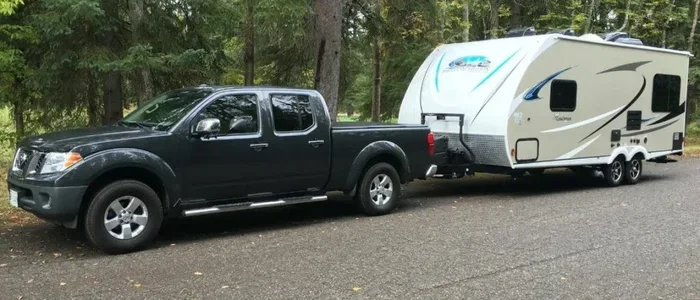
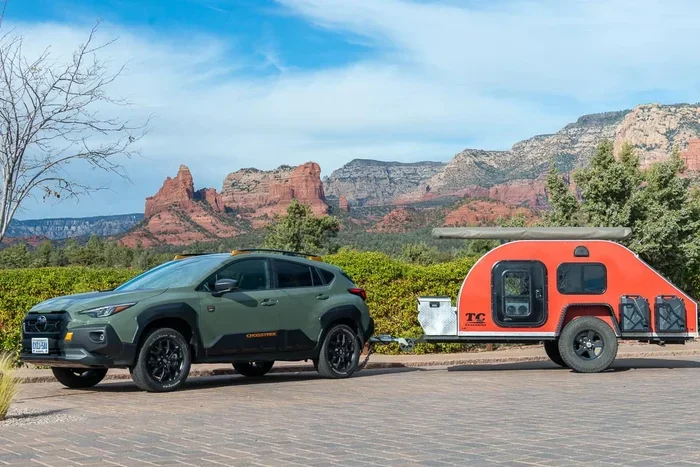
The Crosstrek is a popular choice for outdoor enthusiasts. With a 2,000-pound towing capacity, you can easily tow a small camping trailer loaded with tents, coolers, cooking gear, and bikes. The Crosstrek’s all-wheel-drive system also gives you confidence on dirt roads and campgrounds, making it a great companion for backcountry adventures.
Hauling Utility Trailers
Whether you are moving furniture, hauling landscaping materials, or towing a small utility trailer for work, the Crosstrek handles these tasks well. Just be mindful of the total weight and make sure you stay within the towing limit. A utility trailer loaded with heavy materials can quickly approach the 2,000-pound threshold, so weigh your load before you go.
Towing Small Boats
Small boats and jet skis are well within the Crosstrek’s towing range. A typical aluminum fishing boat or personal watercraft trailer weighs between 300 and 800 pounds, leaving plenty of capacity for the boat itself. The Crosstrek’s compact size also makes it easier to maneuver on boat ramps compared to larger trucks and SUVs.
Long Road Trips with a Travel Trailer
If you enjoy weekend road trips, a lightweight travel trailer is a great match for the Crosstrek. Travel trailers in the 1,200-1,800 pound range are ideal. They are large enough to sleep and cook in but light enough for the Crosstrek to tow comfortably. Many Crosstrek owners report positive towing experiences with small travel trailers, praising the vehicle’s stability and fuel efficiency.
Maintenance Tips for Towing Owners
Towing puts extra wear and tear on your vehicle. Staying on top of maintenance helps keep your Crosstrek running strong and safe. Here are some key maintenance tips for Crosstrek towing owners.
- Check the Transmission Fluid: Towing increases the workload on your CVT transmission. Check the transmission fluid level and condition regularly, and change it according to the maintenance schedule.
- Inspect the Brakes: The added weight of a trailer wears brake pads faster. Have your brakes inspected at every oil change and replace pads as needed.
- Monitor the Cooling System: Keep an eye on your temperature gauge when towing. If the engine runs hotter than normal, pull over and let it cool down before continuing.
- Rotate Tires Regularly: Towing can cause uneven tire wear. Rotate your tires every 5,000-7,500 miles to promote even wear and extend tire life.
- Lubricate the Hitch: Keep the hitch receiver and ball mount lubricated to prevent rust and ensure a smooth, secure connection.
Expert Insights on Towing with the Crosstrek
We spoke with several automotive experts and experienced Crosstrek towing owners to get their top recommendations. Here is what they had to say.
Start with the right trim. Most experts agree that the Crosstrek with the 2.5-liter engine is the best choice for towing. The additional torque makes a noticeable difference, especially on hills and inclines. If you plan to tow regularly, investing in the 2.5L model pays off in both performance and reliability.
Do not skip the wiring harness. Many owners try to get by without a proper wiring harness, but this is a safety risk and often illegal. A quality wiring harness ensures your trailer lights work correctly and keeps you compliant with state towing regulations.
Practice before your trip. If you are new to towing, practice driving, turning, and braking with your trailer in a safe, empty area before hitting the highway. Towing changes the way your vehicle handles, and getting comfortable with the feel of a trailer takes time and practice.
Know your limits. The Crosstrek is a capable little vehicle, but it is not a full-size truck. Respect the towing limits, do not overload the trailer, and always prioritize safety over convenience.
Key Takeaways
- Towing Capacity: The Subaru Crosstrek can tow up to 2,000 pounds when equipped with the 2.5-liter engine and proper towing package.
- Hitch and Wiring: A Class II hitch receiver, wiring harness, and trailer brake controller are essential for a safe towing setup.
- Load Balance: Proper load distribution and tongue weight are critical for towing stability and safety.
- Driving Adjustments: Reduce speed, increase following distance, and use manual transmission mode when towing hills.
- Maintenance Matters: Regular maintenance of brakes, transmission fluid, cooling system, and tires keeps your Crosstrek reliable for towing.
- Practical and Versatile: From camping trailers to small boats, the Crosstrek handles a wide range of towing tasks with ease and confidence.
Conclusion
The Subaru Crosstrek is a surprisingly capable towing vehicle that can handle a wide range of trailer types and loads. With a towing capacity of 2,000 pounds, the right equipment, and proper setup, you can confidently tow a camping trailer, utility trailer, or small boat with your Crosstrek. The key is understanding your vehicle’s limits, investing in quality towing equipment, and following safe towing practices.
Whether you are a weekend adventurer or someone who needs to haul gear regularly, the Crosstrek proves that you do not need a large truck to handle towing duties. Its compact size, all-wheel-drive capability, and reliable 2.5-liter engine make it one of the most versatile towing options in the compact crossover segment.
Now that you know what your Subaru Crosstrek can do, it is time to plan your next towing adventure. Equip your vehicle properly, respect the weight limits, and enjoy the confidence that comes with knowing your Crosstrek is ready for the road ahead.
Frequently Asked Questions
Can a Subaru Crosstrek tow a travel trailer?
Yes, the Crosstrek can tow a travel trailer as long as the combined weight stays within the 2,000-pound towing capacity. Lightweight travel trailers in the 1,200-1,800 pound range are ideal for the Crosstrek and provide a comfortable camping setup.
Do I need a towing package to tow with a Crosstrek?
A towing package is highly recommended. It typically includes a Class II hitch receiver, wiring harness, and cooling system upgrades. While you can technically tow without a factory package, having one ensures your Crosstrek is properly equipped for safe and reliable towing.
What is the best hitch for a Subaru Crosstrek?
A Class II hitch receiver is the best choice for the Crosstrek. It is rated for trailers up to 3,500 pounds gross trailer weight and provides a secure, bolt-on installation that does not require permanent modifications to the vehicle.
Can I tow with a Subaru Crosstrek CVT transmission?
Yes, the CVT transmission in the Crosstrek is designed to handle towing loads. Use the manual mode to hold lower gears when climbing hills or descending, and avoid sustained high speeds while towing to prevent transmission overheating.
Is the Subaru Crosstrek AWD good for towing?
Absolutely. The all-wheel-drive system provides better traction and stability when towing, especially on wet or uneven roads. AWD helps distribute the towing load more evenly across all four wheels, improving control and safety.
How do I calculate the total weight of my trailer and cargo?
Weigh the trailer on a vehicle scale before loading, then add the weight of your cargo. The total gross trailer weight should not exceed the Crosstrek’s 2,000-pound towing capacity. Also account for the tongue weight, which should be 10-15% of the total trailer weight for optimal balance and stability.