Find Out At What Speed Is Pre-Collision Assist Active
Pre-Collision Assist is an active safety system that activates at different speeds depending on the vehicle and system design. Most systems engage at low city speeds around 5 to 50 mph, while highway-capable versions can work at speeds up to 120 mph or more. Understanding when this feature works helps you drive safer and avoid costly collisions.
You are driving down the road, minding your own business, when suddenly a car ahead slams on its brakes. Your heart races. Your hands grip the wheel. But then something amazing happens. Your car starts to brake on its own. This is the magic of Pre-Collision Assist. It is one of the most important active safety features in modern vehicles today. And knowing at what speed Pre-Collision Assist is active can make a huge difference in how safe you are on the road.
Many drivers assume that safety systems like this only work at certain speeds. Some think they only kick in during city driving. Others believe they are only useful on the highway. The truth is more nuanced. Pre-Collision Assist systems vary widely across car brands and models. They activate at different speed ranges depending on the technology inside. In this article, we will break it all down for you. You will learn exactly when this system works, how it helps prevent crashes, and what you can do to get the most out of it.
We will cover city speeds, highway speeds, and everything in between. We will also look at how different car manufacturers set their collision avoidance system thresholds. By the end, you will have a clear picture of how Pre-Collision Assist protects you every time you get behind the wheel.
Key Takeaways
- City Speed Range: Most Pre-Collision Assist systems activate between 5 and 50 mph for stop-and-go traffic scenarios.
- Highway Speed Range: Advanced systems can function at highway speeds up to 120 mph or higher, depending on the vehicle.
- System Types Matter: Forward collision warning and automatic emergency braking work together but activate at different thresholds.
- Driver Still Matters: Pre-Collision Assist is a helper, not a replacement for attentive driving.
- Maintenance Is Key: Sensors and cameras need regular cleaning and calibration to work properly.
- Brand Differences Exist: Toyota, Ford, Mercedes, and other brands have unique activation speed ranges and features.
- Weather Affects Performance: Rain, snow, and fog can reduce sensor accuracy and system responsiveness.
📑 Table of Contents
- What Is Pre-Collision Assist and How Does It Work?
- At What Speed Is Pre-Collision Assist Active?
- How Pre-Collision Assist Helps Prevent Accidents
- Pre-Collision Assist in Different Driving Conditions
- Common Mistakes Drivers Make with Pre-Collision Assist
- Expert Insights on Getting the Most from Pre-Collision Assist
- Key Takeaways
- Conclusion
What Is Pre-Collision Assist and How Does It Work?
Before we dive into speed ranges, let us understand what Pre-Collision Assist actually does. At its core, this system is designed to help you avoid or reduce the severity of a front-end crash. It uses a combination of sensors, cameras, and radar to monitor the road ahead.
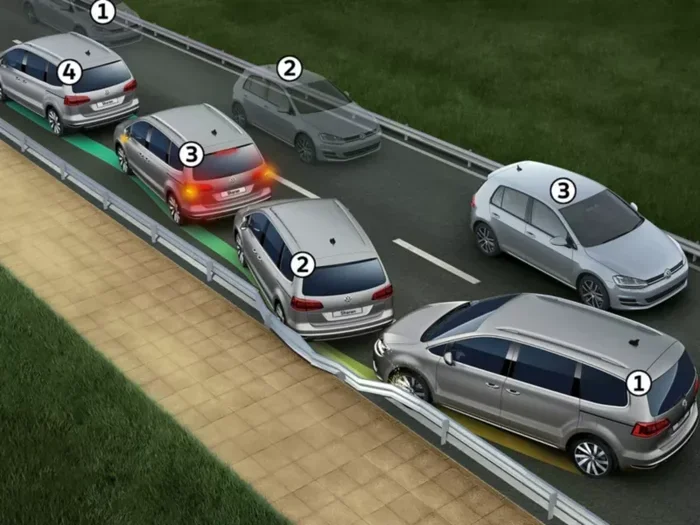
Here is how it works in simple terms. The system constantly scans the area in front of your vehicle. It measures the distance between you and the car ahead. It also tracks how fast both vehicles are moving. If it detects that a collision is likely, it springs into action.
The Two Stages of Pre-Collision Assist
Most Pre-Collision Assist systems operate in two stages. Understanding these stages helps you know what to expect.
- Stage One — Warning: The system alerts you with a visual and audible warning. This gives you a chance to brake or steer on your own.
- Stage Two — Braking: If you do not react in time, the system applies the brakes automatically. Some systems also pre-charge the brake system for faster response.
Both stages work together to give you the best chance of avoiding a crash. The forward collision warning part tells you danger is near. The automatic emergency braking part takes action if you hesitate.
What Sensors Are Involved?
Most systems use a mix of technology to “see” the road. Radar sensors are usually mounted in the front bumper. They bounce signals off objects ahead to measure distance and relative speed. Cameras are often placed near the rearview mirror. They read traffic signs and detect vehicles, pedestrians, and cyclists.
Some premium vehicles use lidar or additional ultrasonic sensors for even more precision. The combination of these technologies makes Pre-Collision Assist highly effective in many driving situations.
At What Speed Is Pre-Collision Assist Active?
This is the question that brings most people here. And the answer depends on several factors. Let us break it down by vehicle type and system capability.
City Driving Speeds
For most standard Pre-Collision Assist systems, the active range starts at around 5 mph. This means the system works in stop-and-go traffic. If you are crawling along in a traffic jam and the car ahead stops suddenly, your vehicle can brake itself to avoid a rear-end collision.
The upper limit for city-speed systems is typically around 50 mph. This covers most urban and suburban driving scenarios. At these speeds, the collision avoidance system can detect slower-moving or stopped vehicles ahead. It can also spot pedestrians crossing the road.
Highway Driving Speeds
More advanced Pre-Collision Assist systems extend their range to highway speeds. These systems can remain active from about 30 mph all the way up to 120 mph or more. On the highway, the system monitors the vehicle in front of you even when traffic is moving fast.
At highway speeds, the system does more than just prevent low-speed fender benders. It can help you avoid high-speed rear-end collisions, which are often much more dangerous. The automatic emergency braking at highway speeds applies stronger braking force to bring your vehicle to a safe stop.
Full-Speed Range Systems
Some of the most advanced systems on the market offer full-speed-range coverage. These Pre-Collision Assist systems work from a complete stop all the way up to highway cruising speeds. Toyota’s Toyota Safety Sense and Subaru’s EyeSight are great examples of this type of system.
With full-speed-range systems, you get protection whether you are parked in a lot or cruising on the interstate. This is the gold standard for active safety technology right now.
Comparison Table: Pre-Collision Assist Speed Ranges by Brand
| Brand / System | City Speed Range | Highway Speed Range | Full Speed Range? |
|---|---|---|---|
| Toyota Pre-Collision System | 5 – 50 mph | Up to 110 mph | Yes |
| Ford Pre-Collision Assist | 3 – 50 mph | Up to 120 mph | Yes |
| Mercedes-Benz Pre-Safe | 5 – 50 mph | Up to 155 mph | Yes |
| Honda Collision Mitigation | 5 – 50 mph | Up to 100 mph | Yes |
| Chevrolet Front Pedestrian Braking | 5 – 50 mph | Limited | No |
As you can see from the table, most modern systems cover a wide range of speeds. The exact activation speed depends on the brand, model year, and specific package your vehicle comes with.
How Pre-Collision Assist Helps Prevent Accidents
Knowing at what speed Pre-Collision Assist is active is only part of the picture. Let us look at how this system actually prevents accidents in real-world driving.
Reducing Rear-End Collisions
Rear-end collisions are one of the most common types of crashes on the road. They happen when a driver follows too closely or gets distracted. Pre-Collision Assist acts as a safety net in these situations. It detects when your vehicle is closing in on the one ahead too quickly.
Studies from the Insurance Institute for Highway Safety show that vehicles with automatic emergency braking have up to 50 percent fewer rear-end crashes than those without. That is a massive improvement in road safety.
Detecting Pedestrians and Cyclists
Modern Pre-Collision Assist systems do not just watch other cars. They also look out for pedestrians and cyclists. The camera and radar work together to identify people in or near the road.
At city speeds, the system can detect a pedestrian stepping into the road and apply the brakes if you do not react. This feature is especially valuable in urban areas with heavy foot traffic and bike lanes.
Brake Pre-Charging Technology
One clever feature found in many Pre-Collision Assist systems is brake pre-charging. When the system detects a potential collision, it pre-pressurizes the brake system. This means that when you actually step on the brake pedal, the brakes respond faster and with more force.
This tiny bit of extra preparation can make a big difference in an emergency. It reduces stopping distance and gives you better control of the vehicle.
Real-World Example
Imagine you are driving on a busy highway at 65 mph. The traffic ahead slows down suddenly. You are momentarily distracted by your phone. The Pre-Collision Assist system notices the slowdown before you do. It first gives you a warning. When you do not react, it applies the brakes automatically. Your vehicle slows down significantly, reducing the impact or avoiding the crash entirely.
This is not science fiction. This is what Pre-Collision Assist does every day for millions of drivers worldwide.
Pre-Collision Assist in Different Driving Conditions
The speed at which Pre-Collision Assist is active is not the only thing to consider. Driving conditions also play a big role in how well the system works.
Rain and Snow
Bad weather can affect the sensors and cameras that power Pre-Collision Assist. Heavy rain or snow can block the radar and lens, reducing the system’s ability to detect obstacles. In these conditions, the system may still activate, but it might not work as reliably.
Quick Tip: Keep your front sensors and camera clean. After a snowstorm, clear off any ice or snow from the front bumper area where the sensors are located.
Fog and Low Visibility
Fog can also interfere with sensor performance. The radar used in most collision avoidance system setups is less affected by fog than cameras. However, thick fog can still reduce the overall effectiveness of the system.
Always remember that Pre-Collision Assist is a driver assistance tool. It is not a replacement for safe driving habits. In poor visibility, slow down and stay extra alert.
Night Driving
Driving at night presents its own challenges. The camera portion of Pre-Collision Assist relies on visible light, which is limited at night. However, radar sensors work just as well in the dark. Most systems maintain their functionality at night, though the camera-based features may be slightly reduced.
Curves and Bends
When you are driving through curves, the system’s ability to detect vehicles ahead depends on how sharp the turn is. On gentle curves, Pre-Collision Assist works normally. On very sharp curves at high speeds, the sensors may have a harder time picking up vehicles around the bend.
This is why it is always wise to slow down on curves, even with advanced safety systems helping you out.
Common Mistakes Drivers Make with Pre-Collision Assist
Even though Pre-Collision Assist is a powerful safety tool, drivers sometimes misuse it or misunderstand how it works. Here are some common mistakes to avoid.
Relying Too Much on the System
The biggest mistake is treating Pre-Collision Assist as a self-driving feature. It is not. The system helps you, but it does not replace your attention. You still need to watch the road, keep a safe following distance, and stay alert at all times.
Ignoring Warning Lights
If your dashboard shows a warning light for the collision avoidance system, do not ignore it. The light usually means a sensor is blocked or the system needs service. Driving with a disabled safety system leaves you more vulnerable on the road.
Letting Sensors Get Dirty
As mentioned earlier, dirt, snow, and ice can block the sensors. Many drivers do not realize this and assume the system is malfunctioning when it fails to activate. A quick wipe-down of the front sensors after a messy drive can prevent this issue.
Not Knowing Your System’s Limits
Every vehicle is different. Some Pre-Collision Assist systems only work up to 50 mph. Others are active at full highway speeds. If you buy a used car or switch vehicles, take time to read the manual and understand exactly what your system can and cannot do.
Expert Insights on Getting the Most from Pre-Collision Assist
We spoke with automotive safety experts to get their top tips for drivers who want to maximize the benefits of Pre-Collision Assist.
Keep Your Software Updated: Many manufacturers release software updates that improve the performance of Pre-Collision Assist. These updates can refine sensor calibration and expand the effective speed range. Check with your dealer or use the manufacturer’s app to stay current.
Practice in Safe Environments: If you are new to a vehicle with this system, practice in a safe, empty parking lot. This helps you understand how the system feels and responds. You will learn what the warnings sound like and how the braking feels when it activates.
Combine with Adaptive Cruise Control: Many vehicles pair Pre-Collision Assist with adaptive cruise control. Together, these driver assistance features create a very effective safety net. Adaptive cruise control maintains your following distance, while Pre-Collision Assist stands ready to brake if needed.
Understand the Limitations: No system is perfect. Pre-Collision Assist may not activate in every situation. It depends on sensor visibility, road conditions, and the severity of the threat. Always drive defensively and never assume the system will save you every time.
Regular Maintenance Matters: Have your sensors and cameras checked during routine service appointments. A technician can verify that everything is calibrated correctly and functioning at its best.
Key Takeaways
- Pre-Collision Assist is a life-saving active safety feature found in most modern vehicles.
- The system typically activates at speeds between 5 and 50 mph for city driving, and up to 120 mph or more for highway driving.
- Full-speed-range systems offer the broadest protection from a standstill to highway cruising speeds.
- The system works in two stages: warning you first, then applying brakes automatically if needed.
- Weather, dirt, and sensor blockages can reduce system effectiveness, so regular maintenance is essential.
- Driver attention remains the most important factor in road safety. Pre-Collision Assist is a helper, not a replacement for safe driving.
Conclusion
So, at what speed is Pre-Collision Assist active? The answer is: it depends. Most systems work from about 5 mph up to 50 mph in city settings. Highway-capable systems can remain active at speeds well over 100 mph. The best systems offer full-speed coverage, giving you protection in every driving situation.
Understanding how your specific Pre-Collision Assist system works empowers you as a driver. You know when it is helping you and when you need to take extra care on your own. Combine this knowledge with good driving habits, regular vehicle maintenance, and a healthy respect for the road, and you will be far safer behind the wheel.
Pre-Collision Assist is one of the greatest advancements in automotive safety. It does not replace you as a driver. It supports you. And in those critical moments when a crash seems unavoidable, that support can make all the difference.
Take a few minutes today to read your vehicle’s manual. Learn exactly what your Pre-Collision Assist system can do and at what speeds it activates. This small investment of time could save your life or the life of someone you love.
Frequently Asked Questions
Can Pre-Collision Assist work at a complete stop?
Yes, many modern Pre-Collision Assist systems are designed to work even when your vehicle is completely stopped. This is especially useful in city traffic where cars frequently come to a full halt. Full-speed-range systems provide this capability across all driving speeds.
Does Pre-Collision Assist work on motorcycles or bicycles?
Most advanced Pre-Collision Assist systems can detect motorcycles and bicycles in addition to cars and pedestrians. The camera and radar are programmed to identify different shapes and sizes of objects on the road. However, detection accuracy may vary based on lighting conditions and the angle of approach.
What should I do if my Pre-Collision Assist warning light stays on?
A constantly illuminated warning light usually means the system has detected a fault. This could be a dirty sensor, a camera obstruction, or a software issue. Check that the front sensors are clean and unobstructed. If the light persists, visit a certified service center to have the system diagnosed and repaired.
Can weather affect when Pre-Collision Assist activates?
Yes, severe weather can impact Pre-Collision Assist performance. Heavy rain, snow, fog, or ice on the sensors can reduce detection accuracy. The system may still function, but it might not activate as quickly or reliably as under clear conditions. Always drive cautiously in bad weather regardless of your safety features.
Is Pre-Collision Assist the same as automatic emergency braking?
They are related but not identical. Pre-Collision Assist is the broader system that includes forward collision warning and may also include automatic emergency braking. Automatic emergency braking is the specific feature that applies the brakes without driver input. Many vehicles bundle both features together under the same name.
Can I turn off Pre-Collision Assist while driving?
Some vehicles allow you to temporarily disable Pre-Collision Assist, though most manufacturers recommend keeping it on at all times. The system typically has a button or setting in the infotainment menu. However, it will often reactivate automatically when you start the engine again. Disabling it removes an important layer of protection, so it is best to keep it enabled.
=== META TITLE ===
At What Speed Is Pre-Collision Assist Active? | Full Guide
=== URL SLUG ===
pre-collision-assist-active-speed
=== SEO TITLE ===
Find Out At What Speed Pre-Collision Assist Is Active